
Omoide Yokocho
Shinjuku’s Smoky Postwar Yakitori Alley
<p>Once called "Piss Alley" for grim postwar reasons, this narrow strip of smoky yakitori stalls was rebuilt after a 1999 fire — deliberately made to look exactly as it always had.</p>
Last verified: 2026-05-09
Why Japanese People Love It
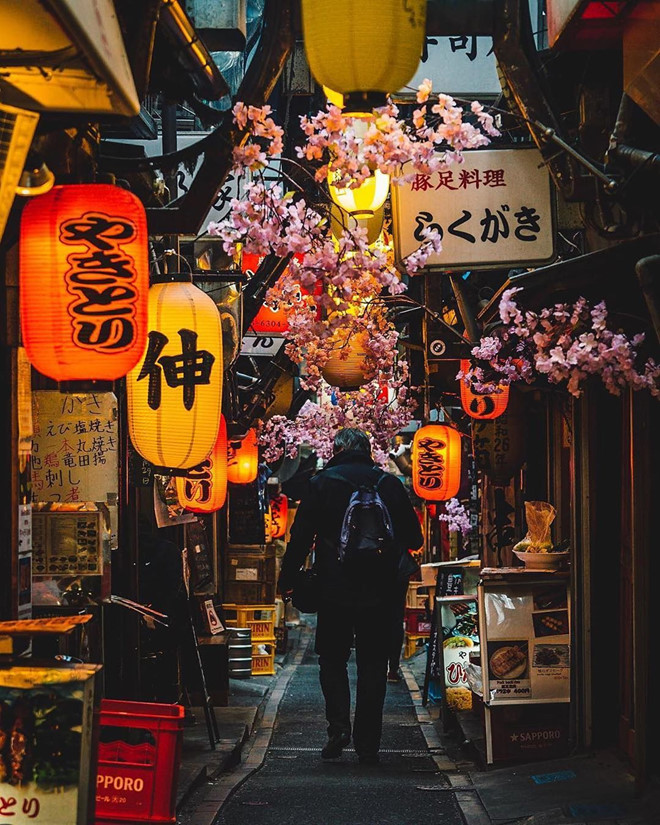
For Japanese people of a certain age, Omoide Yokocho isn't a bar alley — it's a time machine. The original nickname was Shonben Yokocho, "Piss Alley," because in the postwar chaos of the late 1940s, when this strip grew out of a black market, there were no toilets and the railway tracks served as the nearest option. That name stuck for decades, worn like a badge of rough-edged honesty. When a fire gutted the entire alley in 1999, the owners rebuilt it deliberately to look exactly as it had before — smoke-blackened wood panels, shoulder-width corridors, counters barely wide enough for your elbows. Nostalgia here isn't decoration. It's the whole point.
What pulls locals back — salarymen who've been coming since the bubble era, grandparents who remember the original stalls — is the specific atmosphere of shōwa-era drinking culture: sitting elbow-to-elbow with strangers, watching the yakitori char over binchōtan charcoal, shouting your order over the hiss of smoke. The closeness forces conversation. You don't sit at Omoide Yokocho and look at your phone. The person next to you will talk to you, and by the second skewer, that feels completely natural.
How to Experience It
No reservations needed — just show up and follow your nose. The alley runs parallel to Shinjuku Station's west exit, and most stalls open around 5pm, closing by midnight. Arriving right at opening gives you the best shot at a seat; by 7pm on weekends, the narrow passage is shoulder-to-shoulder and wait times stretch long. Weeknight visits before 6:30pm are noticeably calmer.
Most stalls seat six to eight people along a single counter — tight, smoky, and deliberately so. Solo diners fit in perfectly here; the counter format actually makes it easier to strike up conversation with whoever's grilling beside you.
Ordering is done directly with the staff at whichever stall you choose. Point confidently if you can't find the words — most counters display skewers visibly, so gesturing works. English menus are rare, and staff English is limited, so a translation app on your phone is worth having ready.
One thing to know before you sit down: each stall is its own independent business. When you're done, settle your bill and leave before moving to the next one — hopping between stalls mid-tab causes real confusion.
What to Order
Yakitori (焼き鳥) — Skewers of chicken charred over binchōtan coals, smoky on the outside with just enough char to add bitterness that balances the sweet tare glaze. At these tiny counters, the grill is close enough to watch the fat drip and flare — order a mix of thigh, skin, and liver to get the full range. Tell the cook tare for sauce or shio for salt.
Motsuyaki (もつ焼き) — Grilled pork offal skewers with a springy, slightly chewy texture and a deep, mineral richness that pairs perfectly with cold beer. Each stall has its own seasoning rhythm, so don't hesitate to ask what's fresh that night.
Hoppī (ホッピー) — A low-alcohol shochu highball made with a beer-flavored mixer, crisp and slightly bitter, traditionally the drink of Tokyo's working-class districts. Order the naka (中) for a shochu refill when your glass runs low.
Plan your visit
| Area | Shinjuku |
|---|---|
| Category | Izakaya & Bars |
| Price range | ¥1500-4000 |
| Hours | 17:00-23:00 (店舗により昼営業もあり) |
| Closed | なし |
| Access | JR新宿駅西口から徒歩2分 |
| Reservations | Walk-in only |
| English menu | ⚠ Limited Limited — 一部店舗で英語メニューあり |
| English support | Limited English staff |
| Last verified | 2026-05-09 |
Nearby Experiences
Before the yakitori smoke pulls you in, spend the afternoon wandering Takashimaya Times Square on the south side of Shinjuku Station — particularly the basement food hall, where you can graze on regional Japanese snacks and get a feel for the city's food obsession before dinner. Afterwards, walk ten minutes east to Kabukicho's Golden Gai: a cluster of 200 six-seat bars where a single drink turns into a two-hour conversation with strangers. Book a guided Golden Gai bar-hop through ONDO to skip the "tourists not welcome" doors entirely.