
Imahan Bekkan Asakusa
Historic Sukiyaki by Senso-ji
A Taisho-era sukiyaki house just off Senso-ji, with walk-in hall seating downstairs and reservable tatami rooms for a slower, more formal meal.
Last verified: April 2026
Why Japanese People Love It
Asakusa's sukiyaki lineage goes back to 1895, and Imahan Bekkan became an independent offshoot in 1921. What locals come for is not novelty but continuity: sweet-salty warishita, carefully selected wagyu, and the kind of tableside rhythm that only settles in after decades of repetition.
The building matters almost as much as the beef. Bekkan's woodwork, garden views, and old-school tatami rooms give the meal a sense of occasion without turning it into a performance. Japanese families use it for reunions, milestone lunches, and visiting relatives because it still feels unmistakably Asakusa.
There is also a practical reason people keep returning. You can experience the same sukiyaki tradition in a more casual hall seat downstairs, or reserve a tatami room when you want the full formal setup. That flexibility is part of what has kept the place relevant for generations.
How to Experience It
The first decision is seating. Hall seating is walk-in only, while tatami rooms are reserved in advance by phone or email and served with course menus. If you want the easiest, most spontaneous visit, aim for the hall; if you are planning a celebratory meal, reserve a room.
Weekday lunch is the most approachable entry point. Weekend afternoons around Senso-ji get busy quickly, so arriving close to opening will give you the smoothest experience.
Foreign-language staff are limited, and the restaurant's official guidance is clear that foreign-guest-only reservations are not handled casually. If you need help booking a formal room, ask a Japanese-speaking hotel concierge or local contact to call on your behalf.
One etiquette point worth knowing: at a sukiyaki table, the staff will often cook the first round for you to set the seasoning and pace. Let them lead that opening sequence rather than reaching for the pot yourself.
What to Order
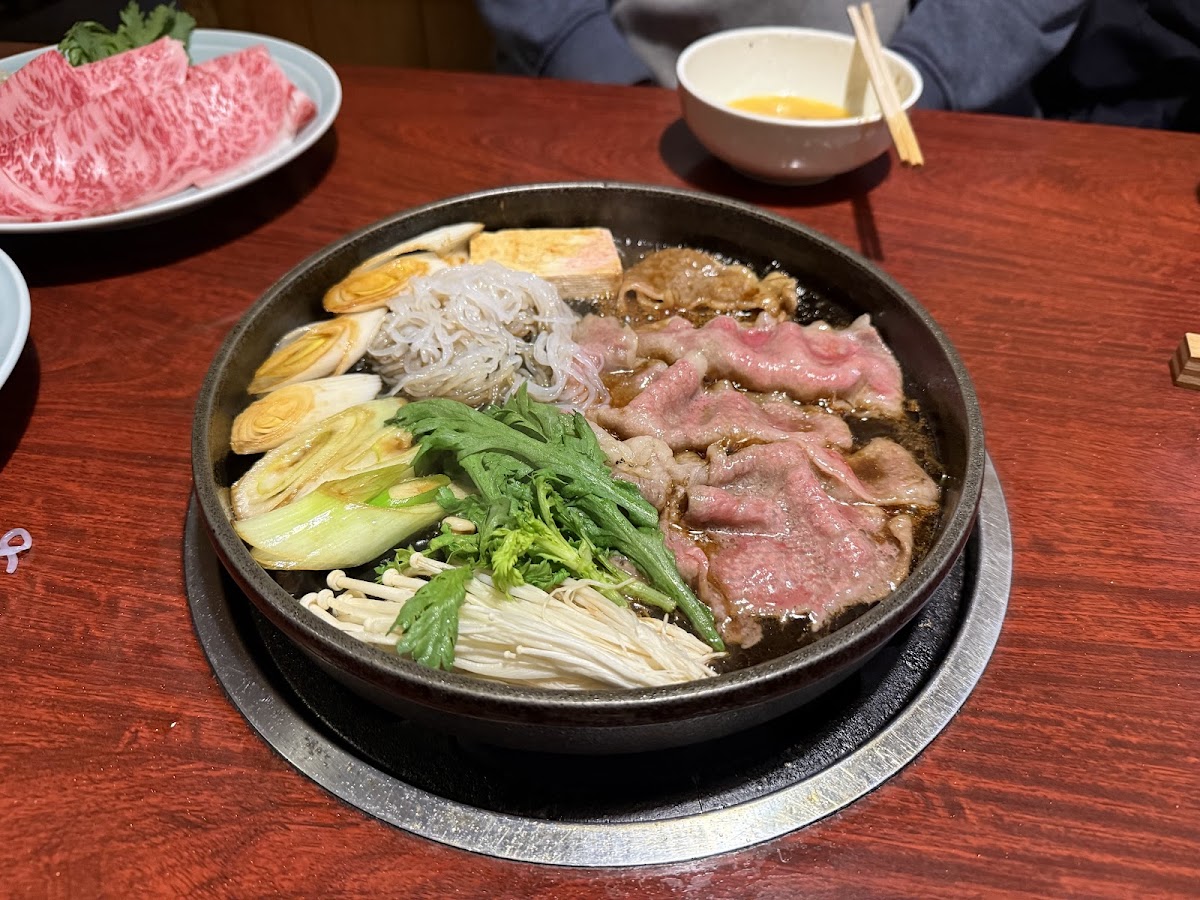
Sukiyaki Course (すき焼き) — The classic order here. Thin slices of wagyu are cooked tableside in warishita until the edges caramelize, then dipped in raw egg. This is the meal that carries the restaurant's reputation.
Shabu-shabu (しゃぶしゃぶ) — A lighter way into the same beef quality, with slices swished through broth instead of simmered in sweet soy. Good if you want the wagyu without the full intensity of sukiyaki.
Japanese Course with Beef (日本料理会席) — Best for reserved-room visits. You get a more measured procession of dishes before the main pot, which suits celebratory lunches and business dinners.
Plan your visit
| Area | Asakusa |
|---|---|
| Category | Sukiyaki |
| Price range | ¥5000-15000 |
| Hours | Weekdays 11:00-15:00 / 16:30-21:30; weekends & holidays 11:00-21:30 |
| Closed | No regular weekly closing day |
| Access | Asakusa Station 5 min walk / Tawaramachi Station 8 min walk |
| Reservations | Tatami-room reservations accepted; hall seating is walk-in only |
| English menu | ✕ None No dedicated English menu confirmed |
| English support | Limited — foreign-language staff are limited |
| Last verified | April 2026 |
Nearby Experiences
Before your meal, walk the quieter lanes behind Senso-ji rather than stopping at the first souvenir row on Nakamise. The area around Denboin-dori and Shin-Nakamise gives you a softer, older Asakusa mood that pairs naturally with a long sukiyaki lunch. Afterward, drift toward the Sumida riverside for a slower reset before heading back into the crowds.