
Gonokami Seisakusho
The Shrimp Tsukemen Worth the Line
A Sendagaya tsukemen specialist built entirely around ebi (shrimp). A dense, sweet-savory shrimp dipping broth that draws a queue from open to close.
Last verified: 2026-05-16
Why Japanese People Love It
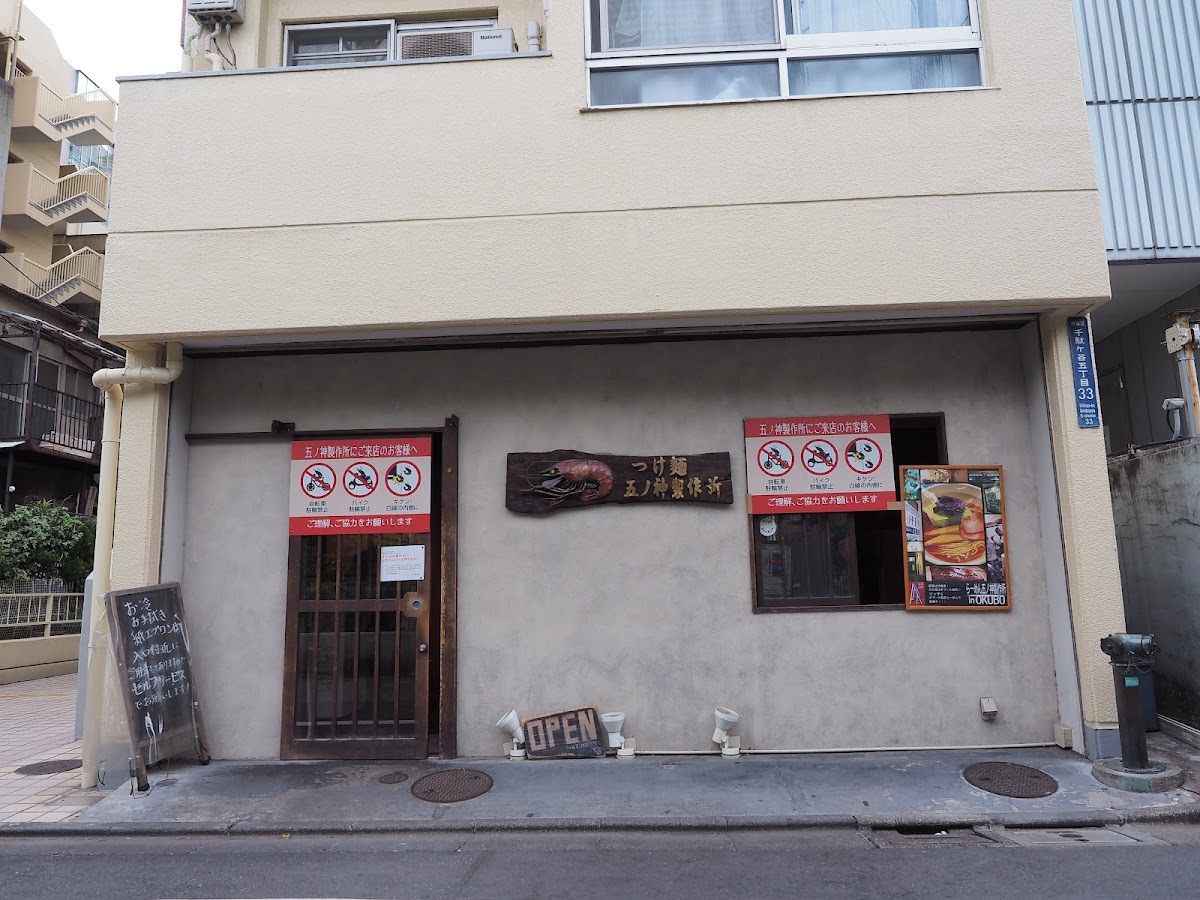
Gonokami Seisakusho does one thing with single-minded intensity: ebi (shrimp) tsukemen. The dipping broth is built from a heavy reduction of shrimp shells and heads, producing a thick, almost bisque-like liquid with a sweet-savory depth that's closer to a French shellfish stock than to a typical ramen broth. It's not a subtle bowl — it commits fully to the shrimp idea — and that commitment is exactly why it draws a queue from open to close on a quiet Sendagaya side street.
Tsukemen (noodles served separately from a concentrated dipping broth) rewards this kind of specialization. Because the noodles aren't sitting in soup, they can be thicker and chewier, and the broth can be far more intense than a sippable ramen soup would allow. Gonokami pushes both variables to the edge — fat, springy noodles into an aggressively concentrated shrimp dip — and the result is one of Tokyo's most distinctive single-flavor tsukemen.
For visitors who've had ramen but never tsukemen, this is a strong place to learn the format, precisely because the flavor is so legible. There's no ambiguity about what you're tasting. The shop is also useful geographically — between Sendagaya, Shinjuku Gyoen, and the National Stadium — making it a natural lunch on a day spent around the garden and the Olympic-area architecture.
How to Experience It
Find it at 5-33-16 Sendagaya, five minutes from JR Sendagaya Station or seven from Shinjuku-Gyoenmae Metro. The shop is small and the queue is the landmark — it's reliably there, especially at lunch. The line moves at ramen pace; budget 20-40 minutes at peak, less off-peak.
Buy a ticket at the vending machine before or while queuing — tsukemen plus any toppings or noodle-size options. Hand it over when seated. The transaction needs almost no language. Hours are 11:00-21:30 with a possible mid-afternoon lull that's the best time to avoid the longest wait.
When eating tsukemen: dip a few noodles at a time into the broth rather than pouring broth over noodles. At the end, ask for soup-wari — the staff dilutes your remaining concentrated broth with a thin dashi so you can drink it as a finishing soup. This is the standard tsukemen ritual and Gonokami's broth rewards it.
What to Order
The standard ebi tsukemen is the order — it's the entire reason the shop exists, and the configuration most regulars consider definitive. Choose the medium noodle portion for a first visit (the large is substantial). Add ajitama (seasoned egg) if you want the standard full setup.
Finish with soup-wari (broth dilution) — it's not optional in the sense that it completes the dish: the concentrated shrimp dip becomes a drinkable shrimp soup. Skipping it means missing the intended arc of the meal. The ebi-abura (shrimp oil) drizzle option intensifies the theme further for those who want maximum shrimp.
Plan your visit
| Area | Shinjuku |
|---|---|
| Category | Ramen |
| Price range | ¥1100-1700 |
| Hours | 11:00-21:30 |
| Closed | なし |
| Access | JR千駄ヶ谷駅から徒歩5分・東京メトロ新宿御苑前駅から徒歩7分・千駄ヶ谷5-33-16 |
| Reservations | Walk-in only — ticket machine, expect a queue |
| English menu | ⚠ Limited Limited — ticket machine, photo menu |
| English support | Minimal interaction needed |
| Last verified | 2026-05-16 |
Nearby Experiences
Shinjuku Gyoen (the National Garden, ¥500) is a five-minute walk — the obvious post-tsukemen stroll, especially in cherry-blossom or autumn-foliage season. Konjiki Hototogisu (Michelin ramen) is nearby in Shinjuku 2-chome for a same-day ramen comparison if you have the appetite.
For a Shinjuku noodle flight, Gonokami (shrimp tsukemen) contrasts with Menya Musashi (double-broth ramen) and Fuunji (fish-powder tsukemen) — three specialists within a short radius that together cover the modern Tokyo tsukemen-and-ramen spectrum.