
Kushikatsu Tanaka Shibuya
Osaka Deep-Fried Skewers, Tokyo Branch
The chain that brought Osaka's working-class kushikatsu culture nationwide — battered, deep-fried skewers, one communal sauce pot, strict no-double-dipping rule.
Last verified: 2026-05-16
Why Japanese People Love It
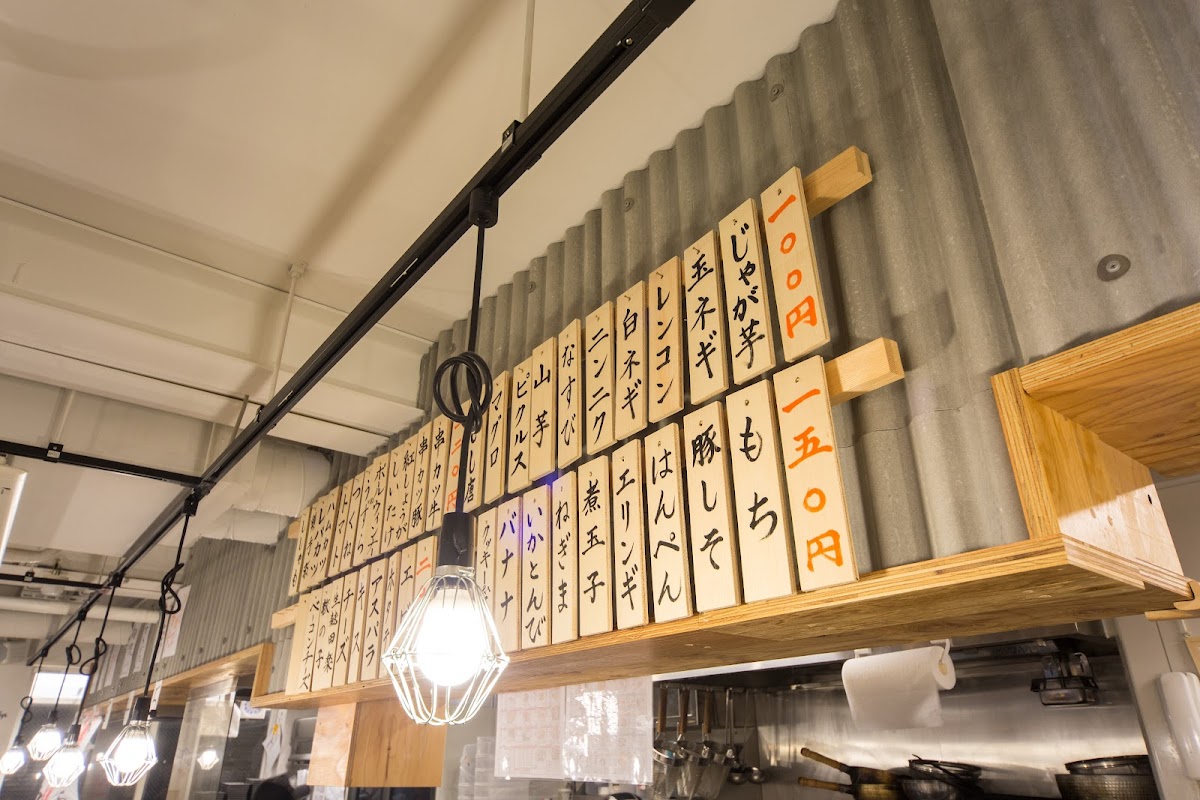
Kushikatsu is Osaka's defining working-class food — bite-sized pieces of meat, seafood, and vegetables, battered, breaded, and deep-fried on skewers, then dipped in a thin Worcestershire-style communal sauce. Kushikatsu Tanaka is the chain that took this Shinsekai-district tradition nationwide in the 2010s, recreating the retro Showa-Osaka atmosphere — enamel signage, cheap highballs, a deliberately downmarket warmth — in cities that had no kushikatsu culture of their own, including Tokyo.
The one rule everyone learns is no double-dipping. The sauce sits in a shared pot at the table; you dip the skewer once before the first bite, never again (the shredded cabbage on the table is provided as a free 'scoop' to add more sauce without re-dipping). This single hygiene rule, posted on every table, is itself a small cultural lesson — and the kind of low-stakes participatory custom that makes the chain genuinely fun for first-time visitors rather than just convenient.
For visitors, Kushikatsu Tanaka is the accessible entry to a regional food culture that's otherwise an Osaka day-trip. It's cheap, casual, English-menued, open late, and the format (order skewers in rounds, drink highballs, follow the one rule) removes social friction. It's not haute cuisine and doesn't pretend to be — it's the reliable, fun, ¥2,500 version of an Osaka night, transplanted to a Shibuya basement.
How to Experience It
There are several Kushikatsu Tanaka branches in Shibuya (Dogenzaka 2-18-7 and 2-14-4 among them), each five-or-so minutes from JR Shibuya. Any branch delivers the same format; the Dogenzaka locations are most convenient for a nightlife-area visit. Some branches take reservations; walk-in is normal.
Order skewers in rounds from the menu (English available) — they arrive fried to order, a few at a time. The communal sauce pot is on the table; dip each skewer once, before biting. Use the free cabbage to scoop extra sauce. Highballs and lemon sours are the canonical drinks and very cheap.
Open late (typically until midnight, later on weekends), which makes it a strong second-stop or post-other-dinner option. It's loud, casual, and turnover-friendly — a 60-90 minute stop, not a long sit. Good for groups; equally fine solo at the counter.
What to Order
Start with the classics: the original beef kushikatsu (the benchmark skewer), renkon (lotus root), shrimp, quail egg, and asparagus. Order five or six to begin, then add rounds based on what you liked. The cheese and the mochi skewers are the crowd favorites among the less obvious options.
Pair with a highball or lemon sour — kushikatsu is engineered for cheap carbonated drinking, and the chain prices its alcohol accordingly. Don't over-order up front; the rhythm is small rounds, drink, repeat. End with the dote-yaki (miso-simmered beef tendon) if it's on the branch's menu.
Plan your visit
| Area | Shibuya |
|---|---|
| Category | Izakaya & Bars |
| Price range | ¥2000-3500 |
| Hours | 16:00-翌0:00 (店舗による・週末は延長) |
| Closed | なし(店舗による) |
| Access | JR渋谷駅から徒歩5分・道玄坂2-18-7(店舗複数) |
| Reservations | Walk-in / reservations accepted at some branches |
| English menu | ✓ Available Yes — English menu available |
| English support | Some English; chain is used to tourists |
| Last verified | 2026-05-16 |
Nearby Experiences
You're in the Dogenzaka nightlife cluster — Kurand Sake Market Shibuya, Uobei Shibuya, and Han no Daidokoro Bettei are all within five minutes for the rest of a Shibuya evening. The Scramble Crossing is five minutes downhill.
For a regional-food contrast, follow a Kushikatsu Tanaka stop (Osaka working-class) with a different regional format another night — the manufactured-yokocho energy of Shinjuku Kabuki Hall or the postwar-Tokyo grit of Hoppy Street in Asakusa — to feel how differently Japan's drinking-and-frying cultures present.