
Gonpachi Nishi-Azabu
The ‘Kill Bill’ Izakaya, For Real This Time
The soaring wood-beamed izakaya that inspired Kill Bill's House of Blue Leaves set. Robata grilling, soba, and a room built like a feudal-era theater. Open until 3:30am.
Last verified: 2026-05-16
Why Japanese People Love It
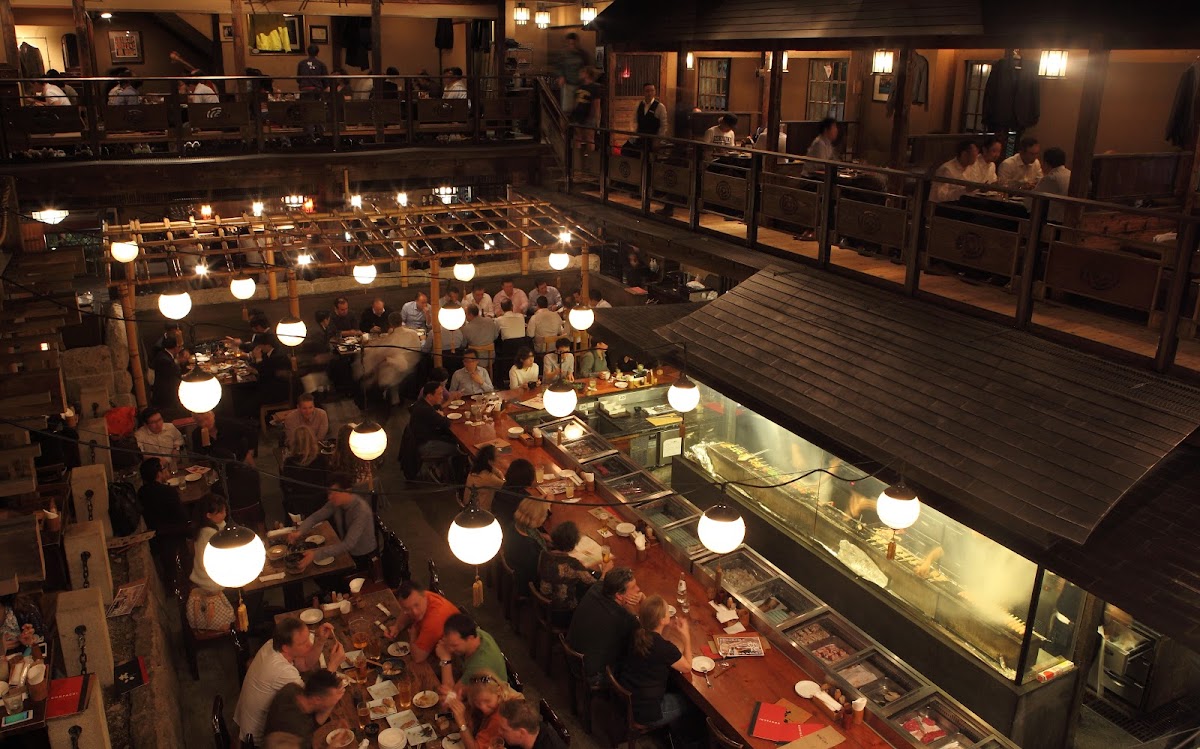
Gonpachi Nishi-Azabu is the izakaya whose soaring, wood-beamed double-height interior inspired the set design for the House of Blue Leaves — the climactic restaurant battle in Quentin Tarantino's Kill Bill (2003). The scene wasn't filmed here (it was a built set), but Tarantino's team visited Gonpachi, and the room's feudal-theater architecture — exposed timber framing, balcony seating overlooking a central floor, lantern light — is unmistakably the reference. It also hosted the 2002 'izakaya summit' dinner between then-President Bush and then-PM Koizumi, which sealed its status as the foreigner-facing izakaya of record.
Behind the cinematic room is a competent kitchen. Gonpachi runs a robata (charcoal) grill turning out skewers and grilled fish, an in-house soba operation, and a broad izakaya menu pitched at a sharing-plates-and-sake rhythm. It is not Tokyo's best izakaya on food alone — its fame outruns its kitchen — but the food is solidly good, and the experience being sold is the room plus the food, which together justify the visit.
For visitors, it's an honest recommendation with a clear frame: you go for the architecture and the Kill Bill association, and the food is good enough to make the evening worthwhile rather than a tourist trap. The 3:30am close, full English menu, and Nishi-Azabu/Roppongi location make it a viable late-night anchor on a night out in Tokyo's most international nightlife district.
How to Experience It
Find it at the Nishi-Azabu crossing, 1-13-11 Nishi-Azabu, about eight minutes from Roppongi Station. The building is distinctive — a tall traditional-style structure standing out among the crossing's modern frontages. Reservations are recommended, especially for dinner and for the balcony seating that gives the best view of the atrium.
Open 11:30 to 3:30am daily — one of the few architecturally notable restaurants in Tokyo you can take seriously at 1am. Dinner is the atmospheric time (lantern light, full room); late night it doubles as a Roppongi nightlife anchor. Lunch is quieter and a cheaper way to see the room.
Order izakaya-style: a sequence of grilled and small plates to share, plus sake or shochu, building over the evening rather than a single main. End with the house soba — the in-house noodle operation is a genuine strength and the canonical Gonpachi closer.
What to Order
From the robata: grilled skewers (chicken, seasonal vegetables), grilled fish of the day, and the tsukune (chicken meatball) are the reliable picks. Order these in rounds alongside drinks rather than all at once — the izakaya rhythm is incremental.
Finish with the hand-cut soba — it's the dish Gonpachi actually does best and the intended end to the meal. Pair the evening with sake (the list is broad and English-annotated) rather than beer to match the room's register.
Plan your visit
| Area | Roppongi |
|---|---|
| Category | Izakaya & Bars |
| Price range | ¥4000-9000 |
| Hours | 11:30-翌3:30 |
| Closed | なし(年中無休) |
| Access | 東京メトロ六本木駅から徒歩8分・西麻布交差点・西麻布1-13-11 |
| Reservations | Reservations recommended (especially dinner) |
| English menu | ✓ Available Yes — full English menu, internationally oriented |
| English support | Yes — staff used to foreign guests |
| Last verified | 2026-05-16 |
Nearby Experiences
You're at the Nishi-Azabu crossing between Roppongi and Hiroo — Ippudo Roppongi is about eight minutes east for a late-night tonkotsu chaser. Roppongi's museums (the Mori Art Museum at Roppongi Hills, the National Art Center, 21_21 Design Sight) are all within fifteen minutes for an earlier-in-the-day pairing.
Gonpachi works best as the architecture-and-atmosphere node of a Roppongi evening — book it for the room, eat well enough, then continue into the district's broader nightlife or wind down over its late soba.