
Ippudo Roppongi
The Tonkotsu Chain That Went Global, At Home
The Tokyo branch of the Hakata tonkotsu brand that exported Japanese ramen to New York, London, and Sydney. Refined pork-bone broth, late hours, English everything.
Last verified: 2026-05-16
Why Japanese People Love It
Ippudo, founded in Fukuoka in 1985, is the brand that did more than any other to globalize Japanese ramen. Its New York opening in 2008 was a cultural event; London, Sydney, Singapore, Paris, and dozens more followed. The style is Hakata tonkotsu — the milky, long-boiled pork-bone broth of southern Kyushu — but refined: lighter and cleaner than a street-stall Hakata bowl, engineered to scale internationally without losing its identity. The Roppongi branch is where you eat that famous bowl in its home country.
What Ippudo standardized was a more designed ramen experience: a calm, modern interior rather than a counter dive; consistent broth across hundreds of locations; thin Hakata noodles cooked to a specified firmness you can request; and a topping/condiment setup (spicy bean paste, garlic press, pickled ginger, sesame) that lets you tune the bowl. For Japanese diners it's a reliable, slightly upscale chain; for the world it became the introduction to what ramen could be.
For visitors in Tokyo, the case for eating at Ippudo specifically — rather than dismissing it as 'a chain you have at home' — is the comparison. Eating the Roppongi original next to the New York or London memory clarifies how much (or little) translated. It's also genuinely good, English-everything, open late, and three minutes from Roppongi Station — a low-friction quality bowl in a district where late-night options skew toward bars over food.
How to Experience It
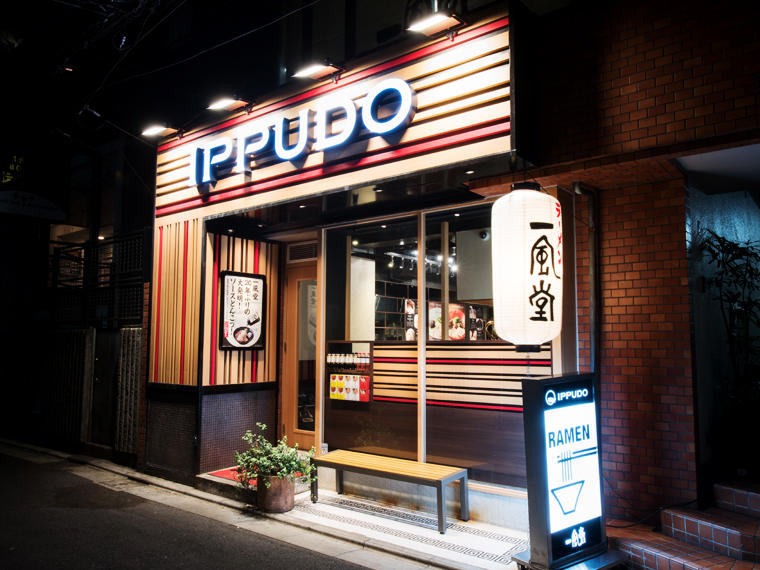
Find it at 4-9-11 Roppongi, three minutes from Roppongi Station. The interior is the modern Ippudo template — clean, designed, more restaurant than ramen counter. Walk-in only; turnover is steady, so waits at peak are usually short.
Open 11:00-23:00 (last order 22:30), no closing day. The late hours make it a strong dinner or post-museum/post-bar option in Roppongi, where good late food is scarcer than good late drinks. Lunch and the post-work window are the busier periods.
Order at the table or counter. The two signature bowls are Shiromaru (the classic, original tonkotsu) and Akamaru (the 'modern' version with miso-garlic oil). Specify noodle firmness if you have a preference (futsu = normal, katame = firmer). Use the table condiments to tune as you go; kaedama (extra noodles) is the Hakata-style finish.
What to Order
First visit: Shiromaru Motoaji — the original, classic tonkotsu, the bowl Ippudo built its reputation on. It's the clean reference version of Hakata pork-bone ramen. Order a kaedama (extra noodle portion) added to the remaining broth at the end if you're still hungry; that's the regional ritual.
Second bowl or return visit: Akamaru Shinaji — the same broth with a miso-garlic 'fragrant oil' and a richer profile, Ippudo's signature modernization. Tasting Shiromaru then Akamaru is the intended arc. The buns (pork or chicken hirata buns) are the canonical side.
Plan your visit
| Area | Roppongi |
|---|---|
| Category | Ramen |
| Price range | ¥1100-1900 |
| Hours | 11:00-23:00 (LO 22:30) |
| Closed | なし(年中無休) |
| Access | 東京メトロ六本木駅から徒歩3分・六本木4-9-11 |
| Reservations | Walk-in only |
| English menu | ✓ Available Yes — full English menu, international-standard service |
| English support | Yes — Ippudo is built for international guests |
| Last verified | 2026-05-16 |
Nearby Experiences
Gonpachi Nishi-Azabu (the Kill Bill izakaya) is about eight minutes west for a same-evening contrast — refined chain ramen versus theatrical izakaya architecture. Roppongi's art triangle (Mori Art Museum, National Art Center, 21_21 Design Sight) is within fifteen minutes for a daytime pairing.
For a tonkotsu comparison across the trip, Ippudo (refined, globalized Hakata) sits against Kyushu Jangara Harajuku (40-year neighborhood Hakata) — same regional style, opposite philosophies of how to serve it.