
Izu-ei Honten
Ueno’s 270-Year Unagi Institution
Their tare sauce hasn't been reset in nearly 300 years — built daily from grill drippings, aged a full month, sharp and savory where others turn sweet.
Last verified: 2026-05-09
Why Japanese People Love It
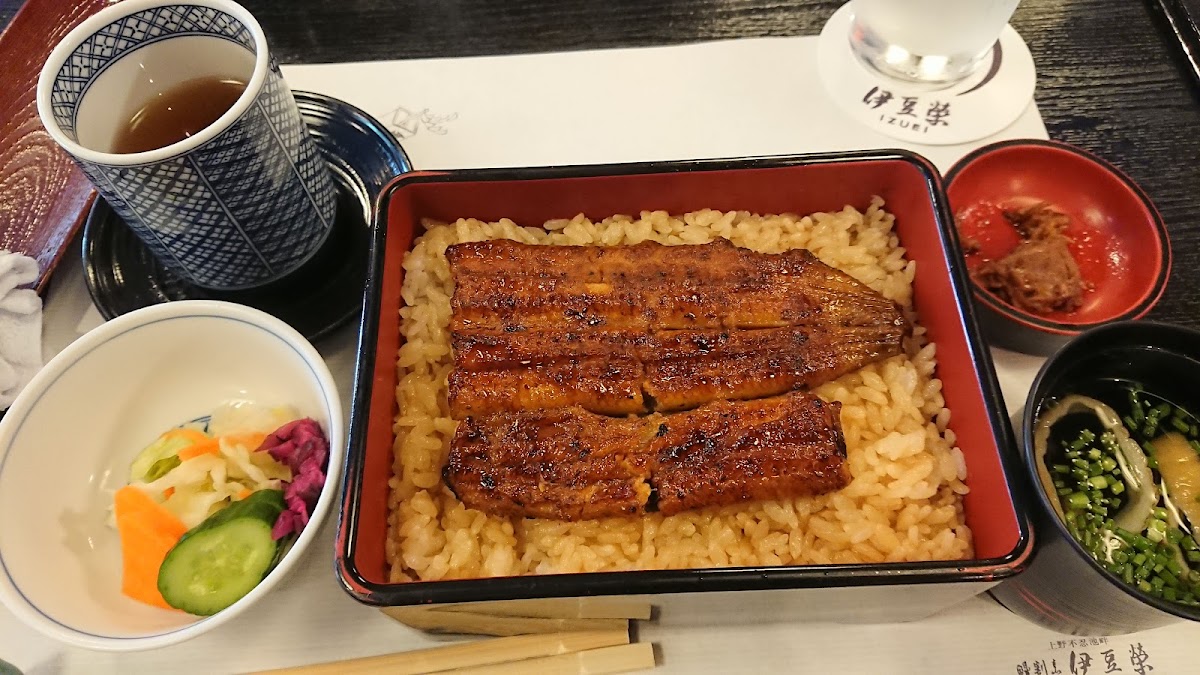
What keeps Japanese people coming back to Izu-ei across generations isn't nostalgia alone — it's the tare. That lacquer-dark sauce has been building in flavor for nearly three centuries, fed daily with drippings from the grill, never reset from scratch. No sugar ever goes in, only soy sauce and mirin, aged for two weeks to a full month. The result is a sauce that tastes genuinely complex — slightly sharp, deeply savory, without the cloying sweetness that's crept into most unagi restaurants today. Regulars notice the difference immediately.
The preparation itself follows the Edomae sequence without shortcuts: each eel is split down the back, skewered, grilled white, steamed until the flesh opens and softens, then finished over the charcoal with tare. That steaming step is what separates Tokyo-style unagi from the firmer, char-forward Kansai version — the texture here is almost cloud-like, yielding before you even apply pressure.
For locals, there's also the setting. The tatami rooms face Shinobazu Pond and the Bentendo hall beyond it — a view that hasn't changed much since Mori Ogai used to walk here from his study. Eating unagi in that room, with the pond light shifting through the seasons, feels less like a restaurant visit and more like participating in something Tokyo has been quietly doing for 290 years.
How to Experience It
Reservations are recommended, particularly if you want a tatami seat overlooking the pond — that view changes everything about the meal, so it's worth the extra step. Call ahead to secure your spot; English support from staff is limited, so if you're not confident in Japanese, consider having your hotel concierge make the booking on your behalf.
Walk-ins are possible, but weekends and public holidays draw steady crowds. A weekday lunch, arriving right when doors open, is your smoothest entry point.
Ordering is done à la carte at the table. Take a moment to look around at what other diners are eating before you decide — the staff will appreciate that you're not rushing, and you'll notice what looks best that day. A printed menu with some visual aids makes pointing your way through manageable even without Japanese.
The one etiquette note worth keeping front of mind: once you're seated in a tatami room, shoes come off before stepping onto the mat. Do this without being asked, and you'll immediately feel the atmosphere shift — quieter, slower, more yours.
What to Order
Unaju (うな重) — Lacquered eel glazed in Izu-ei's house tare, served over rice in a tiered lacquer box. The eel itself is steamed before grilling, giving it a pillowy interior with lightly charred edges — a distinctly Tokyo-style preparation you won't get in Osaka. Ask for "jō" (上) grade if you want a thicker, meatier cut.
Shirayaki (白焼き) — Eel grilled without any sauce, served with wasabi and soy on the side. This is the purest way to taste the quality of the eel itself — delicate, faintly smoky, with a clean richness that tare would otherwise mask. Order it as a starter before your unaju to properly compare.
Kimoyaki (肝焼き) — Skewered eel liver, grilled until just firm with a slight bitterness that cuts through the richness of everything else on the table. It's a small order but a telling one — regulars almost always add it.
Plan your visit
| Area | Ueno |
|---|---|
| Category | Traditional Specialties |
| Price range | ¥3500-12000 |
| Hours | 11:00-21:30 (LO 20:30) |
| Closed | なし |
| Access | JR上野駅不忍池口から徒歩5分・京成上野駅から徒歩3分 |
| Reservations | Reservations recommended (especially for tatami seats with pond view) |
| English menu | ✓ Available Yes |
| English support | Limited English staff |
| Last verified | 2026-05-09 |
Nearby Experiences
Before your reservation at Izu-ei, spend an hour drifting through Ueno Park's Shinobazu Pond — the lotus beds and wooden boardwalk put you in exactly the right unhurried mood for a long eel lunch. Afterward, walk five minutes down Nakamise-dori toward Yanaka for coffee at one of the old shotengai's small roasters while the unaju settles. Both experiences are bookable through ONDO Tokyo — start with the Yanaka neighborhood walk.