
Maisen Aoyama
Tonkatsu in a 1930s Aoyama Bathhouse
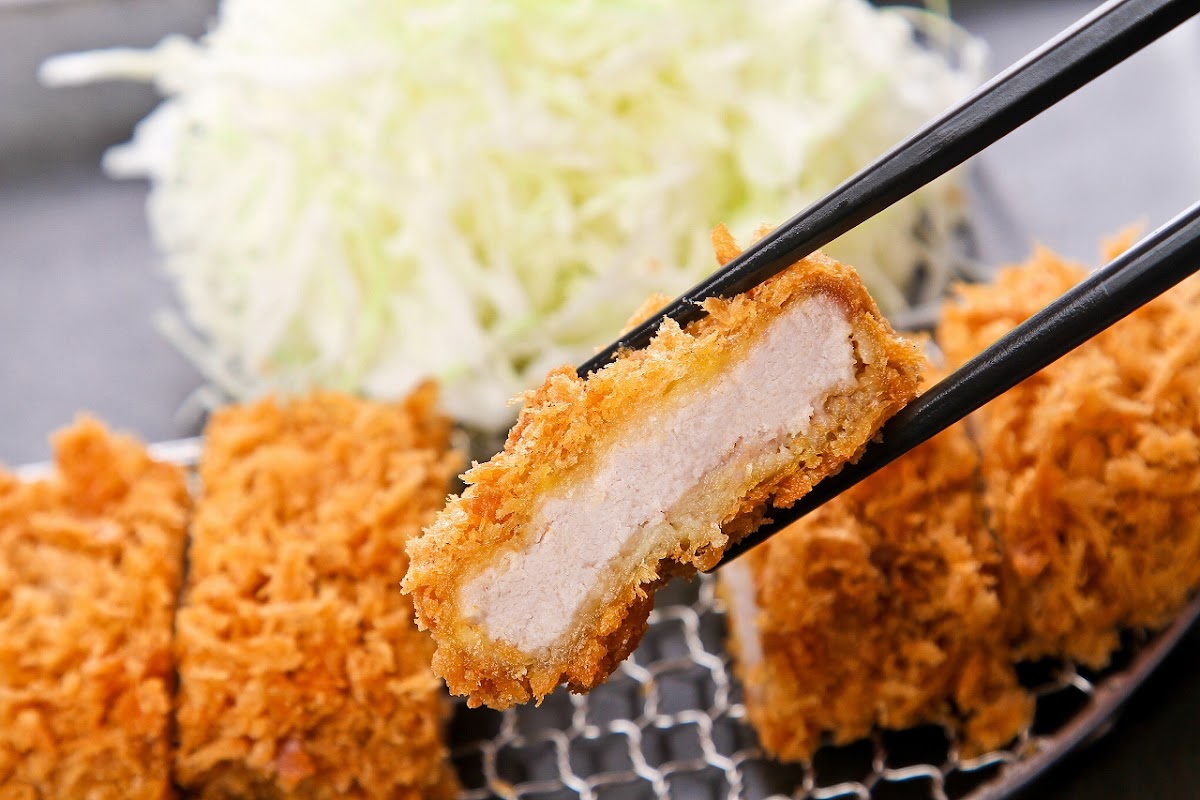
Maisen's Agu pork — an Okinawan heritage breed with fat so evenly marbled it stays juicy inside while the fine-milled breading crisps perfectly outside.
Last verified: April 2026
Why Japanese People Love It
Maisen has been frying tonkatsu since 1965, but what keeps Japanese people coming back generation after generation isn't nostalgia alone — it's the pork. The Agu pork used here is a Okinawan heritage breed with fat distributed so evenly through the meat that each bite stays juicy even as the breading stays crisp. The custom-milled breadcrumbs are finer than what you'll find elsewhere, and they absorb just enough oil during frying to create a coating that gets sweeter, not heavier, the more you chew. That phrase — kame ba kamu hodo amami ga aru, "the more you chew, the sweeter it gets" — is something regulars will actually say out loud at the table.
The building itself matters to Tokyoites in a way that's hard to explain to outsiders. It's a converted sentō — a neighborhood public bathhouse — and the high ceilings, tiled walls, and wooden beams are all still intact. Eating here feels like stepping into a piece of pre-bubble Tokyo that somehow survived.
The katsu sando sold at the takeout counter has become a standard gift item for people visiting friends or colleagues in this part of the city. You'll regularly see office workers in suits carrying the flat white boxes under their arms like a badge of good taste. That kind of quiet social role is something a chain can't manufacture.
How to Experience It
Maisen works best as a walk-in for most visitors. Weekend and holiday reservations are limited to banquet-course bookings, so for a standard meal the better tactic is simply to arrive a little before the main lunch rush. Aim for an 11:30am arrival if you're walking in on a Saturday or Sunday. Weekday lunches are noticeably calmer.
The converted bathhouse layout includes a mix of smaller solo-friendly seats and larger tables, so even a quick lunch on your own doesn't feel out of place. The menu has English, though it's a simplified version, so if you want to go beyond the standard rosu (fatty) or hire (lean) katsu sets, pointing works fine and the staff are used to it.
One thing worth knowing before you sit down: the cabbage is free-flowing and meant to be eaten between bites of katsu, not as an afterthought. The dipping sauces — Worcestershire-style and mustard — are on the table; use both, try them separately before mixing.
What to Order
Hire Katsu Teishoku (ヒレかつ定食) — Tenderloin cutlet, miso soup, rice, and pickles. The fillet is lean and impossibly tender, with a fine, golden crust that shatters cleanly rather than crumbling. Maisen's proprietary Worcestershire-style sauce cuts through the richness just enough — pour it sparingly the first time.
Rosu Katsu Teishoku (ロースかつ定食) — Loin cutlet set, with a thin ribbon of fat that melts into the meat as you eat. This is the version regulars order: more flavor and juiciness than the fillet, and the fat cap is never waxy or thick. Ask for extra shredded cabbage — it's free and worth it.
Katsu Sando (かつサンド) — Thick-cut pork between pillowy white milk bread, pre-sliced into neat rectangles. These sell out by early afternoon on weekends, so order them before noon if you're visiting then.
Plan your visit
| Area | Shibuya |
|---|---|
| Category | Tonkatsu |
| Price range | ¥1800-3500 |
| Hours | 11:00-22:00 (L.O.21:00) |
| Closed | No regular closing day |
| Access | 3 min walk from Omotesando Station A2 Exit |
| Reservations | Walk-ins welcome. Weekend and holiday reservations are only for banquet courses. |
| English menu | ✓ Available Yes |
| English support | Limited English menu |
| Last verified | April 2026 |
Nearby Experiences
Before heading to Maisen, spend an hour drifting through the backstreets of Ura-Harajuku — the quiet lanes between Takeshita-dori and Omotesando Hills where independent boutiques replace the chain stores. Afterwards, walk ten minutes south to Aoyama Cemetery, especially lovely in the late afternoon when the light filters through the zelkova trees. Both pair well with a slow lunch pace. If you want to build a full day around this neighbourhood, browse our Omotesando walking experiences below.