
Menya Musashi Shinjuku
Double-Broth Ramen with a Samurai Theme
The 1996 flagship that helped define Tokyo's modern ramen era. A pork-and-seafood double soup, fist-sized chashu, and a kitchen run like a dojo.
Last verified: 2026-05-16
Why Japanese People Love It
Menya Musashi opened its Shinjuku flagship in 1996, in the wave of ambitious independent ramen shops that reframed the dish from cheap working lunch to chef-driven craft. The defining technique is a 'double soup' — an animal broth (chicken and pork bones) and a seafood broth (dried bonito and sardine) brewed separately and combined to order, producing a soup with both deep richness and a clean dashi top-note. It was an influential idea; the double-broth method is now standard across a generation of Tokyo ramen shops that Musashi helped train.
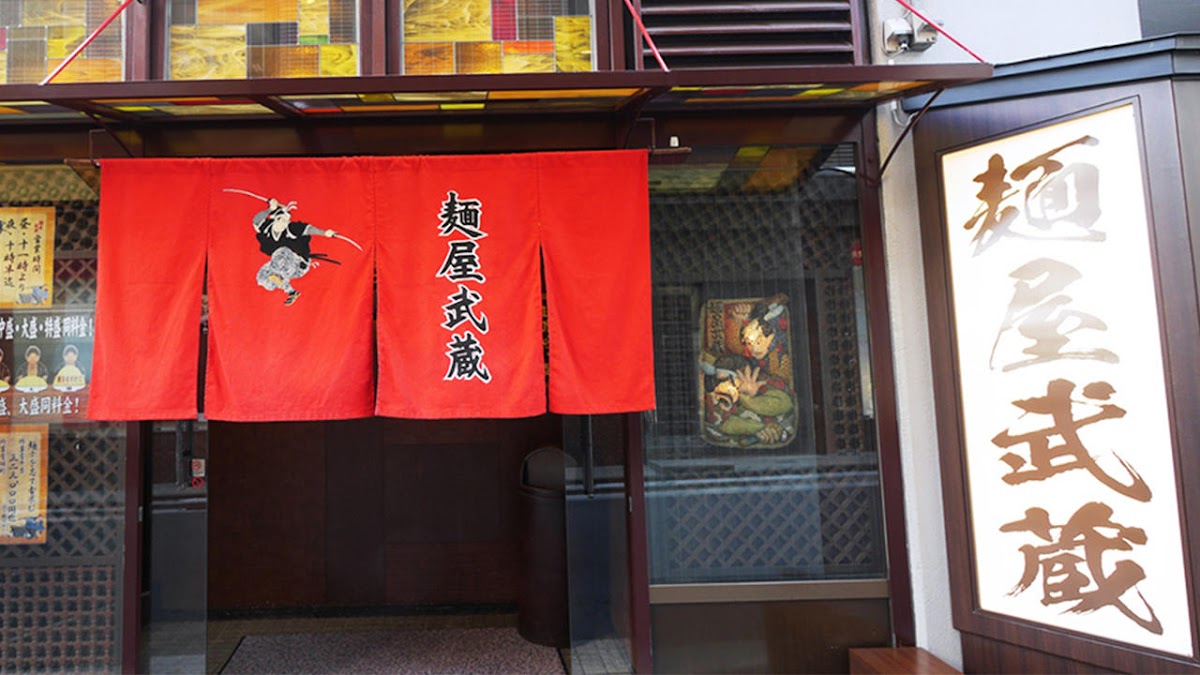
The shop's identity is built around a samurai theme (the name references the swordsman Miyamoto Musashi), and the kitchen runs with a deliberate dojo-like discipline — calls and responses across the counter, a fixed sequence, a fist-sized slab of chashu (braised pork) that became a signature flex. For Japanese ramen eaters, Musashi is part of the canon: not the trendiest shop anymore, but one of the foundational ones, the way certain jazz records are foundational regardless of fashion.
For foreign visitors, the Shinjuku honten is one of the most accessible 'serious ramen' experiences in central Tokyo — four minutes from Shinjuku Station, ticket-machine ordering (no language needed), open 11 to 10 daily, and a bowl distinctive enough to anchor a ramen comparison against the lighter AFURI yuzu-shio style or the heavier Hakata tonkotsu shops.
How to Experience It
Find it at 7-2-6 Nishi-Shinjuku, ground floor of the K-1 Building, four minutes from JR Shinjuku's west exit (or three minutes from Seibu-Shinjuku Station). The shop is small — about 19 counter seats — so a queue is normal at meal times; it moves at ramen pace, usually 15-25 minutes.
Buy a ticket at the vending machine by the entrance before queuing — choose ramen or tsukemen and any toppings; the machine has photos and some English. Hand the ticket to the counter staff when seated. The whole transaction is designed to need almost no spoken language.
Off-peak (14:00-17:00) you usually walk straight in. Lunch (12:00-13:30) and the post-work window (19:00-20:30) are the queues. Counter only, fast turnover — this is a focused 20-30 minute meal, not a lingering one.
What to Order
The standard ramen (¥1,100-1,300) is the order for a first visit — it's the clearest expression of the double-broth method, topped with the signature large chashu, menma (bamboo), and green onion. Add an ajitama (seasoned soft egg) if you want the full standard configuration.
The tsukemen (dipping ramen, ¥1,300-1,500) is the alternative and arguably the more impressive showcase — thicker noodles served cold alongside a concentrated dipping broth that carries the double-soup intensity better than the thinner ramen version. If you've had ramen elsewhere on the trip but not tsukemen, order it here.
Plan your visit
| Area | Shinjuku |
|---|---|
| Category | Ramen |
| Price range | ¥1100-1800 |
| Hours | 11:00-22:00 |
| Closed | なし(年中無休) |
| Access | JR新宿駅西口から徒歩4分・西武新宿駅から徒歩3分・西新宿7-2-6 K-1ビル1階 |
| Reservations | Walk-in only — ticket vending machine at the entrance |
| English menu | ⚠ Limited Limited — ticket machine has some English; menu is photo-based |
| English support | Minimal interaction needed; ticket machine + counter |
| Last verified | 2026-05-16 |
Nearby Experiences
You're four minutes from Tsunahachi Shinjuku Sohonten for a tempura contrast and seven minutes from Omoide Yokocho (Memory Lane) for postwar-alley drinking. The Tokyo Metropolitan Government Building observation decks (free, 45th floor) are ten minutes west for a skyline view after the bowl.
For a Shinjuku ramen flight, Musashi (double-broth) pairs naturally with the nearby Fuunji (fish-powder tsukemen) and a Kabukicho tonkotsu shop — three styles within a fifteen-minute walking radius that together map most of Tokyo's ramen spectrum.