
Rainbow Pancake
Hawaiian Stacks on Omotesando’s Backstreets
Tokyo's pancake-boom originator. Macadamia nut sauce on dense, slightly chewy Hawaiian-style stacks. Hidden between Omotesando and Harajuku.
Last verified: 2026-05-16
Why Japanese People Love It
Before Tokyo had Eggs 'n Things, before bills, before Sarabeth's, there was Rainbow Pancake. When it opened in 2011 on a quiet Omotesando side street, the only people queuing were a handful of locals who'd traveled in Hawaii and recognized the style — dense, slightly chewy, Southern-influenced batter as opposed to the fluffy Japanese soufflé version. Within two years the line was around the block and Tokyo's pancake decade had officially started.
The signature is the macadamia nut sauce — a recipe traced back to Boots & Kimo's, a legendary cafe on Oahu's windward side. It's a thick, creamy, distinctly non-Japanese sauce that pools over the stacks and sinks slowly into the batter. Japanese visitors who know the original always order it first, partly out of curiosity, partly out of respect for what this place did for the pancake economy.
Today Rainbow Pancake sits in an interesting position: it isn't trying to be a viral sensation anymore. The shop has weathered Tokyo's full pancake hype cycle and emerged as something more reliable than trendy. Regulars come for the Tuesday-Wednesday closures (built in as legitimate two-day weekends, unusual in Japanese hospitality) and the unhurried second-floor seats overlooking the lane.
How to Experience It
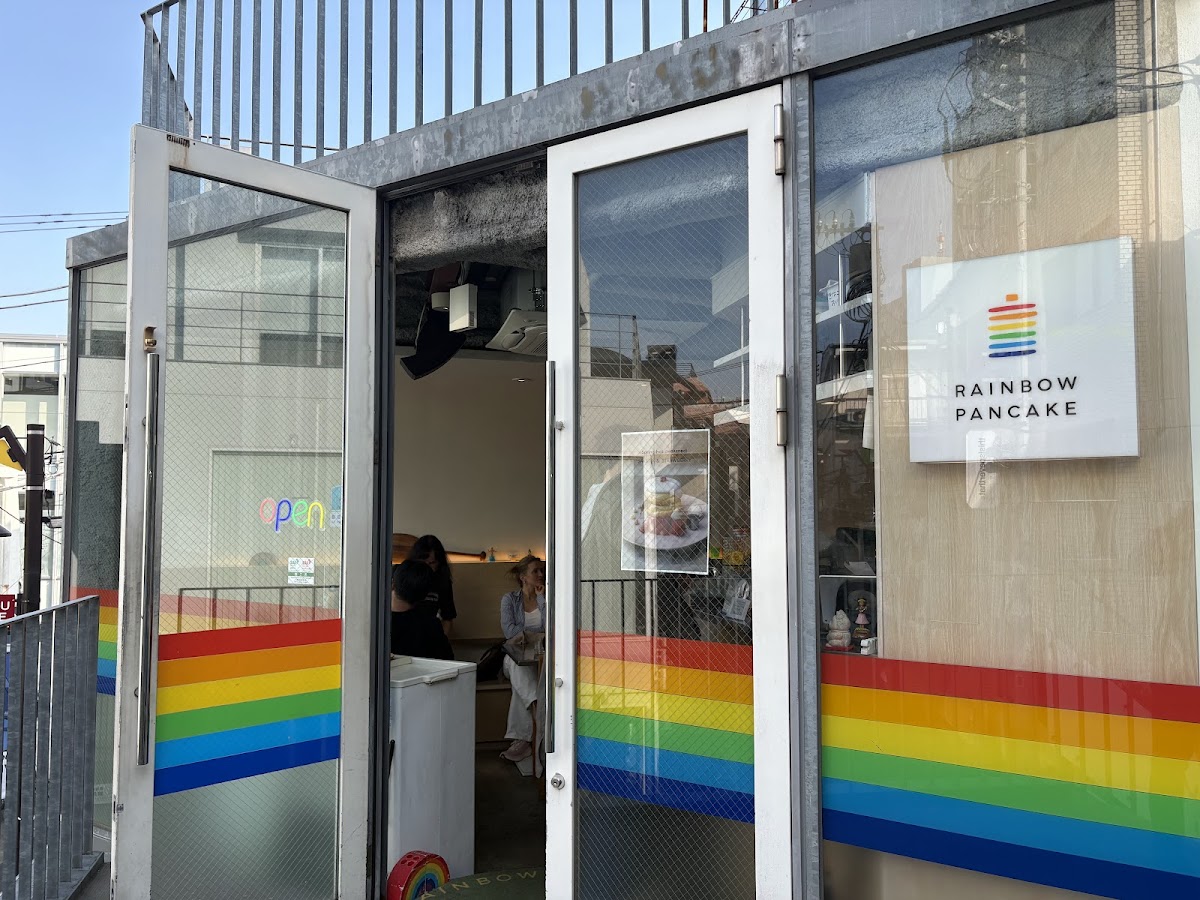
Approach from Omotesando Station's A2 exit — the walk is five minutes through the residential blocks behind the main avenue. The signage is small; look for a narrow staircase between a flower shop and a vintage clothing store. The second floor is walk-in with table seats; the first floor is a separate reservation-only private dining room with its own door.
Weekend mornings are the queue; weekday afternoons are calm. If you're in Tokyo for a short trip and want to combine Harajuku-Omotesando shopping with pancakes, a Thursday or Friday between 2pm and 4pm is the sweet spot. You'll wait twenty minutes maximum and you'll have natural light from the second-floor windows.
If you're coming as a couple or in a group of four, the first-floor private room (reservation only via the official website, in Japanese) gives you a complete dining-room style experience — full table service, no shared seating, longer leisure window from 9:30 to 21:00.
What to Order
The macadamia nut sauce pancake is the order. It's the one that made the shop's reputation and it remains the highest-volume seller. The thick stack absorbs the sauce in layers, and there's a small dish of additional sauce on the side so you can adjust intensity. Pair with Hawaiian Kona coffee.
Seasonal variations rotate every month — strawberry in spring, mango in summer, fig in autumn, chocolate-banana through winter — but the signature stays year-round. If you're undecided, the half-and-half plate splits a macadamia stack with a seasonal stack for direct comparison.
Plan your visit
| Area | Harajuku |
|---|---|
| Category | Café & Coffee |
| Price range | ¥1200-2500 |
| Hours | 2F walk-in 10:00-18:00 / 1F private room 9:30-21:00 (reservation only) |
| Closed | 火曜・水曜 |
| Access | 東京メトロ表参道駅A2出口から徒歩5分・JR原宿駅竹下口から徒歩9分 |
| Reservations | 2F walk-in available / 1F private rooms reservation-only |
| English menu | ✓ Available Yes — full English menu |
| English support | Limited English staff |
| Last verified | 2026-05-16 |
Nearby Experiences
You're on the quiet side of Harajuku-Omotesando. Walk five minutes east and you hit Omotesando Hills; ten minutes west and you're at The Roastery by Nozy Coffee for a single-origin espresso chaser. Cat Street's vintage shops run parallel one block north — the loop is a complete afternoon if you start with pancakes and end with espresso.
For something local, the surrounding streets between Omotesando and Harajuku stations are filled with tiny independent boutiques and one-room cafes that most tourists miss. Walk randomly for fifteen minutes after eating and you'll find the side of Harajuku that residents actually use.