
@home cafe
Akihabara’s Defining Maid Cafe
The big, mainstream maid cafe that, more than any other, made Akihabara's 'moe' service culture famous. Go once, knowingly: you're buying a performance and a vocabulary lesson, not a meal.
Last verified: 2026-06-13
Why Japanese People Love It
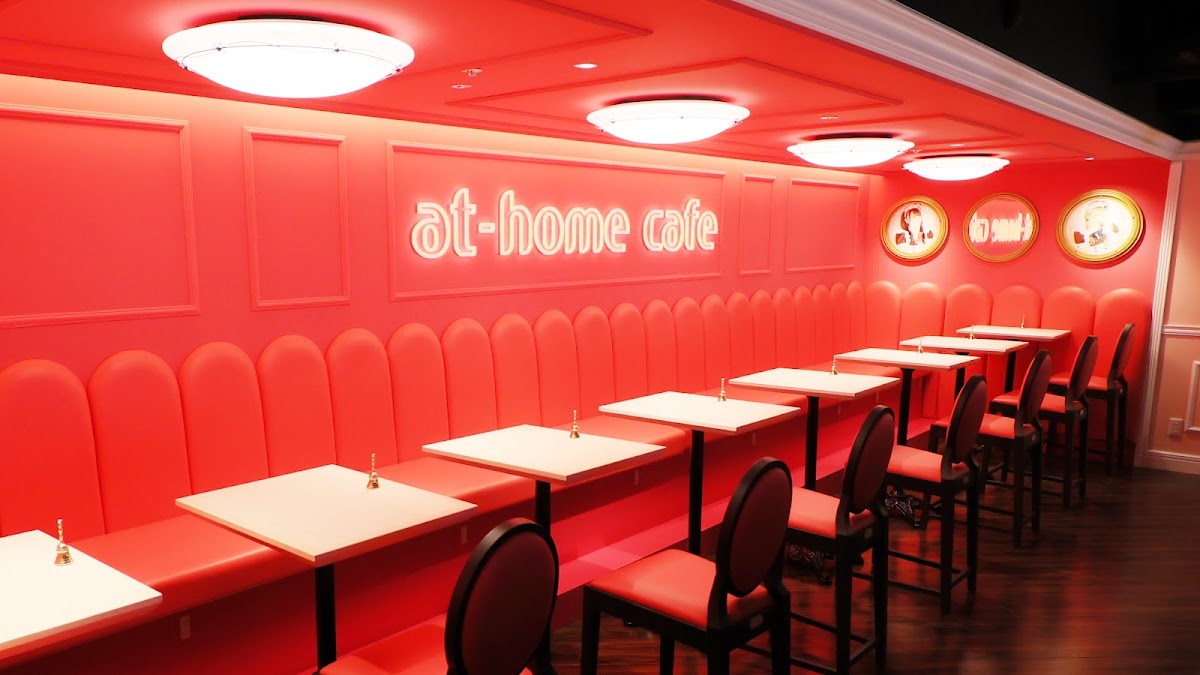
The maid cafe is Akihabara's most exported piece of culture, and @home cafe — open since 2005 and now spread across several floors and buildings in the district — is the one that defined the mainstream version of it. The concept: staff in maid costume treat each guest as a returning 'master' or 'princess,' with a scripted warmth, cute rituals, and a deliberately theatrical service style. It grew out of Akihabara's otaku (geek) culture in the early 2000s and became the district's signature export.
It is essential to understand what you are buying. This is not a restaurant where the food is the point; it's a performance and an interaction, priced accordingly (typically an hourly table charge plus per-item prices, and extra for photo or 'live' interactions). The omurice (omelette over ketchup rice) that the maid decorates with a drawn message and 'casts a spell' over — the famous 'moe moe kyun' chant to make it 'delicious' — is a participatory bit, not a culinary one. Judging it as cuisine misses the genre entirely.
For curious visitors, @home cafe is the safe, legible, tourist-accustomed entry to a genuinely Akihabara phenomenon — bright, busy, English-friendly, and clearly bounded by posted rules (no touching, photos only when paid for and permitted). Done once and knowingly, it's a real cultural experience and an easy first-person lesson in 'moe' service culture and a chunk of pop-culture Japanese. Done expecting dinner, it disappoints. We file it under experience, not food, on purpose.
How to Experience It
@home cafe runs several Akihabara locations; the best-known is inside the AKIBA Cultures Zone building at 1-7-6 Soto-Kanda, about four minutes from the Electric Town exit. Maids on the street hand out flyers; the cafes are on upper floors, so look up. Hours are long — roughly 11:00-22:00 weekdays, from 10:00 on weekends.
Expect a charge structure rather than a simple menu: an hourly table/entry charge per guest, plus food and drink, plus optional paid extras (a photo with a maid, a 'live' song-and-dance). The English menu lays this out; ask about the table charge up front so the bill isn't a surprise. Walk-in is normal; weekends and evenings are busiest.
Follow the posted rules, which are part of the form: no photography except the paid, permitted kind; no touching or asking for personal contact; play along with the rituals (the call-and-response, the 'moe moe kyun' over your food) rather than watching skeptically — the participation is the experience. It's a 45-90 minute stop, not a long sit.
What to Order
Order the omurice with a drawn-on message — it's the iconic, photographed dish and the one built for the 'spell-casting' ritual, so it delivers the full performance. A parfait or one of the brightly colored 'character' drinks is the other canonical choice; the menu is engineered for cuteness and photos more than flavor.
Budget for one paid extra if you want the complete experience — a photo (cheki) with a maid or a short live performance is what most first-timers remember. Keep food expectations modest: you came for the interaction and the spectacle, and ordering simply (one dish, one drink, one extra) is the efficient way to do the genre once.
Plan your visit
| Area | Akihabara |
|---|---|
| Category | Cultural Experiences |
| Price range | ¥1500-4000 |
| Hours | 平日 11:00-22:00 / 土日祝 10:00-22:00 |
| Closed | なし |
| Access | JR秋葉原駅電気街口から徒歩4分・外神田1-7-6 AKIBAカルチャーズZONE内 |
| Reservations | Walk-in — table charge per hour applies; multiple Akihabara floors |
| English menu | ✓ Available Yes — English menu and English-capable maids; tourist-accustomed |
| English support | Yes — used to international first-timers |
| Last verified | 2026-06-13 |
Nearby Experiences
For the heritage counterpoint, Cure Maid Cafe — the calm, classical 'birthplace of maid cafes' from 2001 — is a short walk and shows the genre's quieter, tea-salon origins against @home cafe's high-energy mainstream version. Doing both is the honest way to understand maid-cafe culture.
When you want actual food, old Kanda is minutes away: Tonkatsu Marugo for fried pork, Kikanbo for numbing-spicy ramen, and the Milk Stand on the Sobu Line platform for a two-minute Showa palate-reset. The pillar logic of Akihabara is exactly this — the spectacle up top, the eating underneath.