
Kanda Matsuya
Hand-Cut Soba in a 1925 Wooden Hall
An 1884 Kanda soba house in a Taisho-era wooden building, beloved by the writer Shotaro Ikenami. Hand-cut buckwheat noodles, communal tables, closed Sundays.
Last verified: 2026-05-16
Why Japanese People Love It
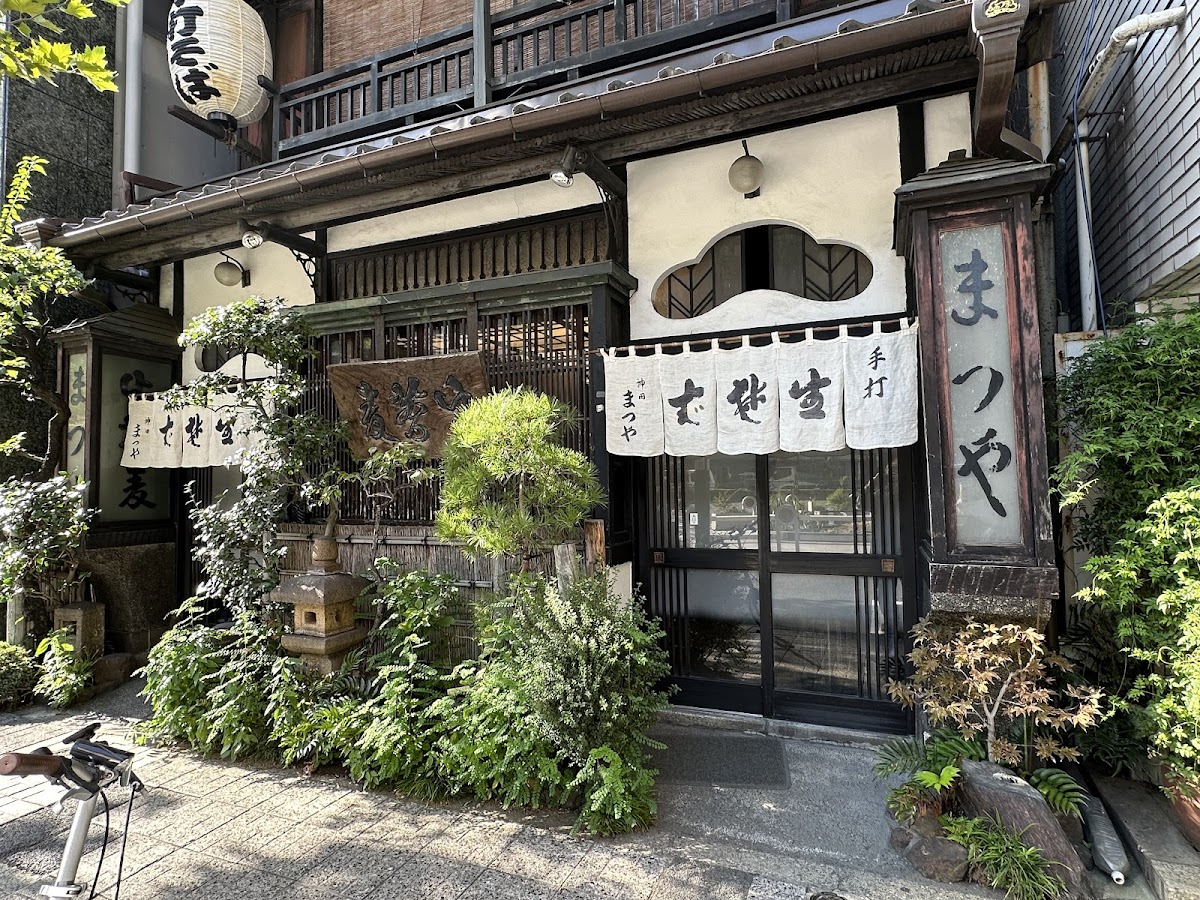
Kanda Matsuya opened in 1884 (Meiji 17) and still serves hand-cut soba in a wooden building that dates to the Taisho era — a survivor of both the 1923 earthquake's aftermath and the wartime fires that erased most of old Tokyo's wooden cityscape. The room is the experience as much as the noodles: low tables, shared seating, the clatter of a working soba hall that has done the same thing in the same place for 140 years. The writer Shotaro Ikenami, one of Japan's most beloved historical novelists, was a devoted regular, which fixed it permanently in the city's literary-culinary memory.
The soba itself is the Edo-Tokyo tradition done strictly. The buckwheat is milled and the noodles are cut by hand daily; they're served either cold on a bamboo screen (seiro) with a sharp dipping tsuyu, or hot in broth. The proper Tokyo way to eat cold soba — dip only the bottom third in the tsuyu, eat with audible speed, finish by drinking the sobayu (the cloudy water the noodles were boiled in) mixed into the leftover dipping sauce — is the entire ritual, and Matsuya is one of the best places to learn it because the room expects it.
For visitors, it's a genuine, non-touristic encounter with one of Tokyo's oldest continuously operating restaurants. The shared tables force a kind of low-key communality; the menu is short and traditional; the prices are still reasonable for what it is. It's the antithesis of a destination restaurant, which is precisely why eating soba here lands differently than at a polished modern shop.
How to Experience It
Find it at 1-13 Kanda-Sudacho, two minutes from Awajicho or Ogawamachi Metro stations (six from JR Kanda). The Taisho-era wooden facade is distinctive on an otherwise modern Kanda block. Walk-in only; at busy times you'll be seated at a shared table with strangers, which is normal and expected.
Hours are weekday 11:00-20:00, Saturday/holiday 11:00-19:00, closed Sundays. Lunch is the busiest; mid-afternoon (14:00-16:00) is the calm window and the best time to actually take in the room. Cash is safest; the operation is old-fashioned.
Eat soba correctly: order seiro (cold) for the purest expression. Dip only the bottom third of the noodles into the tsuyu (over-dipping drowns the buckwheat). Eat briskly. At the end, ask for sobayu — the milky noodle-boiling water — and pour it into your remaining tsuyu to drink as a finishing broth. The staff expects this; it completes the meal.
What to Order
Seiro (cold hand-cut soba on a bamboo screen, ~¥900) is the order that shows the noodles most clearly — start here on a first visit. For something heartier, the tenseiro (cold soba with tempura on the side) or a hot kake/tanuki bowl in cold weather. The kamo-nanban (duck and leek hot soba) is the richer classic.
A small bottle of sake or a beer while you wait is the canonical accompaniment in an old soba hall — historically these were daytime drinking spots as much as noodle restaurants. Finish with the sobayu ritual regardless of which dish you ordered; it's the intended close.
Plan your visit
| Area | Kanda |
|---|---|
| Category | Traditional Specialties |
| Price range | ¥900-2500 |
| Hours | 平日 11:00-20:00 (LO 19:45) / 土・祝 11:00-19:00 (LO 18:45) |
| Closed | 日曜 |
| Access | 東京メトロ淡路町駅・小川町駅から徒歩2分・JR神田駅から徒歩6分・神田須田町1-13 |
| Reservations | Walk-in only — communal seating, expect to share a table |
| English menu | ⚠ Limited Limited — English menu available; staff help |
| English support | Limited English; the menu is short and classic |
| Last verified | 2026-05-16 |
Nearby Experiences
Kanda is old-Tokyo merchant territory — the Kanda Myojin shrine is ten minutes north, and Jimbocho, the world's largest used-bookshop district, is a fifteen-minute walk west. Akihabara's electronics-and-anime sprawl is ten minutes northeast for a complete tonal whiplash after the soba hall's quiet.
For a Tokyo soba comparison, Kanda Matsuya (1884, Edo-Tokyo strict tradition) contrasts with the lighter modern soba shops elsewhere — but on its own it's best paired with the Jimbocho bookshops or Kanda Myojin for a half-day in the part of central Tokyo that still feels pre-war.