
Kanda Yabu Soba
Edo’s Most Famous Soba House, Since 1880
The flagship of the 'Yabu' school of Edo soba, founded 1880. Firm, faintly green buckwheat noodles, a near-black dipping sauce, and a singing order-call that is itself intangible cultural heritage.
Last verified: 2026-06-13
Why Japanese People Love It
Kanda Yabu Soba, founded in 1880 (Meiji 13), is the head of the 'Yabu' lineage — one of the three great schools of Edo-style soba, alongside Sarashina and Sunaba. Edo (old Tokyo) was a soba town the way Osaka is an udon town, and the Yabu style codified what Tokyoites still mean by 'real' soba: firm, thin-cut buckwheat noodles with a faint green tint, served cold on a slatted box (seiro), dipped briefly into a small cup of dark, sharply-flavored tsuyu. It is restraint as a philosophy — the opposite of a generous bowl.
The tsuyu is the school's signature and the thing visitors most often get 'wrong' on purpose. It is near-black, intensely savory, and deliberately strong: the Edo way is to dip only the bottom third of the noodles, never to drown them, so the buckwheat's own aroma stays in front. At the end the staff bring sobayu — the cloudy, starchy water the soba was boiled in — to pour into the leftover tsuyu and drink as a warm finishing broth. That ritual is the correct, and most satisfying, way to close the meal.
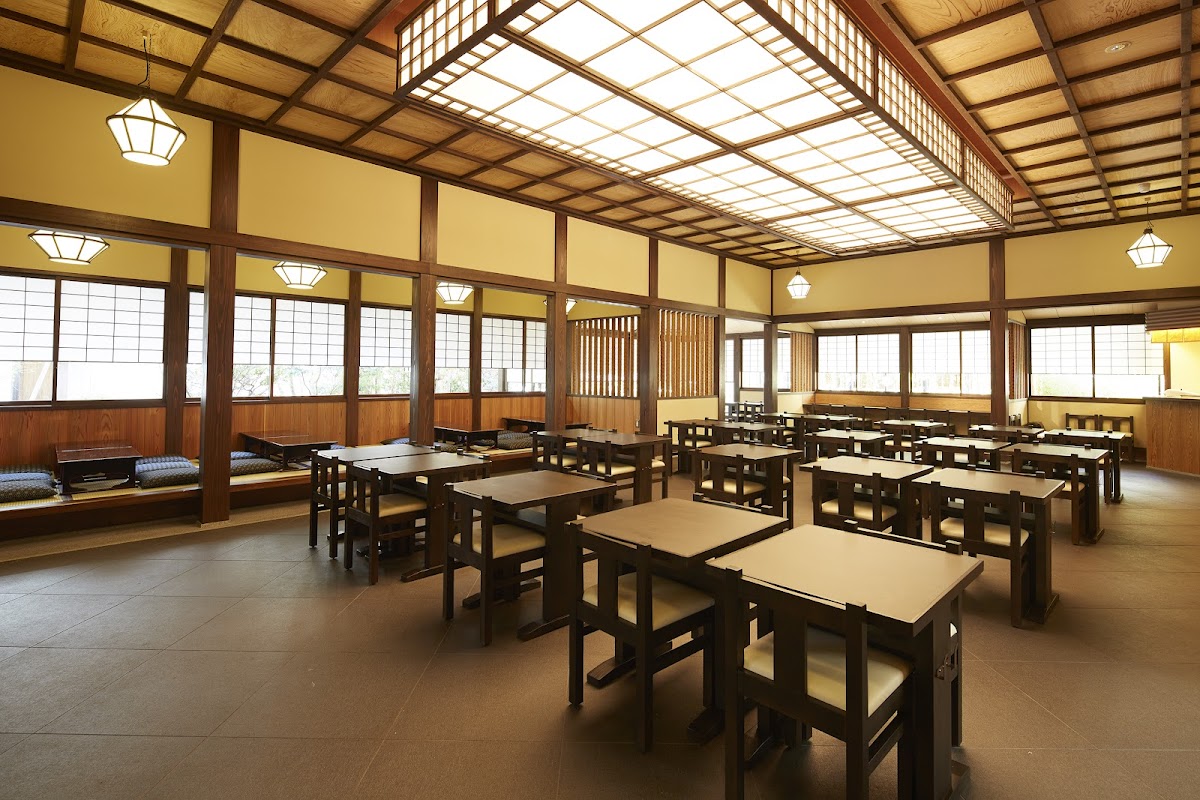
Part of the experience is purely Yabu's own: the order-call. Staff sing each table's order back to the kitchen in a long, melodic, almost sung Edo cadence that carries across the room — a 200-year-old form of service theater that has effectively become intangible heritage of the shop. The 2013 fire that gutted the historic building made national news precisely because Tokyo treats this place as a cultural property, not just a restaurant; it was faithfully rebuilt and reopened in 2014.
How to Experience It
Find it at 2-10 Kanda-Awajicho, three minutes from Awajimachi or Ogawamachi subway stations and about seven from JR Kanda — a quiet block on the western edge of the Akihabara-Kanda district. The low wooden building set behind a small garden is unmistakable; there is usually a short, fast-moving queue at lunch.
Open 11:30-20:00, closed Wednesdays. Lunch is busiest; mid-afternoon is the calmest time to sit and actually hear the order-calls and the room. There is an English menu, and the format needs little language — you point, you receive a box of soba and a cup of tsuyu, you dip and eat.
Order seiro soba (the cold, boxed default) to taste the style as intended. Dip only the lower third of the noodles into the strong tsuyu; eat briskly while the soba is firm. When the soba is gone, ask for sobayu and pour it into the remaining tsuyu to drink. Warm soba dishes (kake, tempura) exist, but the cold seiro is the dish that defines the house.
What to Order
Seiro soba is the canonical order — plain cold soba that shows the Yabu noodle and the near-black tsuyu with nothing in the way. For a little more, the ten-seiro (with tempura on the side, kept separate so the soba stays cold and clean) is the classic upgrade. The faint green of the noodles is intentional — Yabu blends in a touch of the buckwheat plant for color and aroma.
Don't skip the sobayu finish; the meal is built to end with it. A small flask of soba-shochu or a cold beer is the traditional accompaniment if you're making it a sit-down rather than a quick lunch. Avoid over-dipping — the tsuyu is strong by design, and drowning the noodles is exactly the rookie move the Edo style is built against.
Plan your visit
| Area | Kanda |
|---|---|
| Category | Traditional Specialties |
| Price range | ¥900-2500 |
| Hours | 11:30-20:00 (LO 20:00) |
| Closed | 水曜 |
| Access | JR神田駅から徒歩7分・東京メトロ淡路町/小川町駅から徒歩3分・神田淡路町2-10 |
| Reservations | Walk-in only — expect a short queue at peak |
| English menu | ✓ Available Yes — English menu available |
| English support | Limited English; ordering is straightforward |
| Last verified | 2026-06-13 |
Nearby Experiences
You're at the soba heart of old Kanda. Kanda Matsuya, the 1884 hand-cut soba house, is a five-minute walk toward Sudacho — doing both in one trip is the definitive Edo-soba comparison. Rokumon Soba, a Showa standing-soba counter where a bowl costs a few hundred yen, is around the corner and makes the cheap-versus-heritage contrast vivid.
Walk ten minutes east and the neon of Akihabara begins; the Milk Stand on the Sobu Line platform is a two-minute Showa coda to an Edo lunch. mAAch ecute Kanda Manseibashi, in the 1912 red-brick railway viaduct, is between the two — the area rewards treating soba, the arches, and the platform as one short historical walk.