
Tonki Meguro
The Open-Kitchen Tonkatsu Theater Since 1939
An 85-year tonkatsu institution where a dozen white-uniformed cooks work a horseshoe counter in choreographed silence. Dinner only, closed Tuesdays.
Last verified: 2026-05-16
Why Japanese People Love It
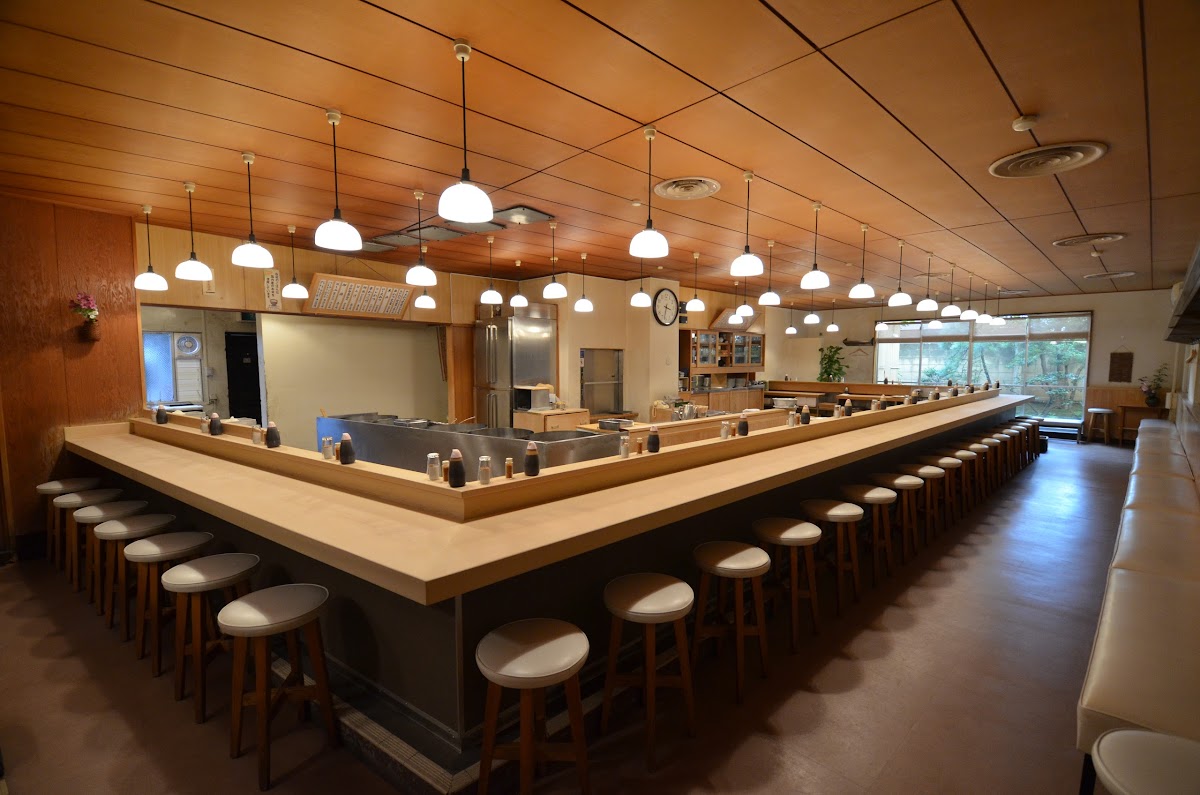
Tonki opened in Meguro in 1939 and has changed almost nothing since. The room is built around a long horseshoe counter facing an open kitchen where a brigade of a dozen cooks — all in white, all moving with the economy of people who have done this for decades — bread, fry, rest, and slice tonkatsu in a continuous choreographed loop. There is no music, no decor to speak of, and no menu negotiation. You sit, you're asked rosu (loin) or hire (filet), and the machine takes over. Watching it work is half the reason to come.
The frying technique is the other half. Tonki cooks its cutlets at a lower temperature for longer than most tonkatsu shops, then rests them, then briefly re-fries — a method that produces a pale, almost blond crust and an interior that stays juicy without the grease-heaviness of fast-fried versions. The result divides tonkatsu purists (some prefer a darker, crunchier crust) but the people who love Tonki are evangelical about it, and the queue every evening settles the argument.
Japanese diners treat Tonki as a Tokyo institution in the literal sense — a fixed point that has outlasted the war, the bubble, and three generations of food trends without a single concession to modernization. There's no website worth the name, no reservations, no English menu, no Instagram strategy. The shop's confidence that the tonkatsu is enough has, paradoxically, made it one of the most internationally famous tonkatsu houses in Japan.
How to Experience It
Find it five minutes from JR Meguro Station's west exit at 1-1-2 Shimomeguro — a corner building with a plain noren curtain and usually a short line of people on the bench outside. Give your name (or just hold up fingers for your party size) to the staff at the door; they'll seat you in counter order when space opens.
Dinner only: 16:00 to 21:00, last order 20:45, closed Tuesdays. There's no lunch service. The least crowded window is right at 16:00 opening or after 20:00; the 18:00-19:30 stretch is the longest wait, often 30-45 minutes. The wait moves predictably because the kitchen turns the counter at a steady rhythm.
When seated, you'll be asked rosu (ロース, loin — fattier, more flavor) or hire (ヒレ, filet — leaner, more tender). That's essentially the entire decision. The set comes with shredded cabbage (refillable), rice (refillable), miso soup, and pickles. Watch the kitchen while you wait for your plate — the cooks call orders across the counter in a shorthand that's been the same for 85 years.
What to Order
Rosu katsu teishoku (ロースかつ定食, ~¥2,000) is the order most regulars consider definitive — the loin cut carries Tonki's frying method best, with enough fat to show what the low-temperature technique does. The hire katsu teishoku (~¥2,100) is the leaner alternative for diners who avoid pork fat.
The sets are complete as served; there's little to add. Refill the cabbage and rice freely (the staff expects it). A bottle of beer while you watch the kitchen is the canonical accompaniment. Skip looking for sides or appetizers — Tonki does one thing, and the menu's brevity is the point.
Plan your visit
| Area | Meguro |
|---|---|
| Category | Tonkatsu |
| Price range | ¥2000-3000 |
| Hours | 16:00-21:00 (LO 20:45) |
| Closed | 火曜 |
| Access | JR目黒駅西口から徒歩5分・東京メトロ目黒駅から徒歩5分 |
| Reservations | Walk-in only — give your name at the door and wait on the bench |
| English menu | ⚠ Limited Limited — the menu is essentially two items; staff guide you |
| English support | Limited English; the system is visual and easy to follow |
| Last verified | 2026-05-16 |
Nearby Experiences
Meguro is a quiet residential-and-design district that most tourists skip. After dinner, the Meguro River walk is ten minutes northwest — particularly worth it in cherry-blossom season. The Tokyo Metropolitan Teien Art Museum (a 1933 Art Deco former imperial residence) is fifteen minutes away if you're visiting earlier in the day.
For continuing the tonkatsu comparison, Maisen Aoyama Honten (a 20-minute train ride) uses the opposite technique — a darker, crunchier panko crust — making a Tonki-then-Maisen pairing the most direct way to understand the two schools of Tokyo tonkatsu.