
Kimuraya Honten
Asakusa’s Original Ningyo-yaki Since 1868
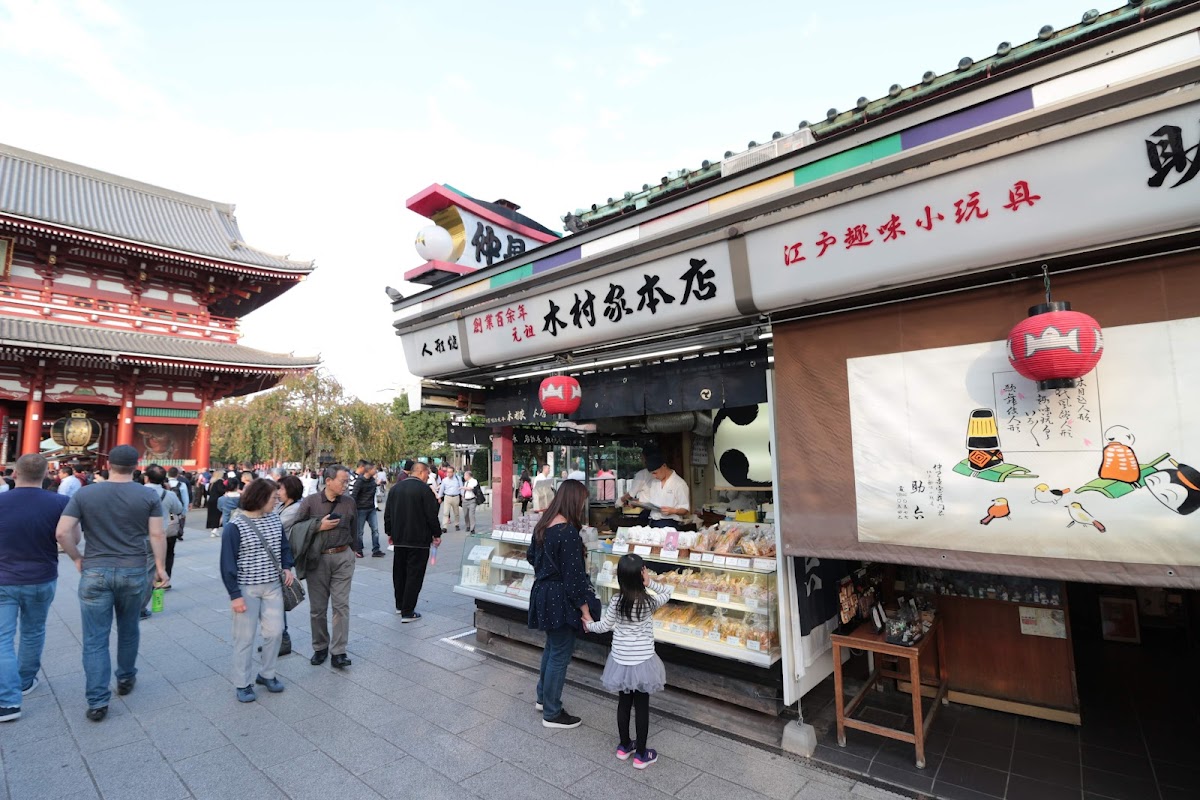
Meiji-era ningyo-yaki at the mouth of Nakamise-dori. Hand-pressed cast-iron molds shaped like the Senso-ji lanterns, eight to a box for under ¥1,000.
Last verified: 2026-05-16
Why Japanese People Love It
Ningyo-yaki is one of Tokyo's signature wagashi (Japanese sweets) — bite-sized castella-batter cakes filled with anko (sweet red bean paste), pressed in cast-iron molds shaped like figures, lanterns, and architectural details. The form was invented in Edo's Ningyocho district in the mid-1800s; the Asakusa version arrived at the front gate of Senso-ji shortly after. Kimuraya, founded in 1868 (the first year of the Meiji era), is the oldest continuous ningyo-yaki shop in Asakusa and one of the oldest of any kind on Nakamise-dori.
The Kimuraya shapes follow the Senso-ji iconography directly: the giant Kaminarimon lantern, the five-story pagoda, the temple bell, the haichu (offering box), the dove, and the boy-figure (ningyo). It's not theme-park merchandise; each shape carries a meaning. Eight pieces in a small paper box for around ¥600 makes the cake the right price for an impulse souvenir or a snack during the temple walk.
The Asakusa visit benefits from this kind of anchored history. Most of Nakamise-dori's shops have updated their inventory toward foreign tourists in the last twenty years — Hello Kitty cookies, generic green-tea KitKats, the same matcha latte everywhere. Kimuraya kept its original product, its original molds, and its original recipe, and consequently became more distinctive as the surrounding street homogenized. The line outside is moderate but steady all day.
How to Experience It
Walk from Asakusa Station (Tokyo Metro Ginza Line exit 1, or Toei Asakusa exit A4) to the Kaminarimon (the giant red lantern gate). The shop is at the very mouth of Nakamise-dori, three minutes north of Kaminarimon, on the right side as you walk toward Senso-ji. The cast-iron pressing operation is visible from the street — a five-meter span of glass with the bakers working the molds in real time.
Walk-in only. The shop sells ningyo-yaki only as takeaway in paper boxes, no eat-in option. The boxes come in 8, 12, 16, 20-piece sizes, with the smaller boxes most common for casual purchase. Larger gift boxes are wrapped in noshi (formal Japanese gift paper) by request.
Watch the press before buying. The cast-iron molds are heated over a gas flame and pressed by hand, with batter poured into the open half and anko placed at the center. The press closes for about twenty seconds; the bakers work two presses in alternating rhythm. It's a small piece of Tokyo street-craft to watch for a couple of minutes before ordering.
What to Order
Standard 8-piece box (¥600-800) is the right starting purchase. The pieces are eaten fresh — they stay good for about a day at room temperature, less if humid. Don't expect to bring them home from the trip; they're meant to be eaten that afternoon.
Larger boxes (16-piece, 20-piece) are designed as omiyage (gifts) for family or work — Japanese custom expects a wagashi assortment from any major sight visit, and ningyo-yaki is the canonical Asakusa contribution. The shop wraps the larger boxes individually and provides a printed brochure of the shapes' meanings.
Plan your visit
| Area | Asakusa |
|---|---|
| Category | Traditional Specialties |
| Price range | ¥600-1500 |
| Hours | 9:30-18:30 |
| Closed | なし(年中無休) |
| Access | 東京メトロ浅草駅から徒歩5分・浅草寺仲見世通り入口・雷門から徒歩3分 |
| Reservations | Walk-in only — pickup at storefront |
| English menu | ✓ Available Yes — bilingual signage and price displays |
| English support | Limited English support |
| Last verified | 2026-05-16 |
Nearby Experiences
You're at the entrance of Senso-ji's shopping street. Walk three minutes north and you're at the temple's main hall; ten minutes south puts you at Hoppy Street for early-evening drinking or Asakusa Imahan Honten for dinner. Asakusa Mugitoro Honten is one minute east near the river for a lunch alternative.
For a wagashi comparison, walk seven minutes west on Kappabashi-dori (the restaurant-supply street) and you'll find a handful of older sweets shops with their own specialties. The Tokyo wagashi tradition rewards comparing two or three shops in a single afternoon — Kimuraya for ningyo-yaki, a Kappabashi shop for monaka, and back to a Senso-ji area shop for taiyaki.