
Yanaka Ginza Shotengai
Showa Tokyo at Walking Pace
170 meters of old shitamachi shotengai, 70 small shops, the famous sunset stairs, and Tokyo's loudest community of stray cats.
Last verified: 2026-05-16
Why Japanese People Love It
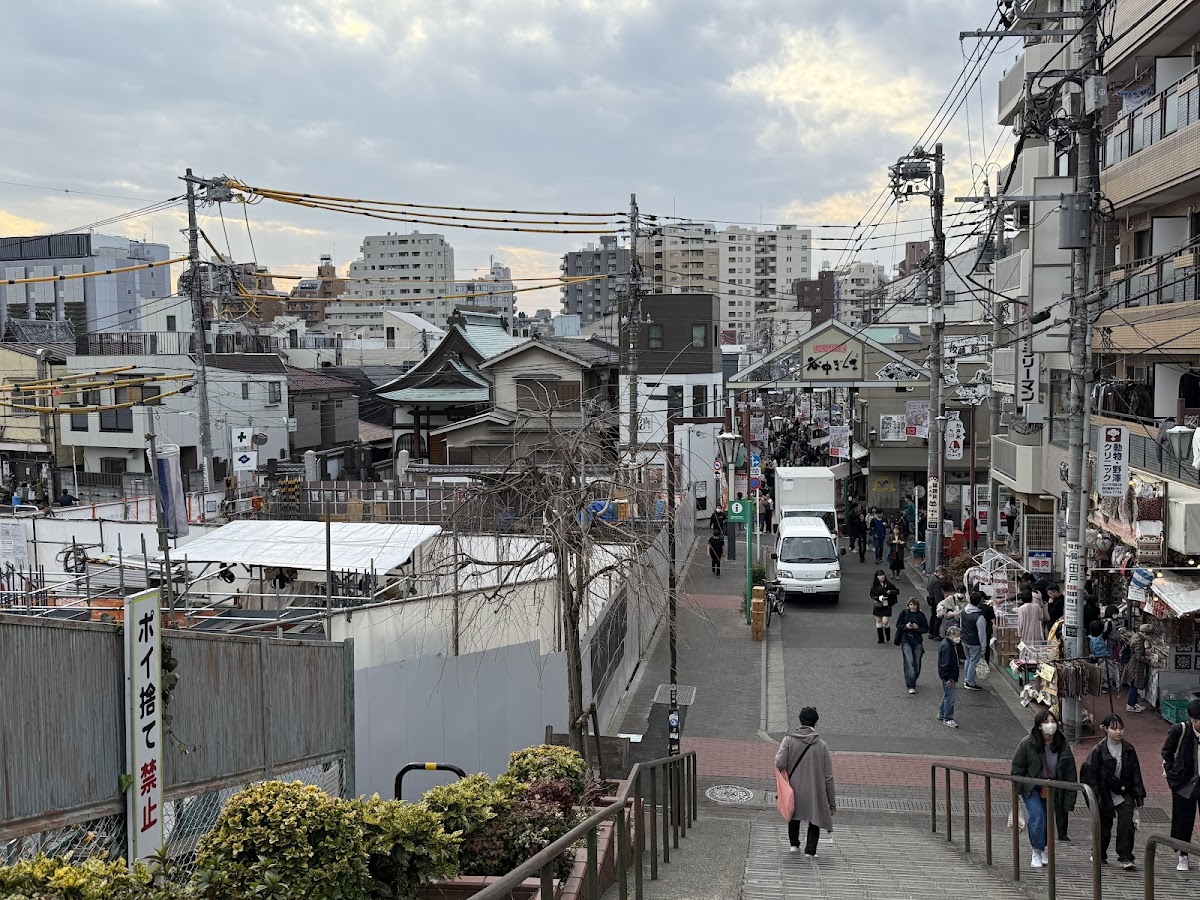
Yanaka Ginza is the most intact shotengai (covered shopping street) in central Tokyo from the immediate-postwar period. It runs about 170 meters between two residential blocks at the back of the Yanaka neighborhood — too narrow for car traffic, too small to attract chain stores, too embedded in the local pedestrian routine to ever convert into a mall. The result is roughly 70 small shops: butchers, fishmongers, vegetable stalls, tofu shops, wagashi (Japanese sweets) houses, picnic-blanket vendors, used bookshops, and a few cafes.
What makes the place a destination rather than a curiosity is the street's daily-life function. The shotengai still serves its original neighborhood — Yanaka residents shop here for groceries, sweets, and home staples, which means everything stays priced for daily purchase. A croquette is ¥220 from Niku no Suzuki; a fish-tail-shaped baked donut is ¥300 from Yanaka Shippoya; a stick of dango is ¥150 from Echigoya Honten. The eating-as-you-walk culture (tabearuki) that Yanaka encourages is the most accessible way to experience old Tokyo without a restaurant reservation.
The cats are the other reason. Yanaka has Tokyo's most established stray-cat community, and they congregate on the sunset stairs (Yuyake-Dandan) that mark the eastern entrance to the shotengai. The stairs face west — the name means 'evening-glow stairs' — and have been a sunset photo spot since the 1970s. Late afternoons here, with the cats in the foreground and the shotengai stretching below, is one of the most photographed scenes in old-Tokyo Tokyo.
How to Experience It
Enter from the east side: descend the Yuyake-Dandan stairs from JR Nippori Station (Nippori west exit, walk five minutes). The stairs are the symbolic entrance and most photographers stop there. From the west side, exit Sendagi Station (Tokyo Metro Chiyoda Line, exit 2) and walk five minutes east through the residential blocks.
Most shops are open roughly 10:00-18:00, but many close on Mondays. Tuesday through Sunday are the safe visit days. Late afternoon (15:00-17:00) is the most active window — the sun is setting on the stairs, the food shops are pre-closing-out their inventory, and the cats are reliably present.
Walk slowly. The shotengai rewards browsing rather than destination shopping. Allow at least an hour for the full length plus a few stalls; allow two hours if you want to combine with a coffee at Kayaba Coffee at the corner.
What to Order
Menchi-katsu (¥220) from Niku no Suzuki — the meat shop's deep-fried minced-beef cutlet, eaten in a small paper sleeve while walking. The croquette next to it (¥80) is the cheaper alternative; locals usually buy both.
Yanaka Shippoya's cat-tail baked donuts (¥300) — sweet potato, cinnamon, and other rotating seasonal flavors in a paper bag. Echigoya Honten's dango (skewered rice dumplings, ¥150) for a traditional sweet. Pick one savory and one sweet for a complete walking lunch.
Plan your visit
| Area | Yanaka |
|---|---|
| Category | Traditional Specialties |
| Price range | ¥200-1500 (per snack/item) |
| Hours | 店舗による(多くは10:00-18:00) |
| Closed | 店舗による(多くは月曜定休) |
| Access | JR日暮里駅西口から徒歩5分・東京メトロ千駄木駅2番出口から徒歩5分 |
| Reservations | Walk-in / no reservations |
| English menu | ⚠ Limited Limited — 一部店舗で英語表記 |
| English support | Limited English support — translation apps helpful |
| Last verified | 2026-05-16 |
Nearby Experiences
Walk up the Yuyake-Dandan stairs and turn south — five minutes brings you to Yanaka Beer Hall (at Ueno Sakuragi Atari) for a craft-beer flight after the shotengai stroll. Kayaba Coffee is at the southwest corner of the shotengai for a slower coffee end-stop.
For a full Yanaka day, combine the shotengai with Yanaka Cemetery (the city's most atmospheric graveyard, with cherry trees and resident cats), the Asakura Sculpture Museum (sculptor Asakura Fumio's home, now a museum), and dinner in nearby Sendagi or Nezu. The whole neighborhood is built for walking pace.