
How Tsukemen Was Born — A Brief History of Tokyo’s Dipping-Noodle Revolution
Tsukemen — the dipping-style ramen that now sustains queues across Tokyo — was invented by a single chef in 1955, in a tiny noodle shop in Nakano. The story of how it became a national format is the story of postwar Tokyo itself.
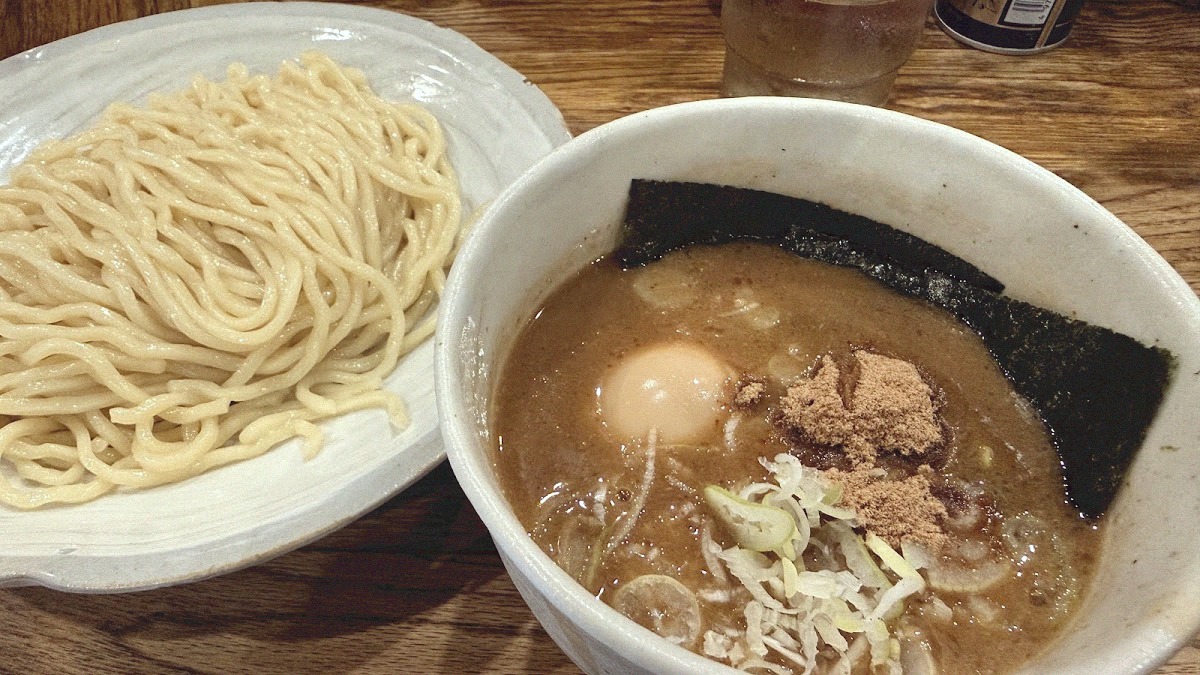
Walk past Fuunji in Shinjuku at 10:30 in the morning and you’ll see thirty people in line, paper tickets in hand, waiting for an 11am opening. They are not waiting for ramen, exactly. They are waiting for tsukemen — the dipping-style format where thick, chewy noodles arrive separately from a small bowl of intensely concentrated broth, ready to be plunged in bite by bite.
Today tsukemen is everywhere in Tokyo, with hundreds of dedicated shops and a permanent presence on most ramen menus. But the format is younger than people assume. It was invented in 1955 — within living memory — by one chef, in one shop, who was trying to solve a problem.
Nakano, 1955: The Accident That Started Everything
The chef was Yamagishi Kazuo, owner of a small Chinese-style noodle counter in Nakano called Taishoken. Yamagishi had a habit, after closing, of dunking leftover noodles into a small bowl of broth at his workstation — a quick staff meal made from what was left over.
One day, a regular customer noticed him eating it and asked to try. Yamagishi formalized the dish, named it morisoba (after the cold soba tradition where noodles arrive separately from the dipping sauce), and added it to the menu. Within a year, customers were ordering it more often than the standard hot ramen.
What made the format work, beyond novelty, was the broth. Because the dipping sauce only had to flavor each individual bite — not stay drinkable across an entire bowl — Yamagishi could concentrate it dramatically. He doubled and tripled the dashi reduction, layered fish stock onto pork bone stock, and added vinegar and sugar to balance the intensity. The result was something almost too rich to drink straight, but perfect against the cold, springy noodles.
From One Shop to a Format
For about twenty years, tsukemen was a quirk — a thing Taishoken did. Other shops occasionally added it to menus. But the format only escaped Nakano in the 1990s, when a generation of younger chefs who had trained under Yamagishi began opening their own shops across the city. Several of those chefs went on to win Michelin recognition; one, Onishi Yuichi at Rokurinsha, would later receive a permanent stall inside Tokyo Station’s “Ramen Street.”
By the 2000s, tsukemen had its own dedicated shops, its own signature noodle thickness (thicker than ramen, often hand-cut), its own broth conventions (fish-and-pork hybrid, sometimes called gyokai-tonkotsu), and its own subculture of obsessives. Tabelog — Japan’s restaurant ranking platform — added tsukemen as a separate category from ramen, and Hyakumeiten, the platform’s prestigious top-100 list, eventually published one for tsukemen alone.
Why Tokyo, Specifically
Tsukemen’s expansion tracks Tokyo’s postwar economy almost exactly. The dish is built for a particular kind of customer: someone with thirty minutes for lunch, willing to queue, willing to pay a small premium, willing to eat aggressively. It is salaryman food, in the most positive sense — engineered for efficiency and reward.
It is also food that performs well in dense urban areas with high foot traffic. Tsukemen shops can run a high turnover (counter seating, ticket-machine ordering, no service to speak of) while still commanding ¥1,000+ tickets. That economic profile fits Tokyo’s mid-density commercial neighborhoods — Shinjuku, Ikebukuro, Nakano, Akasaka — better than it fits Osaka or Kyoto, which have different rhythms.
Yamagishi died in 2015. By then there were tsukemen shops in Hong Kong, Taipei, San Francisco, and Brooklyn. He had also, characteristically, never trademarked the format and never franchised. The original Taishoken in Higashi-Ikebukuro is still open. The line still forms before lunch.
Where to Try It
If you have one tsukemen meal in Tokyo, the contenders are: Fuunji in Shinjuku (Tabelog Hyakumeiten regular, fish-forward broth), Rokurinsha at Tokyo Station (the franchise that brought tsukemen to global attention), or Taishoken Higashi-Ikebukuro (the original, where it all began). Each represents a different point in the format’s history. None of them takes reservations.