
Asakusa Imahan Honten
Sukiyaki by Servers, the 1895 Way
A 130-year sukiyaki institution serving A5 Kuroge wagyu in private tatami rooms, cooked tableside in cast-iron pans with the original house sauce.
Last verified: 2026-05-16
Why Japanese People Love It
Imahan was founded in 1895 in what was then a working-class shitamachi neighborhood north of Tokyo proper. The founder was a meat purveyor who started serving sukiyaki to neighbors after his butcher shop closed each evening — at a time when beef was still a recent addition to the Japanese diet, having been formally legalized for consumption only twenty-five years earlier under the Meiji government. The restaurant is the same business, in roughly the same lineage of family, that has been doing this longer than almost any other beef house in the country.
The sukiyaki is served in the Edo style: thin slices of A5 Kuroge wagyu cooked in a cast-iron pan over a low burner at your table, with a sauce made of soy, mirin, and sugar in proportions the house has refined for 130 years. The server does the cooking — sliding the first piece of meat over the hot fat, adding sauce in increments, building the dish in front of you while explaining each step. This isn't theater; it's the actual technique, which depends on temperature and timing in ways most diners can't easily reproduce.
Japanese visitors love Imahan for what it represents culturally as much as for the food. Sukiyaki was the symbol of Japan's modernization in the late nineteenth century — meat as the marker of becoming a Western-style nation — and eating it in a tatami room in Asakusa, with a kimono-clad server, in a building that's been owned by the same family for over a century, condenses a lot of meaning into a single dinner. The price reflects that; the experience earns it.
How to Experience It
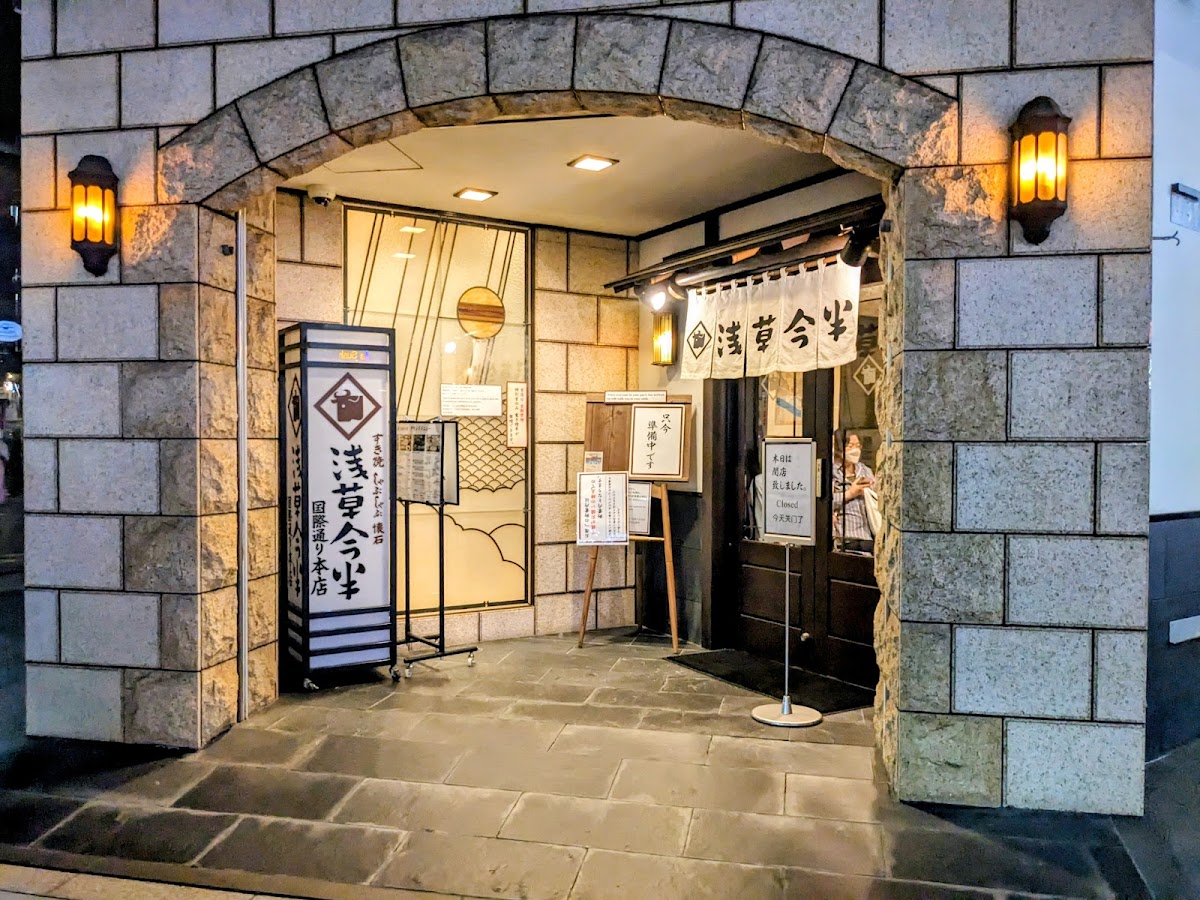
The honten (head shop) is a five-story building at 3-1-12 Nishi-Asakusa on Kokusai-dori (International Avenue). The first floor has private dining rooms; the upper floors house larger tatami banquet rooms used for formal gatherings. Diners are typically seated on the first floor unless they've reserved a tatami room in advance.
Reservations are strongly recommended, especially for dinner and on weekends. Lunch can occasionally accommodate walk-ins on weekdays, but the seating is structured around private rooms and small parties, not turnover. Book at least a few days ahead through the official site, by phone, or via a hotel concierge.
Two-person minimum for sukiyaki — each diner needs their own portion and the dish doesn't share well. If you're traveling solo, the lunch teishoku (set menu) is available individually and gives you a smaller cross-section of the wagyu without committing to the full sukiyaki ritual.
What to Order
The signature is the Tokujou (特上) Sukiyaki — top-grade A5 Kuroge wagyu with vegetables, sukiyaki sauce, and the house side dishes. It's the order that locals consider definitive. The Joushou (上) tier is slightly leaner but more than enough to understand what wagyu sukiyaki actually tastes like. Lunch teishoku starts around ¥6,000 with a smaller portion.
The shabu-shabu menu is also available and equally good — same meat quality, different cooking method (boiled in dashi rather than seared in iron). If you've never compared the two side by side, ordering one of each across a pair of diners is the deepest possible introduction to Japanese beef cookery.
Plan your visit
| Area | Asakusa |
|---|---|
| Category | Traditional Specialties |
| Price range | ¥6000-18000 |
| Hours | 11:30-15:00 / 17:00-20:30 (LO 20:00) |
| Closed | 火曜(祝日・浅草の祭礼期間中は営業) |
| Access | 東京メトロ田原町駅3番出口から徒歩4分・浅草駅から徒歩10分 |
| Reservations | Reservations strongly recommended (especially weekends and dinner) |
| English menu | ✓ Available Yes — English menu available |
| English support | Yes — some English-speaking staff |
| Last verified | 2026-05-16 |
Nearby Experiences
Imahan sits four minutes from Senso-ji, Tokyo's oldest temple, and ten minutes from Nakamise-dori. After a long dinner, a slow walk through the temple grounds at night — when most tourists have left and the lanterns are still lit — is one of Asakusa's quieter pleasures. The route passes Kimuraya Honten (the original ningyo-yaki shop, daytime only) and the Hoppy Street area for nightcap drinking.
For tea or coffee after dinner, walk south to Kappabashi-dori (Tokyo's restaurant supply street) — slightly more interesting at night when the small wine bars and modern coffee shops on its eastern edge are open. Twenty minutes of walking takes you to Kuramae, the craft district with riverside bars and Dandelion Chocolate.