
The Unspoken Rules of Eating Ramen in Tokyo
Most of what tourists hear about ramen etiquette is either wrong or out of date. Here are the rules Tokyo regulars actually follow — and the ones nobody will tell you, because they are too obvious to say out loud.
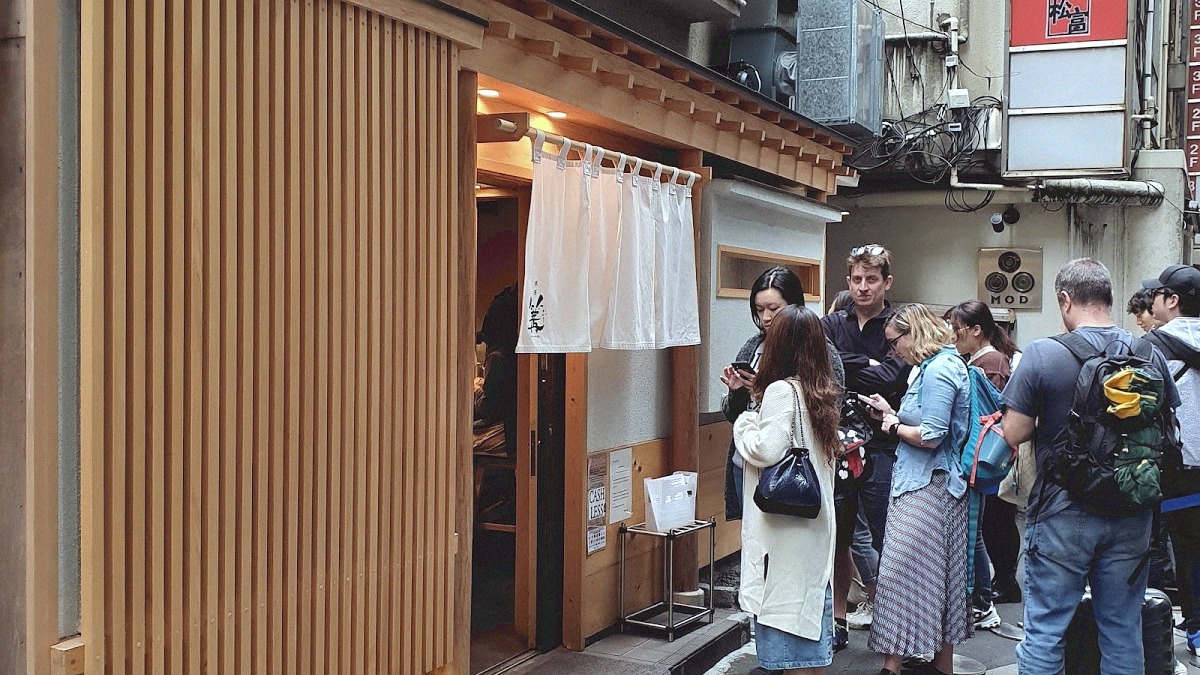
If you ask a Tokyo regular how to behave in a ramen shop, you will not get a clear answer. They will look slightly puzzled, as if you had asked how to behave on a sidewalk. There are rules — they are real, they matter, and breaking them can produce a quiet but unmistakable change in the room — but the rules are mostly invisible, because everyone already knows them.
This piece is the inverse of every “ramen etiquette” article you’ve read. Instead of telling you what tourists are told (which is often wrong), it tells you what locals actually do.
Slurping is fine. Phone calls are not.
Yes, you can slurp. Slurping cools the noodles slightly, intensifies the aroma, and signals appreciation. Nobody loves it, exactly, but it is unambiguously acceptable.
What is not acceptable: a phone conversation, in any volume, inside the shop. Loud groups speaking English at full social volume. Standing up and walking around mid-meal. The space is small, the acoustics are unforgiving, and the customers around you came specifically to eat — not to listen.
Buy your ticket before you sit down
Most serious ramen shops use a ticket vending machine — usually just inside the door. The flow is: enter, buy ticket, hand to staff at the counter, then sit. Sitting first and waiting for someone to take your order is wrong, and it can mean you sit for ten minutes wondering why nobody is helping you.
If the machine is in Japanese only — many older shops are — point at the photo on the wall, or at the row of buttons that look most popular (the larger, more colorful, top-row ones). Staff will help if you look stuck. Cash goes in first; the machine prints a small ticket; you hand it to the cook, you sit, you wait.
Eat fast — but don’t rush
This is the rule that sounds contradictory and isn’t. The cooking style and broth temperatures are designed for a meal that lasts roughly 12–15 minutes from first bite. The noodles change texture quickly. The broth cools quickly. The shop’s economics depend on counter turnover.
You shouldn’t shove food in your mouth. But you should not be the person still eating at minute thirty, half-finished bowl in front of you, while a queue forms outside. The pace of the bowl tells you the pace of the meal. Match it.
Don’t ask for modifications you didn’t pay for
Tokyo ramen shops generally do not improvise. Modifications you can request — extra noodles (kaedama at tonkotsu shops), softer or firmer noodles (katame / yawame), more or less of any topping — are signaled either on the ticket machine or with single Japanese words. If a modification is not on the menu, it is not available, and asking for it puts the cook in an awkward position.
Special exception: kaedama. At any tonkotsu shop, when you finish your noodles but still have broth, you can call out “kaedama, onegaishimasu” and you’ll get a fresh batch dropped into your remaining broth for ¥150–¥250. This is expected and welcomed.
Drink the broth — partially
The bowl is not a soup course; it is a concentrated cooking liquid built around the noodles. Drinking the entire bowl of broth is unusual and a little anti-climactic — the salt content is high, and your second-half spoonfuls are just collecting flavor without the noodle structure that made the first half work.
Local convention: drink one-quarter to one-half of the broth, depending on how much you loved it. Leaving most of it in the bowl is fine. Leaving none of it is also fine. There is no shame either way.
When you’re done, leave
The post-meal lingering common at Western restaurants is not a thing here. Eat, push your bowl forward an inch, say gochisousama deshita if you feel like it (it’s a polite “thank you for the meal” and is genuinely appreciated), pay if a check arrives, and leave.
The reason this matters is the line. There is almost always a line. Your seat being free again is the entire economic engine of the shop. The faster you exit, the better the operation runs, and the less likely the cook is to ever cap shop hours or skip a service.
The one rule nobody writes down
The most important rule is one you’ll only notice if you watch other customers carefully: do not photograph the bowl for more than ten seconds. A quick phone shot is fine. Setting the phone down on the counter and pulling the bowl into different angles for two minutes is a tell that you are not a regular, and at the older shops the cook will visibly tense.
The bowl is engineered to be eaten now. The noodles are cooling while the camera is up. The cook spent ten years perfecting the timing. Respect the timing. Eat the bowl.