
The Birth of Edomae Sushi — How a Tokyo Street Vendor Invented Modern Sushi
The form of sushi that the world now eats — vinegared rice, a piece of fish on top, the whole thing held together by hand — was invented by a single street vendor in 1820s Edo, working under economic constraints that have nothing to do with how sushi is presented today.
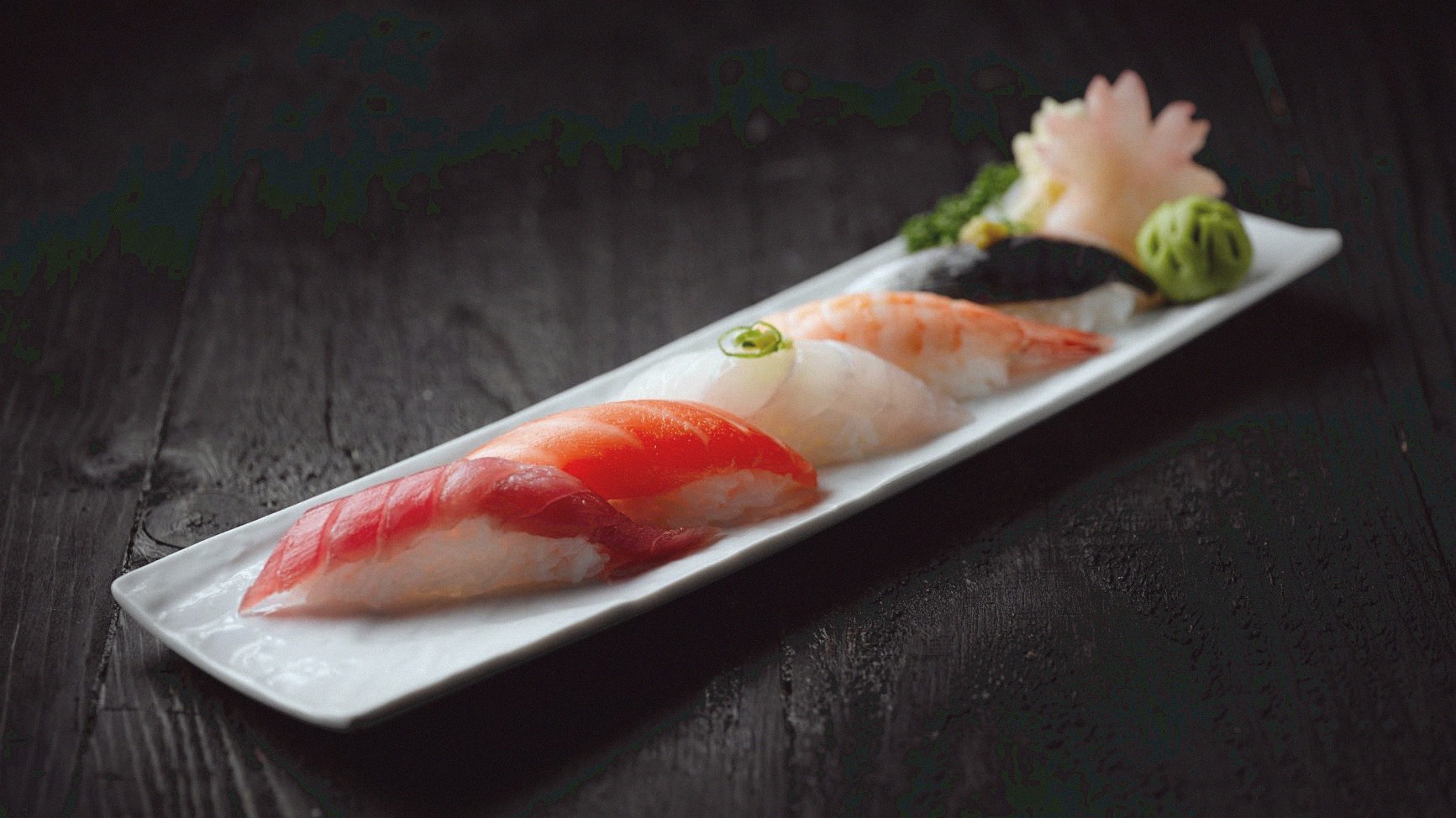
Walk into a high-end sushi counter in Ginza tonight and you will be served a sequence of pieces that look identical, in their basic structure, to what was sold from a wooden cart in Tokyo two centuries ago. The form has not changed: a thumb-sized portion of vinegared rice, shaped by hand, with a single thin piece of fish or shellfish pressed onto the top. No knife, no fork, eaten in two bites or one.

This shape — the universal blueprint that every sushi restaurant in Tokyo, New York, and Sydney now follows — is younger than people assume. It is roughly 200 years old. It was invented by one man, in one cart, in the city now called Tokyo. And it was invented to solve a specific problem that no longer exists.

Edomae Sushi History: A Timeline
| Period | What happened |
|---|---|
| Pre-1700s | Nare-zushi (馴れ寿司): fish fermented in salted rice for months, rice discarded |
| Early 1700s | Hako-zushi (箱寿司): pressed box sushi emerges in Osaka; still not street food |
| c. 1824 (Bunsei era) | Hanaya Yohei (華屋與兵衛) invents hand-pressed nigiri from a cart in Ryogoku, Edo |
| 1880s | After Edo is renamed Tokyo, sushi moves off the street and into stationary shops |
| 1923 | The Great Kanto Earthquake scatters Tokyo sushi cooks, spreading Edomae nationwide |
| 1932 | Hanaya Yohei’s own shop, Yohei Zushi, closes after more than a century in Ryogoku |
| Postwar (1960s–70s) | Refrigeration and cold chains break the original “in front of Edo” geography |
| Today | Edomae means a preparation technique, not a fishing ground |
Before Hanaya Yohei
The word sushi (寿司, also written 鮨) is older than this story by at least 1,000 years. The original meaning of sushi had nothing to do with fresh fish — it referred to a fermented preservation method, called nare-zushi (馴れ寿司), in which gutted fish was packed in salted rice and left to ferment for months, sometimes years. The fermentation broke the fish down into something edible without refrigeration, and the rice was usually discarded after the fish was eaten. The most famous surviving example is funa-zushi from Lake Biwa, which still exists today and tastes, to most people, like nothing else they have ever put in their mouth.
By the early Edo period, around the 1700s, this fermented format had been simplified. Fast-fermenting versions cut the wait time from years to weeks. Hako-zushi (箱寿司, “box sushi”) emerged in Osaka, in which fish and seasoned rice were pressed in a wooden mold and sliced. None of these were street food. They were prepared at home or by specialists, eaten with utensils, and bore little visual resemblance to what we now call sushi.
Edo, 1824: A Vendor Solves a Problem
The man credited with the invention is Hanaya Yohei (華屋與兵衛), who lived from 1799 to 1858 and operated a food cart in the Ryogoku district of Edo. The Tokyo Metropolitan Government’s GO TOKYO gourmet guide dates the nigiri innovation to around 1824, in the Bunsei era (1804–1830). The exact year is debated — some sources cite 1824, others place it as late as 1827 — but the rough story is consistent across them.
Edo at the time was a city of roughly one million people, mostly men — among the world’s largest cities by population, denser than London or Paris, and almost entirely composed of laborers, merchants, samurai retainers, and artisans. The city ate fast and ate often, and a vibrant street-food economy had grown up around this — soba carts, tempura stalls, dango shops. As Nippon.com reports, the Japanese food historian Yoko Isassi traces that stall economy directly to Edo’s constant fires: “Because of the fires, there was always construction. To feed those construction workers, there were many food stalls on the street. Soba, tempura, and sushi, or what we call Edomae-sushi, were the popular selections on the street.” What did not exist was a way to eat sushi at speed. Fermented sushi took months to prepare; pressed sushi took hours and required equipment.
Hanaya’s innovation was to skip fermentation entirely. He vinegared his rice — using the rice vinegar (komezu, 米酢) that had become cheap and widely available in the previous decades. The vinegar maker Mizkan traces this to its own founder, Nakano Matazaemon, who from 1804 began making an affordable vinegar from sake lees — a cheap byproduct of brewing — which put vinegared rice within reach of ordinary Edo cooks. The vinegar gave the rice the sour preservative effect that fermentation had previously provided. Hanaya shaped the rice by hand into small portions. And he pressed onto each one a small piece of raw or lightly cooked fish caught that morning in Edo Bay, the body of water now called Tokyo Bay.
The result was something a working man could buy in five seconds, eat in fifteen, and finish on his way back to work. It was the original fast food. The format was named after the bay it depended on: edomae (江戸前), “in front of Edo,” meaning fish from the bay directly outside the city.
The Constraints That Shaped the Form
Almost every detail of modern sushi is a fossilized solution to a 19th-century problem. The vinegar in the rice was not aesthetic — it was a preservative for the four to six hours between morning preparation and evening sale, before refrigeration existed. The piece-sized portion was not delicate dining — it was the maximum amount a vendor could shape in five seconds. The thin piece of fish on top was not artistic — it was a way to stretch expensive ingredients across many portions.
Even the wasabi was functional. Hanaya’s contemporaries used it not as a condiment but as an antimicrobial — fresh wasabi paste, applied between fish and rice, slowed the spoilage of raw fish in the hours after preparation. Modern Tokyo sushi chefs still apply wasabi between rice and fish (rather than letting customers add it themselves) for a reason that is now purely traditional but was once preventive medicine.
The same is true of the soy reduction painted onto the fish at high-end shops, called nikiri (煮切り). It was originally a way to reduce the soy’s water content so that the fish would not weep liquid into the rice during the wait between preparation and eating. Today the wait is thirty seconds and refrigeration solved the moisture problem decades ago, but every Edomae chef in Ginza still brushes nikiri because the technique became the form, and the form became the cuisine.
From Cart to Counter to Global
By the 1850s, dozens of Edo vendors were producing variations of Hanaya’s format. By the 1880s, after the city was renamed Tokyo and the Meiji modernization had transformed Edo’s economy, sushi had moved off the street and into stationary shops. The price moved with the venue — what had been street food for laborers became, over a single generation, a sit-down meal for the new merchant class. Hanaya’s own establishment outlasted him by decades: the shop he founded, Yohei Zushi, kept operating in Ryogoku until 1932, more than a century after the first hand-pressed piece left his cart.
The 1923 Great Kanto Earthquake accidentally accelerated the spread. Tokyo’s sushi cooks, displaced from their destroyed shops, scattered across Japan and opened new shops in cities that had previously had no Edomae tradition. Within a generation, Hanaya’s format had become Japan’s national format, replacing the regional nare-zushi and hako-zushi styles in most of the country.
Postwar refrigeration changed the cuisine again — fish could now be flown in from Hokkaido and Kyushu, breaking the original “in front of Edo” geography. The rules around fermentation, salting, and aging began to relax in the 1960s and 1970s as cooling chains improved. Today, the term edomae has shifted in meaning: it no longer refers to fish from Tokyo Bay (which is largely fished out and polluted) but to the Edo-style technique of preparing fish, even when the fish itself comes from anywhere in the world.
What Is Edomae, Today
A modern Edomae sushi shop is identifiable not by the location of its fish, but by what its chef does to the fish before serving it. The defining techniques are still Hanaya’s: vinegared rice, hand-shaped pieces, fish processed by the chef rather than served raw. A serious Edomae shop will kobujime (昆布締め) — sandwich a piece of white-fleshed fish between sheets of kelp for several hours to draw moisture and add umami. They will shio-jime (塩締め) — salt-cure smaller fish like gizzard shad (kohada) to firm the flesh and concentrate flavor. They will age tuna for days, sometimes weeks, in carefully controlled humidity. None of these are about freshness. All of them are descendants of preservation techniques developed before refrigeration.
The non-Edomae sushi most travelers know — California rolls, sashimi-on-rice bowls, salmon nigiri (which Edo never had, since salmon was not a Tokyo Bay fish) — is a cuisine that emerged after the Edomae blueprint became globally portable. It is sushi in the loosest sense, related to Hanaya’s invention by structure but not by the philosophy that produced the structure.
Where to Eat Edomae in Tokyo Today
If you want to eat Edomae sushi prepared in the lineage Hanaya started, the geographic shorthand still holds: Ginza, Yotsuya, and the area around Tsukiji are the densest concentrations of serious Edomae shops in the world. Ginza alone has dozens of single-counter shops where the chef is the second, third, or fourth generation in his family to make sushi for a living, and where the meal you eat is a direct descendant of a vendor’s cart from 1824.
If you want to see the form at the other end of its evolution, visit Toyosu Market — the modern fish auction that replaced Tsukiji in 2018 — at 6 AM and have sushi for breakfast at one of the small shops inside the market complex. The fish was on a boat seven hours ago and on the auction floor an hour ago. The price is reasonable and the experience is what every Edomae shop is reaching toward.
And if you want to see the lineage that didn’t survive — the fermented sushi that Hanaya was competing against — Lake Biwa is two and a half hours west of Tokyo by shinkansen, and the funa-zushi served there has not changed in 1,200 years. It will help you understand, by contrast, what exactly Hanaya invented when he stopped fermenting his fish.
FAQ
Who invented edomae sushi?
Hanaya Yohei (華屋與兵衛, 1799–1858), a food-cart vendor in the Ryogoku district of Edo. Around 1824 he began pressing a single piece of fish onto a hand-shaped portion of vinegared rice, creating the hand-pressed nigiri format that became modern sushi. The shop he founded, Yohei Zushi, operated in Ryogoku until 1932.
When was nigiri sushi invented?
In the 1820s, during Edo’s Bunsei era (1804–1830). The Tokyo Metropolitan Government’s GO TOKYO guide dates it to around 1824; some sources place it as late as 1827. Either way, the format is roughly 200 years old — far younger than sushi itself, which began as fermented nare-zushi more than a thousand years earlier.
Why is it called edomae?
Edomae (江戸前) means “in front of Edo” — the stretch of Edo Bay (now Tokyo Bay) directly outside the city, where the fish that topped the original sushi was caught each morning. Today the word no longer describes where the fish comes from; it describes the Edo-style technique of preparing it.
Is edomae sushi raw fish?
Not necessarily. Edomae is defined by preparation, not rawness. Before refrigeration, Edo chefs marinated tuna in soy (zuke, 漬け), salt-cured small fish (shime, 締め), simmered conger eel, and brushed on a soy reduction (nikiri, 煮切り). A serious Edomae chef still treats almost every piece before it reaches the rice — the technique, not the raw fish, is the point.
Sources
GO TOKYO Gourmet (Tokyo Metropolitan Government), “Discover Edomae Sushi in Tokyo” — dates the nigiri innovation to c. 1824, Bunsei era (accessed June 2026). · Nippon.com, “‘Edomae’ Sushi: A Fast Food with a Long Tradition” — food historian Yoko Isassi on Edo fires and the street-stall economy (accessed June 2026). · Mizkan, “Mizkan & the Origin of Sushi” — affordable sake-lees vinegar from 1804 (accessed June 2026). · Hanaya Yohei’s dates (1799–1858) and the closing of Yohei Zushi in 1932 are corroborated across multiple sushi-history references, including The Sushi Geek and Wikipedia (accessed June 2026).