
What “Omakase” Actually Means (And Why “Chef’s Choice” Misses It)
Most English-language menus translate omakase as "chef's choice." That translation is technically true and substantively wrong. What you are actually doing when you say omakase is something specific, and it changes how the meal works.
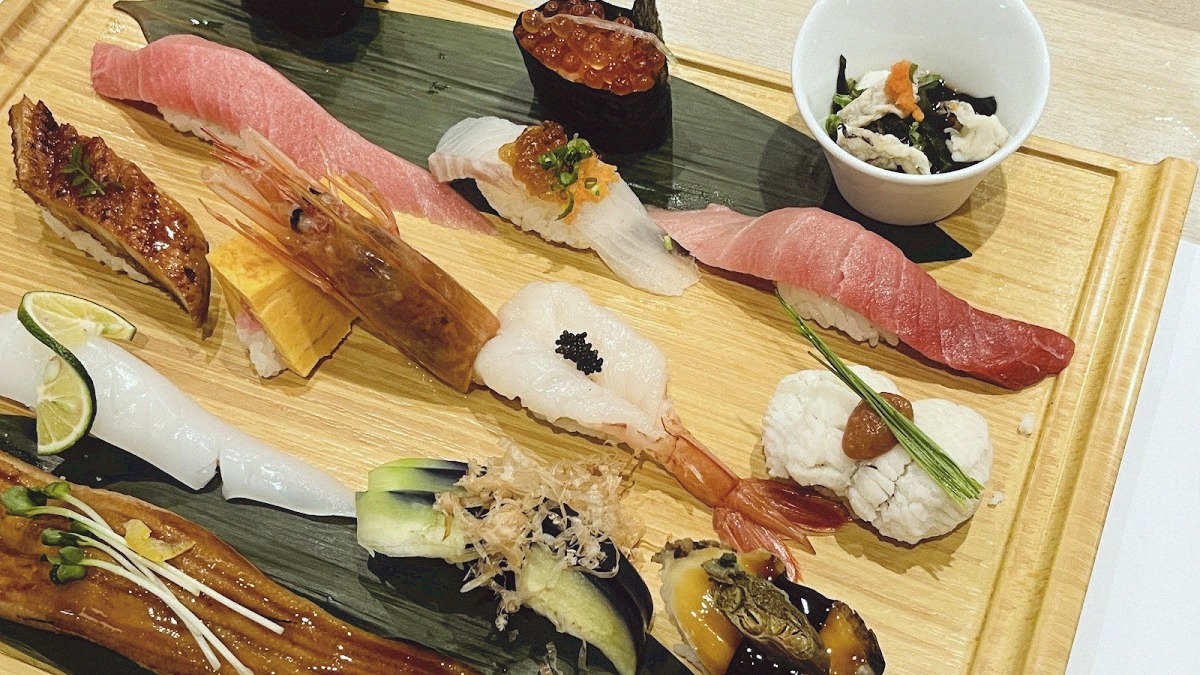
If you have read about Tokyo sushi in English, you have read that omakase means “chef’s choice.” The translation is technically accurate. It is also wrong in the way that translations often are — it carries the words across without the weight, and the weight is the entire point.
This piece is about what you are actually doing when you say omakase, why the practice exists in the form it does, and what it asks of you in return.
What You Think It Means vs. What It Means
The literal translation of omakase (お任せ) is “to entrust.” The verb stem comes from makaseru, which is the same word a Japanese parent uses when they hand a child a household task and walk away — the sense is not just “you decide,” but “I trust you with this and I am no longer in the loop.”
When applied to a sushi counter, that meaning carries over. Saying omakase shimasu (お任せします, “I leave it to you”) is a small ceremony of trust. You are telling the chef that you do not want to choose, do not need to be consulted, and accept whatever they think appropriate. The weight is roughly equivalent to handing a tailor your measurements and not asking what fabric they will use.
This is not a casual transaction. “Chef’s choice” in an American restaurant is a menu shortcut: pick from a small list, here is the curated version, here is the price. Omakase in Tokyo is closer to a contract. The chef is now responsible for the entire arc of your meal — pacing, sequence, what to push, what to hold back — and you are responsible for showing up with attention, eating the courses in the order served, and not undercutting their judgment.
Why the Practice Exists in This Form
The Tokyo sushi counter is a small business. Most serious shops have between six and twelve seats, one head chef, one or two apprentices, and a single market run that morning. The chef knows what came in that day, what is at peak, what needs to be sold quickly because it will not survive to tomorrow, and which combinations will work given the temperature of the rice and the seasoning of the day’s shari.
A customer ordering piece by piece off a menu cannot navigate this. They will, by default, order the things they recognize — tuna, salmon, yellowtail — in a sequence that does not match the day’s actual quality curve. The chef will serve them, of course, but the chef knows the meal could have been twice as good if the order had been left alone.
Hence omakase. It is, fundamentally, an information problem solved by trust. The customer admits they do not have the data the chef has; the chef agrees to use that data on the customer’s behalf. Both sides are better off.
This logic is older than the word. Edo-period sushi vendors served whatever fish was at hand that day, in whatever order the chef thought made sense, and the customer ate it. Menus and à la carte ordering came in only with the rise of mid-century franchise sushi. Omakase as a formal request emerged in the 1980s as a way for serious shops to push back — to tell customers, politely, “please return to the older arrangement.”
What Omakase Asks of You
Three things, in roughly this order of importance.
Eat each piece in the order it is served, immediately. The chef has timed the rice temperature, the wasabi level, and the topping seasoning to land in your mouth within thirty seconds of the piece reaching the counter. Photographing the piece for two minutes is breaking the contract. Eating in the wrong order — saving the fatty tuna for last because you like it — destroys the structure the chef built.
Do not modify. Specifically: do not ask for extra wasabi, do not pour soy sauce on the rice, do not flip the piece upside down to dip it. The chef has already wasabi’d, brushed the soy reduction (nikiri) onto the topping, and decided the seasoning level. “Modify” is a polite word for “override.” You can do it once or twice without offense, but doing it consistently signals that you would have preferred to order off a menu, which raises the question of why you ordered omakase.
Engage with the chef, briefly. A serious counter is a working environment, not a performance. The chef will probably tell you what each piece is — kohada from Saga prefecture, otoro from a 240 kg tuna — and a brief acknowledgment (oishii desu, “that was delicious,” or a simple nod) closes the loop. Long enthusiastic monologues are not expected. Silence and attention are appreciated. The chef is not your friend; they are a professional doing skilled work in front of you, and the appropriate posture is something between gratitude and reverence.
When to Use It and When Not To
Use omakase at counters where the chef is visibly working in front of you, where the sushi is the point, and where the price reflects this — typically ¥10,000 and up at lunch, ¥20,000 and up at dinner. The format is wasted at conveyor-belt sushi (kaiten-zushi, 回転寿司) and at the cheap sushi sets sold at department-store basements.
Do not use omakase if you have a strong dislike (e.g. uni or shellfish allergy) and have not communicated it before sitting down. Tell the staff at booking, or at least at seating, what you cannot eat. The chef will quietly adjust the sequence, and the meal will work. Saying omakase and then refusing pieces mid-meal is the worst of both worlds — you have given up the menu but kept the right to reject, which leaves the chef unable to plan.
If you are uncertain whether you are at an omakase-worthy shop, the easy heuristic: count the seats. Six to twelve, one chef visible, prices not posted on the wall — this is an omakase shop. Forty seats, multiple chefs, a printed menu — order off the menu.
Beyond Sushi
The word now travels beyond sushi counters. Omakase is offered at high-end tempura shops, at kaiseki (懐石) restaurants where it overlaps with the tasting-menu format, at top yakitori counters, and at kappo (割烹, counter-style Japanese cuisine) restaurants generally. The mechanics are similar — entrust the chef, eat what arrives, do not modify — but the financial commitment scales with the cuisine. Omakase at a serious kaiseki shop in Akasaka starts around ¥30,000 per person and runs to ¥80,000.
Western restaurants in New York and London have begun selling “omakase” as a menu category — usually a 12-to-20-course set price meal at a sushi-style counter. The format is roughly the same. The word, in those settings, has shifted closer to its English translation: it has become a product, not a relationship. Whether this loss of meaning matters depends on how seriously you took the original. The chefs who founded the practice in Tokyo would have an opinion.
Where to Try It Well in Tokyo
For a first omakase, the recommendation is to choose a counter with one to three Michelin stars, in Ginza, Roppongi, or Yotsuya, with a lunch slot that runs ¥10,000 to ¥18,000 — about half the dinner price for nearly the same experience. Reserve four to six weeks ahead through a hotel concierge or a service like Pocket Concierge. Wear something the chef will not be embarrassed to have at their counter (a button-down shirt is enough; jacket optional).
If you want a midrange entry point, several shops in Ginza and Tsukiji offer omakase at ¥6,000 to ¥9,000 for lunch, no reservation, walk-in counter only. The pieces are fewer (10 to 14 instead of 18 to 24) and the fish is one tier below the Michelin shops, but the form is the same and the trust contract still holds. A first omakase at this level is the right way to learn the rhythm before committing to the higher-priced shops.
The conveyor-belt sushi places, much as we love them for what they are, are not where you say omakase. Save that word for the counter where it still means something.
When a shop stakes everything on one element, that is kodawari — what the word promises, and when it is just a sticker.