
Why Each Tokyo Neighborhood Has Its Own Ramen Style
The ramen at a Shinjuku tsukemen counter and the ramen at an Ogikubo shoyu shop are not just different bowls — they are different worldviews, shaped by which workers settled where, and what those workers wanted to eat after work.
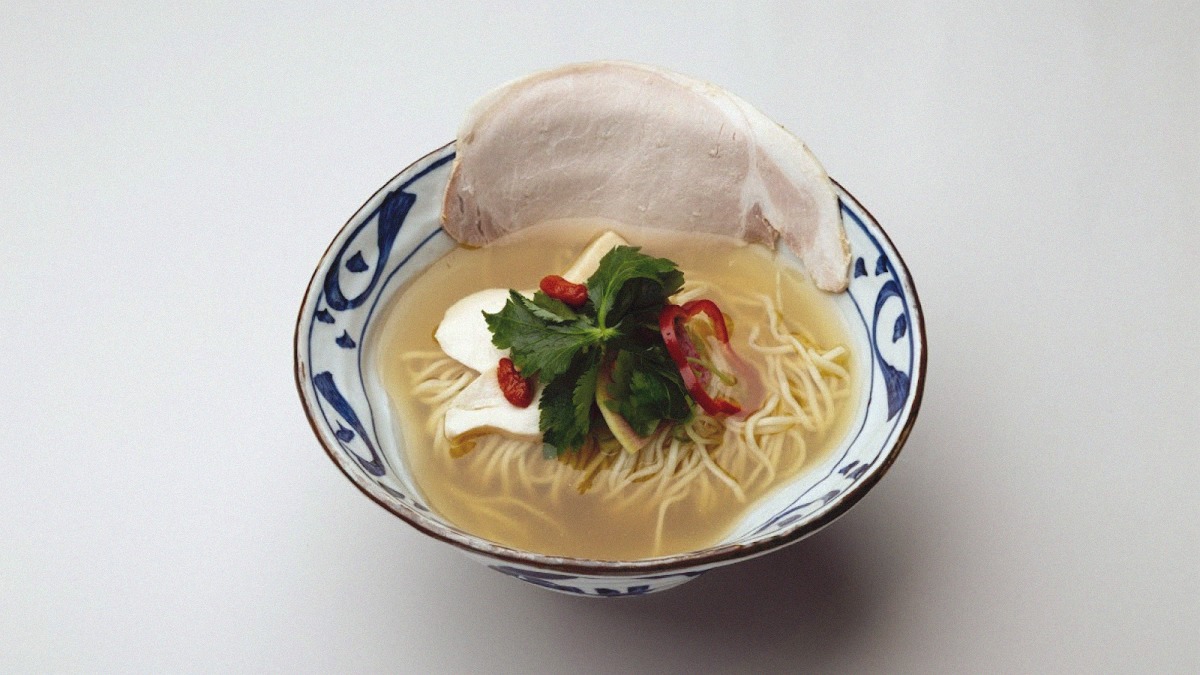
If you eat ramen across Tokyo for a week, you’ll notice something most travel writing skips: the bowl actually changes when you change neighborhoods. Shinjuku’s signature dish runs thick, rich, fish-and-pork — built for queuing salarymen on a 30-minute lunch. Walk twenty minutes west to Ogikubo, and the local style is light, clear, soy-forward — sipped slowly by older regulars who’ve been visiting the same shop for decades.
This isn’t a trick of perception. It’s the result of a specific historical pattern: Tokyo’s working-class neighborhoods developed their own ramen subcultures in the postwar decades, shaped by who lived there and what they could afford to eat.
Ogikubo and Asagaya: The Old-School Shoyu Belt
The Chuo Line corridor running west from Shinjuku — Ogikubo, Asagaya, Koenji — is where Tokyo’s Tokyo-style shoyu ramen lives. Clear chicken-and-fish broths, thin curly noodles, soy sauce as the dominant flavor, restrained portions. The shops are 50–70 years old, often passed between two generations, and they sit in shotengai (covered shopping arcades) that haven’t visually changed since the 1980s.
This style developed because the audience along this corridor was, and largely still is, salaried older men: civil servants, mid-level office workers, retirees. The bowl is built for repeated visits — light enough to eat three times a week, refined enough to reward attention. There is no signature gimmick. The signature is the consistency.
Shinjuku and Ikebukuro: The Tsukemen Capital
Tsukemen — separated noodles and concentrated dipping broth, invented in nearby Nakano in 1955 — found its real audience in the high-density commercial wards. Shinjuku and Ikebukuro both have something the Chuo Line villages don’t: hundreds of thousands of office workers passing through every weekday, looking for a 25-minute lunch that hits hard enough to fuel an afternoon.
Tsukemen’s economics fit this. The format takes longer to eat than ramen (you dip each bite separately) but customers tolerate that because the flavor return per bite is enormous. Shops can charge ¥1,100–¥1,400 instead of ¥800. The result, by the 2000s, was a tsukemen ecosystem clustered tightly around Shinjuku, Ikebukuro, Akasaka, and Tokyo Station — basically following the salaryman density map.
Yokohama Influence: The Iekei Belt
If you eat ramen in southern Tokyo — Shinagawa, Meguro, parts of Setagaya — you’ll start running into shops with photos of bowls topped with spinach, nori, and a slice of pork bigger than the bowl. This is iekei (“family-style”), originally a Yokohama format from the 1970s that crossed the city line and slowly colonized the southern Tokyo suburbs.
Iekei is a hybrid: tonkotsu pork-bone broth (Kyushu influence) seasoned with shoyu (Tokyo influence), with thick straight noodles. The format is custom-order intensive — you specify broth strength, oil level, noodle firmness — which made it popular with construction workers and tradespeople who liked feeling in control of the bowl. Today the iekei chains (Yoshimuraya being the original) have expanded across Tokyo, but the format still feels most natural in the southern wards near the Yokohama border.
The Niboshi Pocket of Hachioji and Akabane
Most travel writing about Tokyo ramen ignores the niboshi (sardine-stock) shops, but they’re worth noticing. Niboshi-style ramen is intensely fishy — the dried sardines are the dominant flavor, sometimes uncomfortably so for first-time eaters — and the style has stronghold pockets in Hachioji (far western Tokyo) and Akabane (just north of Ikebukuro), both working-class neighborhoods with strong drinking cultures.
The connection is alcohol. Niboshi broth is intentionally aggressive — the kind of thing you order at midnight after several beers, when your palate needs something with edges. It’s late-night food in places where late-night eating is the dominant economic pattern.
Why the Pattern Survives
You might expect homogenization to flatten this map. Tokyo is global; chefs travel; trends spread on social media in hours. And yet the neighborhood-specific patterns persist, year after year.
The reason is that ramen shops in Tokyo are still mostly small, owner-operated, single-location businesses. The cook is the owner. The owner lives in or near the neighborhood. The customers are mostly regulars from a one-kilometer radius. When the cook tweaks the bowl, they tweak it toward what the daily regulars want. Over decades, this produces a feedback loop in which each neighborhood’s bowl drifts further toward the local audience.
Which is why, when you visit a city of 14 million people and find that the ramen tastes different on opposite sides of the JR Yamanote Line, you are not imagining it. You are tasting the work of decades, performed in shops the size of a New York living room, by people who never expected to be visited by a tourist.
How to Use This
If you have time for three Tokyo ramen meals, eat them in three different neighborhood styles. A tsukemen lunch in Shinjuku, an old-school shoyu bowl in Ogikubo, and an iekei dinner in southern Tokyo will give you more of Tokyo’s actual ramen culture than three meals on Tabelog‘s top-rated list — which inevitably overweight one or two famous shops in the same district.
The bowls won’t taste the same. They aren’t supposed to.