
Solo Dining in Tokyo — Why Japan Is the World’s Best City to Eat Alone
Eating alone is treated as a third-rate option in most cities. In Tokyo it is structurally normal — even preferred. The reasons are physical, social, and economic, and they make solo dining in Tokyo a category-defining experience.
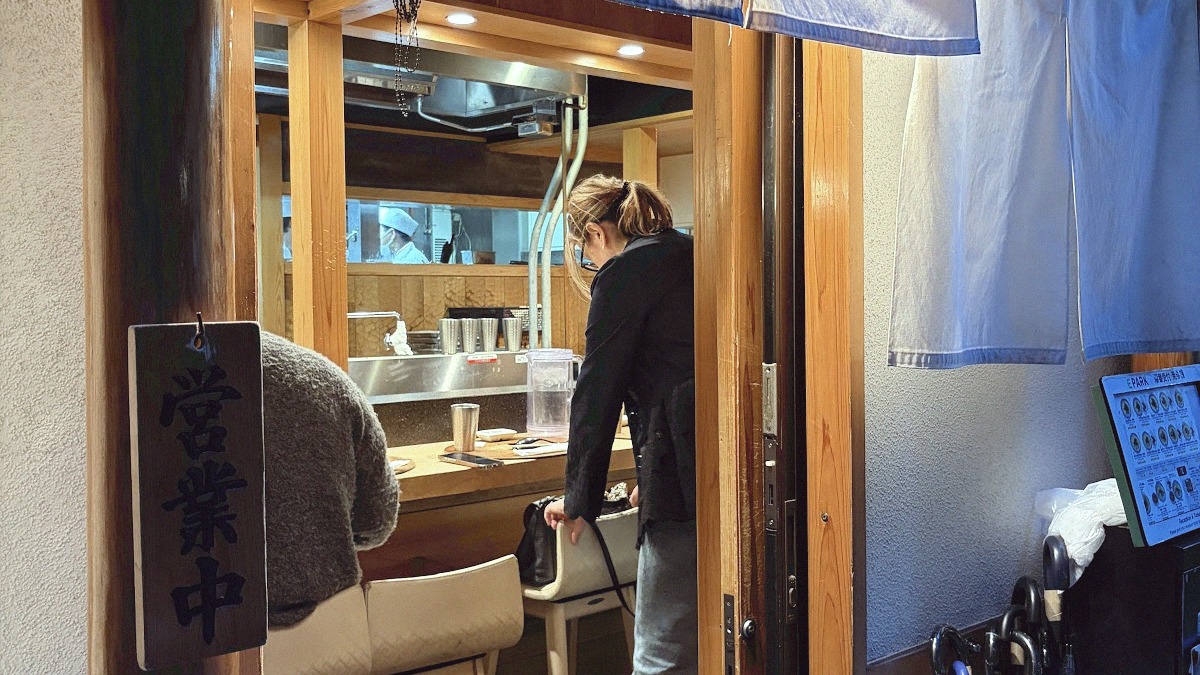
In most cities, eating alone is something you tolerate when no one else is free. The host gives you the smallest two-top by the kitchen door. Other diners glance over once and look away. The waiter clears your single setting with a neutral efficiency that, however polite, communicates that you are not the customer the restaurant was built for.
Solo dining in Tokyo is different. The city’s restaurant geometry, its labor model, and its century-old culinary genres were built around the single eater, and the result is that going to dinner alone is not a workaround — it is, for many of the best restaurants in the city, the format the food was designed for.
This piece is about why Tokyo is the world’s best city to eat alone, what it actually feels like, and the restaurants and rituals that make solo dining in Tokyo a category most travelers underestimate until they try it.
The Geometry: Counters Everywhere
Walk into a Tokyo soba shop, ramen shop, or sushi counter, and the first thing you notice is the seating. There are no tables, or only two or three. The rest of the restaurant is a single bar that runs along the back wall, with stools spaced exactly one body-width apart, facing the cooks.
This is not a stylistic choice. It is the dominant Tokyo restaurant layout, and it predates the modern hospitality industry. Edo-period yatai (street-food carts) were counter-only by physics: the cart was small and the customers stood. When indoor restaurants emerged in the late 19th century, they kept the format because their target customer was the same — a single working-class man looking for one bowl of food on his way home from a shift.
That layout never went away. It evolved. Today the same geometry shapes everything from Fuunji’s tsukemen counter in Shinjuku to the eight-seat omakase bars in Ginza that charge ¥40,000 a person. The difference is the ingredients. The shape is identical: you sit, the chef cooks in front of you, the food crosses three feet of bar to land in front of your hands.
For the solo eater, this is decisive. There is no awkward second chair. No empty place setting. No “table for one” with the implicit footnote. You sit at the bar like everyone else, because the bar is where everyone sits.
The Social Cover: “Solo Eater” Is a Recognized Identity
Japanese has the word ohitorisama (お一人様), which literally means “the honorable single person.” It is the polite term used by hosts and reservation systems for solo guests. Booking sites have a checkbox for it. Karaoke chains have entire menus for it. Yakiniku grill chains (Yakiniku Like is the prominent example) built a national franchise on the premise that one person should be able to grill a dozen cuts of beef alone, at a counter, without explanation.
The cultural weight of ohitorisama matters because it removes the one thing that makes solo dining hard elsewhere — the suspicion that something is wrong with you for being alone. In Tokyo, the suspicion is reversed. Going to a famous ramen counter alone, at lunch, is the default. Going with a group of four is the exception, and is faintly inconvenient for the shop because four-tops force seating reshuffles.
The popular Japanese television series Kodoku no Gourmet (孤独のグルメ, “The Solitary Gourmet”) spent 12 seasons on a single premise: a middle-aged businessman walks into restaurants, sits at the counter, eats, and leaves. No companion, no narrative arc beyond the meal. The show’s existence — and its widespread popularity — confirms that the solo eater is a culturally legible character, not a sad anomaly.
The Economics: Solo Pricing That Actually Works
Tokyo’s restaurant economics favor the single eater in ways that other cities don’t. Most Tokyo restaurants do not charge per-person service fees, do not have a minimum spend, do not push expensive bottles, and do not increase the per-head cost when you arrive solo. In fact, the opposite often holds — the lunch teishoku (set meal) at a serious restaurant is typically half the price of dinner for nearly the same food, and is sized for one person.
A solo lunch budget that works in central Tokyo (the full daily math is in our Tokyo food budget guide):
- ¥1,000–¥1,500: A bowl of ramen at Nagi in Golden Gai, a soba teishoku, or onigiri and side dishes at a neighborhood shop.
- ¥1,800–¥2,500: A solid tonkatsu set, a tendon at a 100-year-old shop like Imahan, or sushi lunch at a serious counter.
- ¥3,000–¥6,000: A mid-tier omakase lunch — full sushi course, single chef, ten to fifteen pieces, fresh that morning.
- ¥8,000–¥15,000: A serious omakase lunch at a Michelin-recognized counter, the kind of meal you would pay double for at dinner.
Each of these tiers is built around a single seat at a counter. The pricing assumes you are alone. There is no group discount because there is no group premise.
The Five Solo Dining Formats Worth Knowing
Tokyo has at least five restaurant formats where the solo eater is the default customer. Each has its own etiquette, its own pricing, and its own pleasure.
1. The Ramen Counter
The Tokyo ramen shop is the canonical solo eater’s restaurant. Eight to fifteen counter seats, no tables, ticket machine at the door, ten-to-fifteen-minute meal, no expectation of conversation. Ichiran took this to the structural extreme by separating diners into individual booths, but the format is older. Most serious ramen shops — Fuunji, Tsuta, Mensho — assume you are eating alone, do not encourage lingering, and treat the meal as a focused single act.
2. The Soba Counter
Often standing-only, often near a train station, often eaten in under five minutes. The classic tachigui-soba (standing soba) shop exists explicitly for solo working adults to eat between trains. The food is unpretentious — buckwheat noodles in dashi, with tempura or wakame on top — and the price runs ¥350 to ¥600. We have written about why the cheap soba costs ¥600 and the serious soba costs ¥1,800; both are, in their way, solo eater’s restaurants.
3. The Sushi Counter
The serious sushi counter is the format that turns solo dining into a small ritual. Six to twelve seats, one chef, no menu, an arc of pieces served in the order the chef chooses. Going alone is not just acceptable here — it is the experience the format was designed for. Two people can talk to each other and break the rhythm. One person eats with focus, exchanges a few words with the chef between pieces, and leaves with a meal that landed exactly as intended. We have written about what omakase actually means as a contract between you and the chef; the format works best with one party of one.
4. The Izakaya Counter Seat
Izakaya are typically thought of as group dining, but most have a counter section that is reserved for solo and pair seating. Sit there, order three small plates and a beer, and you will spend ¥3,000 to ¥4,500 for an unhurried meal that lasts ninety minutes. The izakaya counter is the setting for the prototypical Tokyo evening alone — slow drink, light food, a long look out at the street. Dandadan Sake Bar in Nakano is one example; most Tokyo neighborhoods have three or four within walking distance of any train station.
5. The Cocktail Bar
Tokyo’s serious cocktail bars are almost entirely counter-based, with eight to twelve seats arranged around a single bartender. A bar like High Five in Ginza — World’s 50 Best Bars hall of fame, no menu, drinks built around a brief conversation about your taste — is the solo dining ideal in liquid form. You sit, the bartender asks two questions, and a drink arrives that was made for you and only you. The experience is structurally similar to omakase sushi, in a different medium.
What Solo Dining Actually Feels Like
The texture of a solo meal in Tokyo is hard to convey to someone who has not done it. The closest analog is the experience of going to a museum alone. You set your own pace. You look at what you want. There is no negotiation about how long to spend on each room. The objects in front of you have your full attention.
At a counter, the same thing applies to the food. You taste the rice on the third piece of sushi and notice that the chef has changed the seasoning for a reason. You hear the broth poured into the bowl in front of you and the small clink of the lid as the cook finishes the dish. You watch a single yakitori skewer finish over the charcoal and arrive in front of you at exactly the right temperature. None of this requires that you eat alone. All of it is easier when you do.
The other consequence is conversational, not gastronomic. Tokyo counter chefs and bartenders are accustomed to brief, low-key exchanges with solo customers. “Where are you from?” “How long are you in Tokyo?” “This piece is from the Boso peninsula, the season just started.” These are small, real conversations between two people doing focused work — the chef cooking, the customer eating. With a group of four, those exchanges do not happen, because the group is talking among itself. With one person, they happen naturally, in the gaps between courses.
Solo Dining Etiquette: The Three Rules
Three small etiquette points that distinguish a comfortable solo Tokyo meal from an uncomfortable one.
Don’t linger past the meal. Counter seats are productive real estate at a small Tokyo restaurant. Once you finish your last bite, settle the bill and go. Sitting at a sushi counter for thirty minutes after the last piece is served is read as occupying a seat that someone else is waiting for. The norm is brisk: arrive, eat, pay, leave.
Phones face down. Most counter restaurants do not forbid phones, but the cultural expectation is that a meal at a serious counter is the meal — not a backdrop for scrolling. Photos of the food before eating are normal in tourist-facing places, frowned on at top sushi counters. The default move at any serious counter is to put the phone in your bag.
Engage briefly when invited. If the chef tells you what each piece is, a simple oishii desu (おいしいです, “that’s delicious”) or a small nod of acknowledgment closes the loop. Long enthusiastic monologues are not expected and slightly burden the chef, who has work to do. The right register is brief, warm, and not effusive.
Why Other Cities Don’t Do This
The structural reason most Western cities are bad at solo dining is that their restaurant economics depend on table turns and group spend. A two-top occupied by one person represents lost revenue at restaurants where the labor cost of seating any party is fixed. Counter seating solves this — the restaurant fills the counter regardless of how many parties of one show up — but most Western restaurant designs deprioritize counters in favor of tables that can flex from two to four guests.
Tokyo’s restaurants did the opposite. The counter is the primary surface, and tables (when they exist at all) are secondary. The result is a city where the structural incentive of every small restaurant aligns with the solo eater. The chef makes one bowl as profitably as four. The customer can take a single seat without apology. The math works.
Three Solo Meals to Plan
If you have three days in Tokyo and want a tour of solo dining at its best, the structure that we recommend:
Day 1, lunch: A ramen counter in Shinjuku or Shibuya. Fuunji’s tsukemen, queued for at noon, eaten in twelve minutes, with the cook visible the entire time. Total time: 90 minutes including the line. Total cost: ¥1,300.
Day 2, dinner: A counter izakaya in a quiet neighborhood. Three small plates, one drink, ninety minutes of unhurried eating with the cook in front of you. The setting is unimportant; the experience is consistent across most Tokyo neighborhoods. Total cost: ¥4,000.
Day 3, the omakase lunch: A serious sushi counter in Ginza or Yotsuya, booked through a hotel concierge or Pocket Concierge, ten to fifteen pieces over the course of ninety minutes. This is the meal where solo dining moves from “convenient” to “actually preferable.” The chef is talking to one person. That person is you. Total cost: ¥10,000–¥18,000.
You do not need to follow this exact sequence. You do need to set aside the assumption you brought from home — that eating alone is a compromise. In Tokyo, alone is the format the food was made for.
Eating solo after dark raises one more question for some travelers: is it safe for a woman to eat alone at night in Tokyo? The honest answer, with the data, is here.