
How to Eat Ginza
Ginza isn't expensive everywhere — but it's the one district organised entirely around refinement, where the confident walk-in fails. The inverse of Asakusa: the four layers, and why here you reserve into the food instead of finding it.
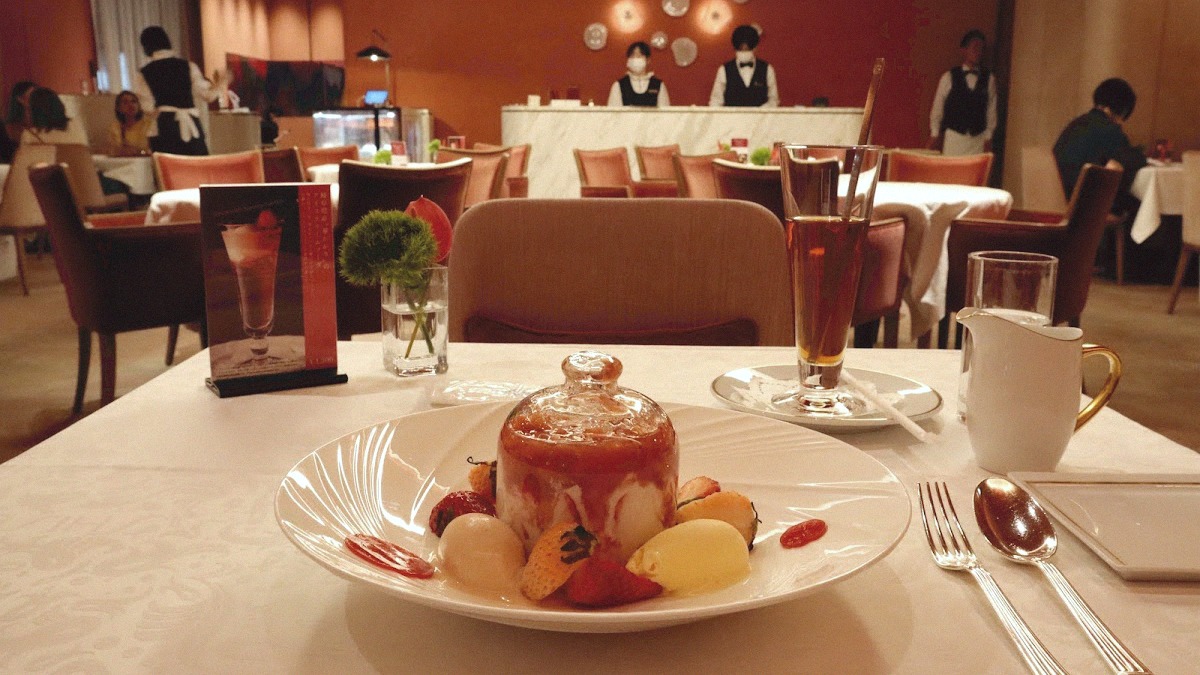
Ginza scares people off before they have read a single menu: it looks like the district where you cannot afford to eat and would not know how if you could. Half of that is wrong and the other half is fixable. Ginza is not expensive everywhere — but it is the one Tokyo district where the food is organised entirely around refinement, and where the move that works in every other neighbourhood, the confident walk-in, is precisely the one that fails. Ginza is the inverse of Asakusa: you do not wander into it, you reserve into it.
This piece is that logic: why Ginza eats the way it does, the layers it splits into, the way to move through it that the district actually rewards, and what to skip.
Why Ginza Eats the Way It Does
Ginza was engineered to be modern. After an 1872 fire the Meiji government hired a British architect to rebuild it in fireproof red brick — Japan’s first deliberately Western district, a “Bricktown” meant to show the country could be new. Imported goods came up from adjacent Shinbashi, Western restaurants opened, cafes filled with writers and painters until Ginza was Tokyo’s small Montparnasse. That origin still runs the food: Ginza does not preserve old eras the way shitamachi does — it perfects things. Every category here exists in its most polished, most formal form, because refinement was the point of the district from the day it was rebuilt. Read Ginza as levels of refinement, not types of cuisine, and it stops being intimidating and starts being navigable.
The Four Layers of Ginza
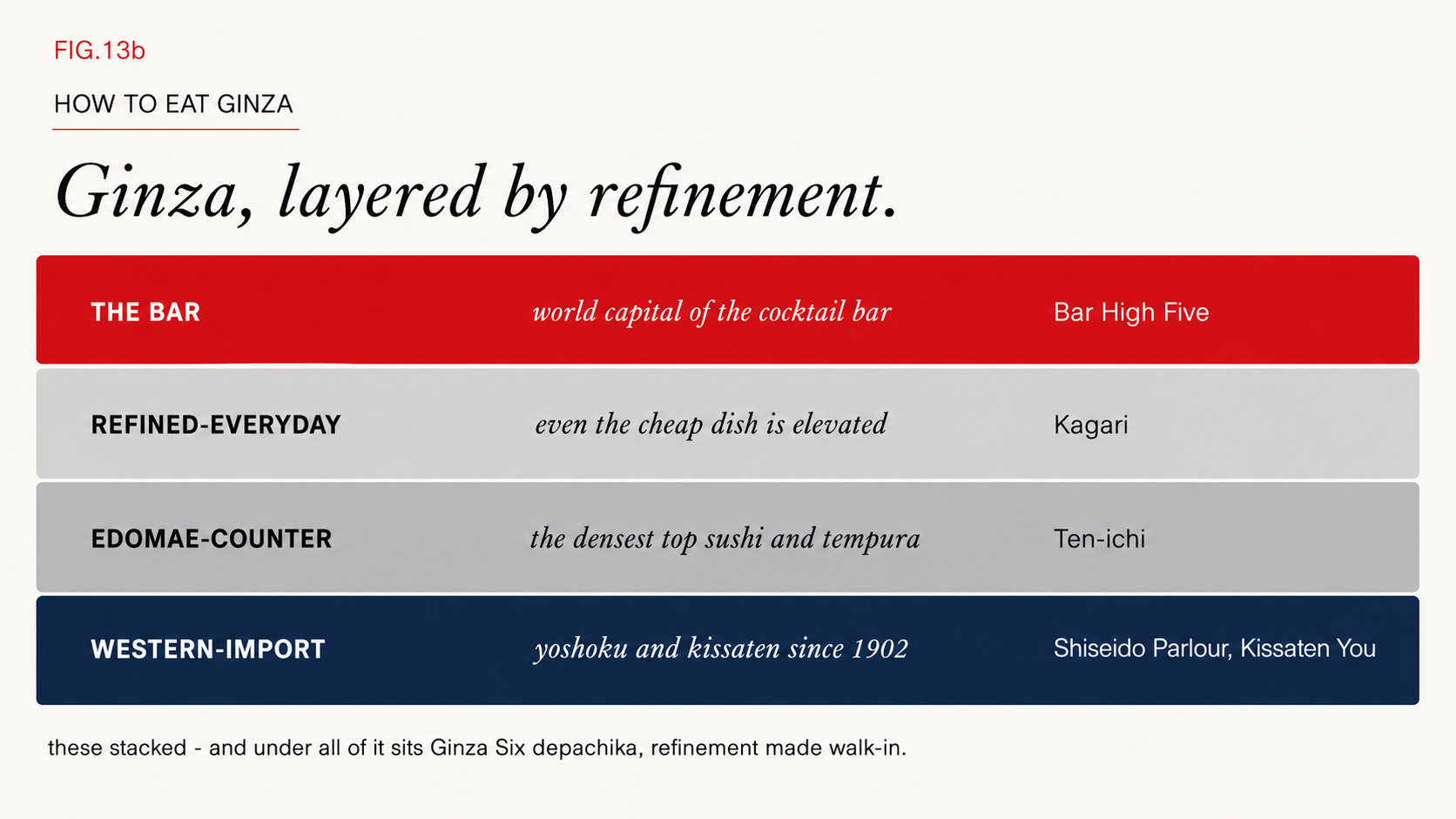
The Western-import layer. Ginza is one of the two birthplaces of yoshoku (洋食, Western-style Japanese cuisine) — the formal Ginza branch, not the chopstick-casual Asakusa one: Shiseido Parlour, serving Western-style food here since 1902, is the institution, and the kissaten (喫茶店, traditional coffee house) tradition that began when Cafe Paulista brought Brazilian coffee to Ginza in 1911 survives at rooms like Kissaten You, famous for its softly-set omurice. The Edomae-counter layer. Ginza holds the densest concentration of top sushi and tempura counters on earth; Ten-ichi, frying counter tempura here since the 1930s, is the accessible way into that world without a three-month wait. The refined-everyday layer. The tell that Ginza polishes everything: even the cheap dish is elevated — Kagari turns a bowl of chicken-broth ramen into something Michelin notices, proof the district’s standard reaches all the way down the price scale. The bar layer. Ginza is the world capital of the Japanese cocktail bar, and Bar High Five is its best-known room — the close of a proper Ginza evening, not an afterthought. Underneath all of it sits the depachika: the Ginza Six food hall is the refinement made affordable and walk-in, the one exception to the reserve-ahead rule.
How to Actually Eat Ginza
Move the opposite way to every other district: plan, do not graze. Pick one perfected thing per visit and build the day around it. Book the counter layer well ahead if it is the point — Ten-ichi for tempura is the gentler entry — and treat the reservation as the spine of the day, not a slot to squeeze in. Use the Western-import layer for the unbookable pleasures: a slow Shiseido Parlour lunch or an afternoon hour in a kissaten is meant to be lingered in, formally, the way the Meiji intellectuals used it. Drop into the refined-everyday layer when you want the Ginza standard without the ceremony — a Kagari bowl proves the district to you in twenty minutes. Close in the bar layer, late, deliberately. And when none of that fits the budget or the clock, the Ginza Six depachika is the walk-in escape hatch that still delivers the district’s quality. The rule of motion here is singular focus: one excellent reserved thing, framed by unhurried unbookable ones — never a scramble between many.
What to Skip, and the One Rule
Skip the confident walk-in into the counter layer — at the top rooms it does not work and trying it wastes the trip; skip the tourist-facing “Ginza experience” set menus that sell the postcode rather than the cooking; and skip judging the district as unaffordable before you have used the depachika and the refined-everyday layer, which are not. For the connective logic, how to eat Asakusa is the deliberate mirror — the same yoshoku history splitting into a casual branch there and the formal one here — the coffee belts piece places the kissaten layer, what omakase actually means prepares you for the counter layer, and the depachika piece is why Ginza Six is the affordable way in. The one rule for Ginza, the inverse of every other pillar: you do not find the food here, you make an appointment with it.
Sources & Further Reading
- GO TOKYO (official) — the charm of Japan’s Western-style cuisine (the Ginza vs Asakusa yoshoku split; the formal Ginza branch)
- Plenus Kome Academy — the roots of yoshoku (how Western cuisine spread; Ginza’s role in popularising it)
- Tokyo MK — Ginza history: from Edo silver mint to modern district (the 1872 fire; the Meiji red-brick Bricktown rebuild)
- LIVE JAPAN — food and drinks that were created in Ginza (Cafe Paulista 1911; the kissaten and yoshoku origins)
- Tokyo Weekender — the best Ginza coffee shops (the surviving classic-kissaten layer)