
How to Eat Asakusa
Most people photograph the temple and graze the souvenir street and miss it entirely. Asakusa is a four-century food district with a temple in the middle — layered by era, not cuisine. The four strata and the order to eat through them.
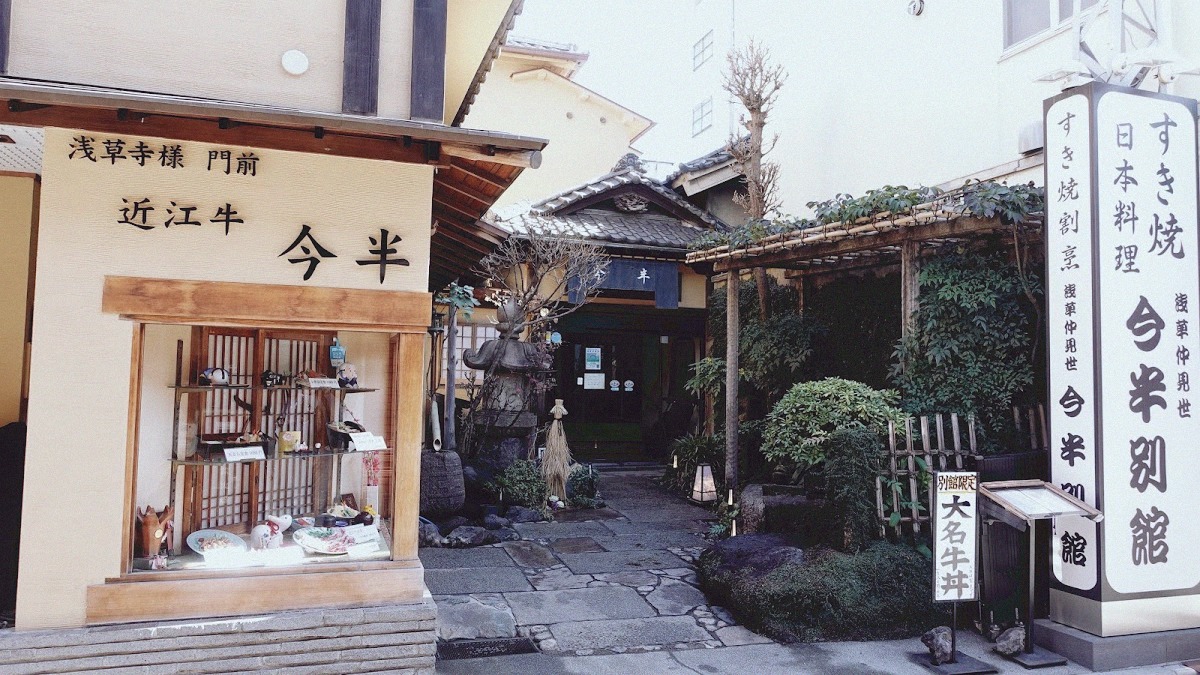
Asakusa is the part of Tokyo most people visit and fewest people actually eat. The pattern is predictable: photograph the giant lantern at the temple gate, graze whatever is loudest on the souvenir street, leave by mid-afternoon, and never find out that the district behind the temple is one of the deepest food neighbourhoods in the city. The mistake is treating Asakusa as a temple with restaurants near it. It is the reverse — a working-class food quarter that happens to have Tokyo’s oldest temple in the middle of it.
This piece is the structure underneath the crowd: why Asakusa eats the way it does, the layers it breaks into by era, the order to move through them across a day, and what to walk past.
Why Asakusa Eats the Way It Does
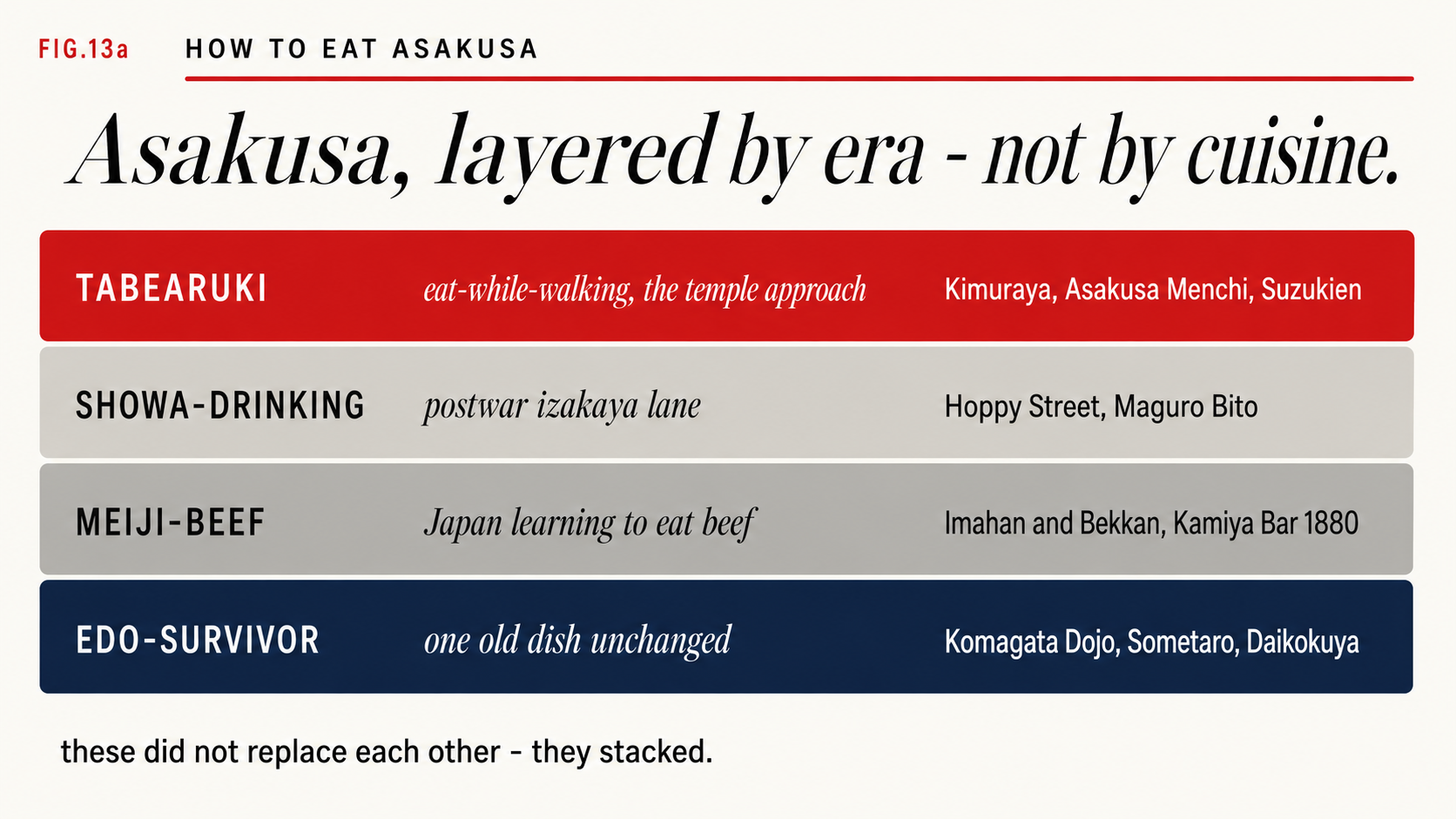
Asakusa is the heart of Tokyo’s shitamachi (下町, the old low-town), the working districts where the culture of Edo and then Showa survived while the rest of the city modernised over it. That is the whole key: in Asakusa, food is layered by the era it preserves, not by cuisine. The pilgrim street to the temple created a stand-and-eat snacking culture centuries ago; the Edo period left behind specialist houses doing one old dish unchanged; the Meiji “enlightenment” decades made Asakusa a centre of Japan’s first encounter with beef and Western drink; and the postwar years added a cheap, convivial drinking street. None of these replaced the last. They stacked. Reading Asakusa is reading those four strata and choosing which century you want lunch in.
The Four Layers of Asakusa
The tabearuki layer (the temple approach). Tabearuki (食べ歩き, eating while walking) is the oldest food culture here, and it lives on the souvenir street and its edges: Kimuraya Honten for griddle-fresh ningyo-yaki, Asakusa Menchi for the meat-cutlet snack people queue for, and Suzukien for graded matcha gelato that runs to the strongest in the world. The Edo-survivor layer. The reason to come hungry: Komagata Dojo has served loach hotpot essentially unchanged for over two centuries, Sometaro is okonomiyaki in a creaking old wooden house, Mugitoro keeps the old grated-yam-over-barley dish alive, and Daikokuya is the 130-year tendon icon. The Meiji-beef layer. Asakusa was central to Japan learning to eat beef: Imahan and its Bekkan annex are the sukiyaki institutions, and Kamiya Bar — Japan’s first Western-style bar, 1880, home of the Denki Bran — is the drink half of the same moment. The Showa-drinking layer. Hoppy Street is the postwar izakaya lane built for daytime drinking and nikomi stew, and Maguro Bito by the temple is the modern tuna-focused conveyor counter that proves the district still cooks for locals, not just pilgrims.
How to Actually Eat Asakusa
Move through the strata by time of day. Arrive earlier than the tour groups and graze the tabearuki layer along the temple approach as breakfast — ningyo-yaki and a cutlet, eaten walking, the way the street was always used. Make lunch the real event in the Edo-survivor layer: a loach pot at Komagata Dojo or okonomiyaki at Sometaro is the meal you actually came to Asakusa for, even if you did not know it yet. Take the afternoon slow on Hoppy Street, which is engineered precisely for an unhurried 3 p.m. drink and a bowl of nikomi. Then make dinner the Meiji-beef layer — sukiyaki at Imahan — and close at Kamiya Bar with the drink that started Japanese bar culture. The route is the point: Asakusa rewards moving forward in time across the day, snack to old Edo to Showa street to Meiji beef, not bouncing between them at random.
What to Skip, and the One Rule
Skip making the souvenir street your actual meal — it is a grazing spine, not a dining room; skip the photo-menu places clustered tightly at the gate that exist only for people leaving by 3; and skip treating Hoppy Street as a dinner venue when it is built for the afternoon. For the connective logic, the yokocho guide covers how to drink Hoppy Street properly, the birth of Edomae sushi is the same Edo food world Komagata Dojo belongs to, the sibling pillar how to eat Shinjuku shows the same layer-reading method on a completely different district, and otoshi explains the small bill the Hoppy Street izakaya will add. The one rule for Asakusa: it is not a sight with food attached, it is a four-century food district with a temple in it — eat forward through its eras and never make Nakamise the meal.
Sources & Further Reading
- Wikipedia — Asakusa (shitamachi; Senso-ji; the Nakamise pilgrim-street origin)
- Japan-guide.com — Asakusa (district layout; temple approach and dining context)
- Asakusa Station — Hoppy Street (Hoppy Dori) (the postwar Hoppy/nikomi drinking street; daytime culture)
- LIVE JAPAN — dining in Asakusa: sukiyaki to street snacks (Meiji sukiyaki; Komagata Dojo loach; Daikokuya tendon)
- Nippon.com — strolling old Tokyo where the Edo spirit lives on (the layered-eras framing of shitamachi Asakusa)