
How to Eat Shinjuku
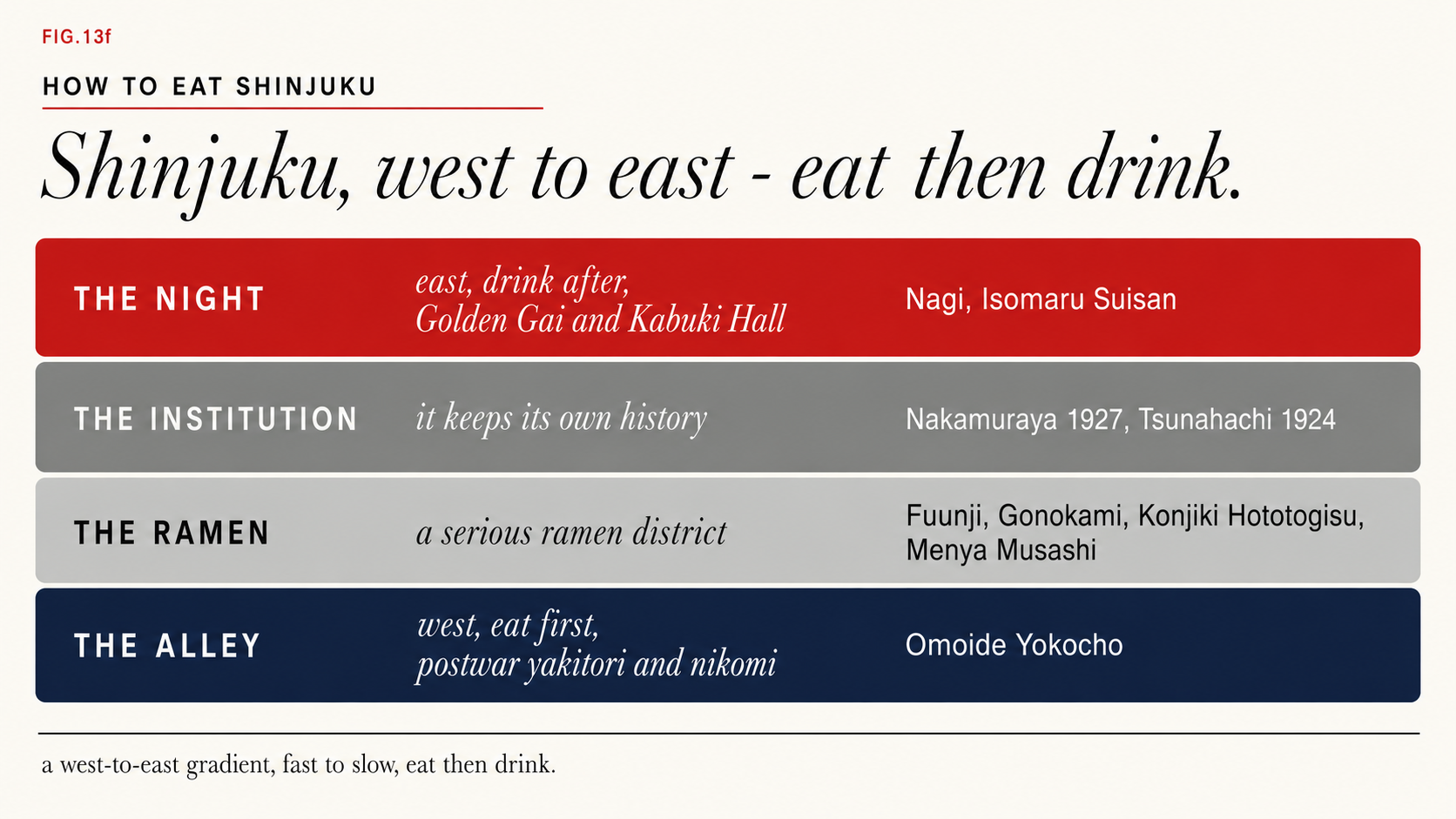
Most visitors eat in Shinjuku by accident — whatever was nearest the exit. The district is actually one of Tokyo's most legible: a west-to-east gradient, fast to slow, eat then drink. The four layers and the order to move through them.
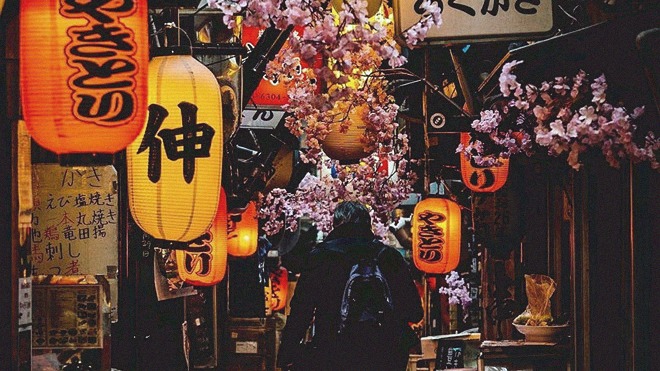
Shinjuku is the station the world walks through and the district most visitors eat in by accident — whatever was nearest the exit they happened to take, which in the busiest transit hub on earth is a lottery. The reputation is “overwhelming, neon, eat-and-flee.” The reality is that Shinjuku is one of the most legible food districts in Tokyo once you stop seeing a wall of signs and start seeing the structure underneath them, which barely changes from decade to decade.
This piece is the structure: why Shinjuku eats the way it does, the distinct layers the district actually breaks into, the order to move through them in a single evening, and the few things to walk straight past.
Why Shinjuku Eats the Way It Does
Shinjuku is organised by the railway, not by a cuisine. It is a commuter machine — millions of workers pass through daily — and its food grew to feed people in transit: fast, cheap, and dense on the west side around the station and the old postwar alleys; slower, later, and looser on the east side toward the entertainment quarter. That west-to-east gradient, from a grilled skewer eaten standing in ninety seconds to a tiny bar you sit in until 4 a.m., is the single most useful map of the district. Layer onto it the department-store basements, built to feed the same commuters something to carry home, and you have the whole logic: Shinjuku feeds movement, and the kind of food you want tells you which part of the movement to stand in.
The Four Layers of Shinjuku
The alley layer (west, eat first). Omoide Yokocho — the open-fronted postwar lane of yakitori and nikomi stalls by the west exit — is the entry point: warm, immediate, cookable-in-front-of-you, and welcoming even on a first night in Japan. The ramen layer. Shinjuku is a serious ramen district in its own right: Fuunji and Gonokami Seisakusho are the tsukemen benchmarks, Konjiki Hototogisu is the clam-and-truffle bowl that earned a star, and Menya Musashi is the double-broth original. The institution layer. The district keeps its own history alive: Nakamuraya has served its own curry here since 1927, and Tsunahachi has fried counter tempura since 1924. The night layer (east, drink after). Nagi runs 24-hour niboshi ramen inside Golden Gai’s maze of tiny bars, the Kabuki Hall yokocho is the modern indoor festival-themed version of the same idea, and Isomaru Suisan is the grill-your-own seafood izakaya that fills the gap between dinner and the bars.
How to Actually Eat Shinjuku
Run the layers in the order the district is built in, west to east. Start before the crowd at the depachika: the Isetan food hall is the best single basement in Tokyo, and a late-afternoon pass through it is the most efficient introduction to Japanese food anywhere — buy nothing or buy everything, both work. Eat dinner proper in the alley layer at Omoide Yokocho while it is still light enough to see the grills, or commit a serious meal to the ramen or institution layer if that is the evening’s point. Then cross east as it gets dark: a 24-hour bowl at Nagi inside Golden Gai, then the bars themselves for the slow end of the night. The rule that makes the whole district work is a sequence, not a place — eat on the west side first, drink on the east side after, and never the reverse, because Golden Gai is a place to sit, not a place to be fed. If you only have lunch, collapse the whole thing to one move: a single benchmark ramen bowl, walked into off-peak.
What to Skip, and the One Rule
Skip the touts and the photo-menu floors of Kabukicho aimed squarely at people who do not know the structure; skip eating a full dinner inside Golden Gai, which is priced and built for drinking, not feeding; and skip judging Omoide Yokocho by its old nickname — it is a real eating alley, not a novelty. For the mechanics behind each layer, the yokocho guide covers the alley etiquette, the depachika piece is why Isetan is the opening move, eating late in Tokyo covers the night layer, and the walk-in guide times the ramen queues. The one rule for Shinjuku: it is not a place you find good food, it is a gradient you move along correctly — west to east, fast to slow, eat then drink.
Sources & Further Reading
- byFood — Shinjuku Omoide Yokocho: a comprehensive guide (the west-exit alley layer; stalls and what to eat)
- Citadines — Shinjuku food guide: from ramen to Michelin stars (the district’s range; ramen and institution layers)
- DiGJAPAN! — a first-timer’s guide to Shinjuku’s Golden Gai (Golden Gai’s six alleys; drink-after, not a full meal)
- Tokyo Cheapo — Shinjuku area guide (the west/east structure; depachika and station logic)
- Kanpai Japan — Omoide Yokocho, the other side of izakaya (the eat-first sequencing; alley character)