
Is a Counter Tempura Dinner Worth It? Tokyo’s Lunch-vs-Dinner Question, Decoded
The English answer to "counter dinner or set lunch" is always about money. It misses what tempura is: not a dish but a tempo, fried and handed over piece by piece. Lunch is that tempo compressed, dinner is it stretched, and a tendon is a different food entirely. The decision rule keys to how your day is shaped, not your budget.
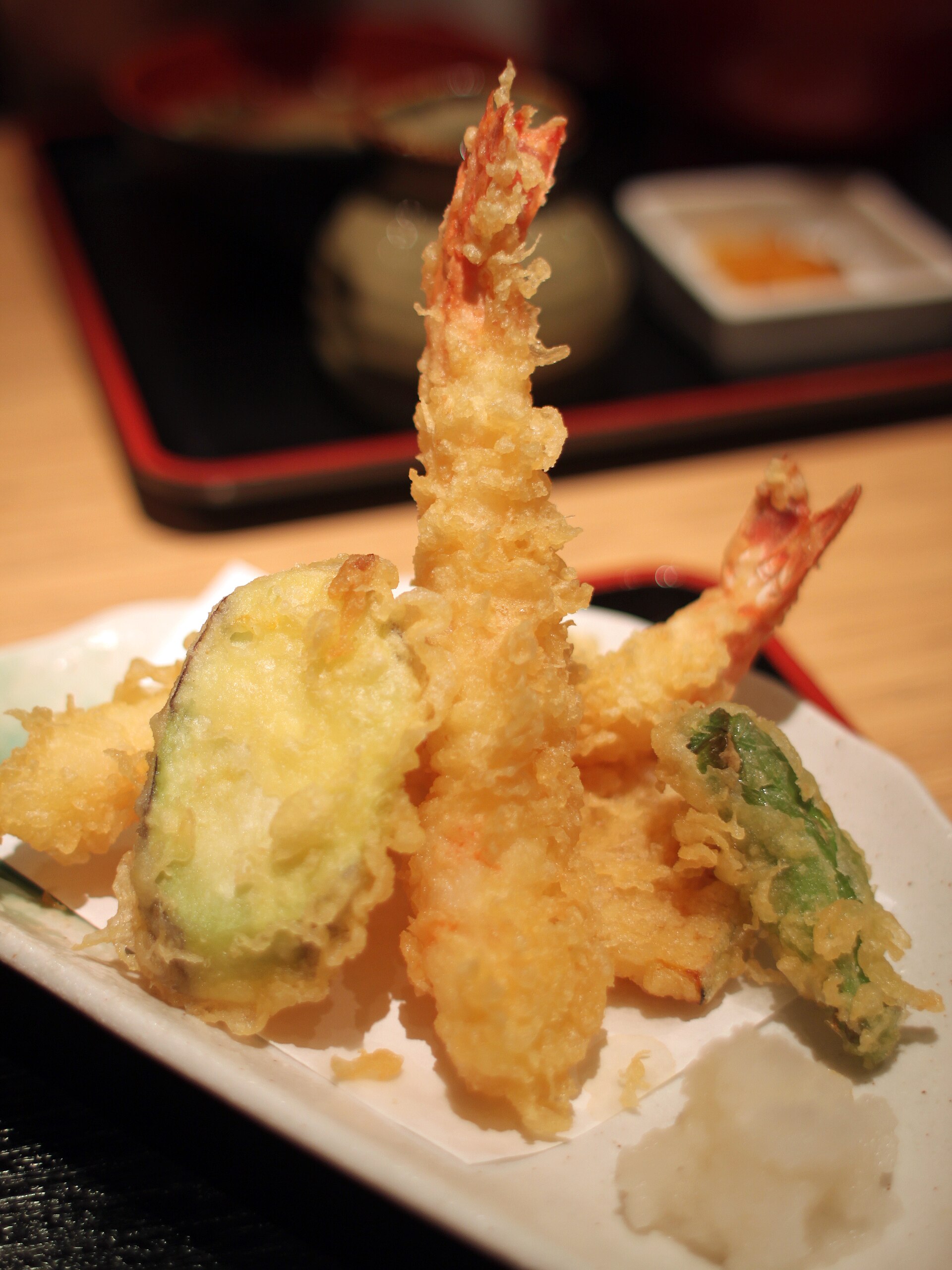
The English-language answer to this question is almost always about money: lunch is 30 to 50 percent cheaper, the quality gap is small, so book lunch and save the difference. That answer is not wrong about the prices. It is wrong about what tempura is. At a counter, tempura (天ぷら, tempura, fish and vegetables fried in batter) is not a plate of food the chef brings out cheaper at noon and dearer at night. It is a tempo: each piece is fried and handed to you to be eaten right away, with the chef walking the oil up in temperature from slow-cooking vegetables to high-heat seafood across the whole course. So the dinner premium does not buy better ingredients or a better cook. It buys time — more beats of that tempo, and more room for the chef to pace them. The real question is not “is the food better at dinner.” It is “how many beats do I want, and how is the rest of my day shaped.” Get that right and the decision answers itself, often in favour of lunch.

What You Think You’re Choosing: Cheap Tempura vs Expensive Tempura
Open any roundup of Tokyo’s best tempura and you will find lunch-and-dinner price pairs stacked like a menu: a famous Ginza counter listed at roughly ¥10,000–15,000 at lunch and ¥20,000–30,000 at dinner, the next one a little lower, the next a little higher. The numbers are presented as self-evident. Of course dinner costs more. It is dinner. The reader is left to assume the dinner version is simply the better, fuller, fancier edition of the same meal, and that lunch is the budget cut — fewer pieces, same idea, money saved.
This is the same trap travelers fall into with soba, where a ¥600 bowl and a ¥1,800 bowl share a name but are different foods made from different decisions — a gap we walked through in why real soba costs ¥1,800 and cheap soba costs ¥600. With tempura the trap is sharper, because the lunch and dinner at a single counter come out of the same kitchen. Same chef. Same oil, blended the same way. Same morning’s prep. If you treat the price gap as a quality gap, you will conclude — correctly, and uselessly — that the gap is small. Then you book lunch to save money, and you have made the right call for entirely the wrong reason, which means the next time the variables shift you will get it wrong.
What Tempura at a Counter Actually Is: A Tempo, Not a Dish
Sit at a tempura counter and the structure becomes obvious within two pieces. The chef fries one item, lifts it from the oil, and sets it on the paper in front of you. You are meant to eat it now — the freshly-fried moment, agetate (揚げたて, “just fried”), is not a bonus of sitting at the counter. It is the entire reason the counter exists. Tokyo’s own tourism board calls eating it the instant it is served the edomae way — wait, and the batter starts absorbing oil and loses its lightness. The crust is at its driest and lightest the moment it leaves the oil, and it begins to soften the moment it stops. Talk, photograph too long, and you are eating a slightly worse version of what the chef just handed you at its peak.
The order of the course is the craft, not the ingredient list. A chef stages the oil temperature across the meal: longer-cooking root vegetables early, at lower heat, so they cook through without burning; seafood later, at higher heat, when the oil is hotter and the batter sets fast and thin. There is a logic to the sequence — it keeps the oil from being fouled by stronger ingredients before the delicate ones go in, and it lets each piece finish correctly. The dish you are eating is really the dish plus its timing. This is why a counter course has an order at all, and why it is closer in spirit to what omakase actually means than to a set lunch: you are entrusting the chef with the pacing, not just the menu.
None of this changes between noon and night. The tempo is the same craft at both services. What changes is how long the chef gets to run it.
The Real Difference: Lunch Is the Tempo Compressed, Dinner Is the Tempo Stretched
A counter lunch is the identical craft compressed into fewer beats. You get the staging — a vegetable or two, then the shrimp, the kisu (キス, a small white-fleshed fish), the anago (穴子, conger eel) to close — fried in front of you, eaten agetate, but in a tighter arc that fits a midday hour. The brand that proves you don’t need a ¥20,000 evening to get this is Tsunahachi, founded in Shinjuku in 1924, where the counter is described by the shop itself as the “special seat” and the sound and smell of the frying are treated as part of the meal. A note before you plan around it, though: the original Tsunahachi Sohonten building in Shinjuku closes for a full rebuild on May 31, 2026, with the rebuilt flagship not due until summer 2028. The counter does not leave Shinjuku, though — a temporary annex (総本店別館, Sohonten Annex, main-shop annex) opens June 23, 2026 at TRES SHINJUKU, a one-minute walk away, so the same counter format continues uninterrupted in the same neighbourhood. For a neighbourhood-scale version, Tsunahachi Rin by Nakano Marui runs the Edo-style counter at smaller scale — fried in front of you, eaten agetate, with lunch courses that sit well under the central-Tokyo tier. That is the proof a real fry-it-in-front-of-you counter is a midday option, not a luxury reserved for night. You can sit down at lunch and get the whole structure — the tempo, just shorter.
A counter dinner is the same craft stretched long. More courses, longer pauses, the chef pacing the oil with no clock pushing the next seating. Ten-ichi in Ginza, founded in 1930, runs a small counter with dinner courses priced ¥16,500 / ¥22,000 / ¥27,500 tax-inclusive — and a 15% service charge sits on top, so the all-in reality lands around ¥19,000 to ¥32,000 depending on the course. That is a useful illustration of what the premium actually buys. It is not better shrimp than lunch. It is time: a long, unhurried sequence where the gap between one fried piece and the next is itself part of the experience. If you have an empty evening and you want the meal to be the evening, that stretched tempo is exactly what you are paying for. If you don’t, you are paying for hours you can’t spend.
The Third Option the Price Comparison Ignores: A Tendon Is a Different Food
There is a version of “cheaper tempura” that is not a discounted counter at all. It is a different food. A sesame-oil tendon (天丼, tempura over rice) bowl is Edo-style tempura in its original register: the Ministry of Agriculture’s account of edomae (江戸前, “Edo-bay-style”) tempura describes seafood and vegetables battered and deep-fried in oil that was historically sesame oil (ごま油, goma-abura), used because Edo Bay fish were strong-flavoured and the oil masked the smell. Daikokuya, an Asakusa institution founded in 1887 that has fried its tempura only in sesame oil for over a century, still works that way today, which is why its tendon batter comes out famously dark — the deliberate opposite of the pale, light counter tempura the price comparisons have in mind.
A tendon has no tempo to give up because it never had one. Nothing is fried and handed to you piece by piece; it arrives as a bowl, batter soaking pleasurably into rice and sweet-savoury sauce, and it is meant to be eaten that way. That is not a worse counter dinner. It is a different proposition entirely — closer to a great bowl of rice than to a fried-in-front-of-you course. When a roundup flattens a ¥1,500 Asakusa tendon and a ¥20,000 Ginza counter into the same “tempura, cheap to expensive” line, it is comparing a sandwich to a tasting menu because both contain bread. Knowing the tendon exists as its own thing is what lets you choose it on purpose, rather than as a budget compromise.
The Decision Rule: Order by How Your Day Is Shaped, Not Your Budget
Here is the rule the price comparisons never give. Choose by the shape of your day, and the spend takes care of itself. A counter at lunch wastes nothing: you get the full tempo, eaten agetate, in a window that still leaves the afternoon for a neighbourhood or a museum. Book it when your day is busy and you want the craft without surrendering the hours. A counter at dinner needs an empty evening to justify itself, because the thing you are buying — the stretched, unhurried tempo — only pays back if you have nowhere to be after. Book it when the meal is the plan, not a stop inside it. A tendon needs neither: no empty evening, no midday slot to protect, no reservation strategy. Book it when you want excellent fried food in twenty minutes and the tempo is not what you came for.
Two practical notes before you book. Counter dinners at the famous houses take reservations and fill; a counter lunch is far more walk-in-friendly, which is its own argument for trying the format at midday first. And the round-number price ranges that float around the English internet — lunch ¥8,000–15,000, dinner ¥15,000–30,000 at the Michelin counters — are roundup figures, not promises. Treat them as bands, check the venue’s own page, and remember that a service charge often sits on top at the upper tier. The honest version of “is a counter tempura dinner worth it” is this: the dinner is worth it when you have an evening to give it, the lunch is worth it almost always, and the tendon is worth it when you wanted a bowl all along.
Sources & Further Reading
- GO TOKYO Gourmet — 揚げたての一瞬を逃さない 天ぷらのおいしい食べ方 (the agetate principle — eat it the instant it is served; why the counter exists)
- 農林水産省『うちの郷土料理』てんぷら 東京都 (definition of edomae tempura; sesame oil and Edo Bay ingredients)
- 天ぷら 新宿つな八 公式 (1924 founding; the “special seat” counter; Sohonten rebuild, temporary annex, and reopening timing) (menu and store info as published, accessed May 2026)
- 銀座 天一 公式 店舗案内 (1930 founding; intimate Ginza counter; dinner course pricing and service charge) (menu as published, accessed May 2026)
- 浅草 大黒家天麩羅 公式 (Asakusa institution founded 1887; sesame-oil tendon and its dark batter)