
Cash-Only Tokyo: Why It Survived, and How Not to Get Caught
A cash-only sign in Tokyo isn't backwardness — it's information. Why cash survived here when it collapsed everywhere else, why the sign often points at the best owner-cooked rooms, and the one-habit, one-machine system to never get caught short.
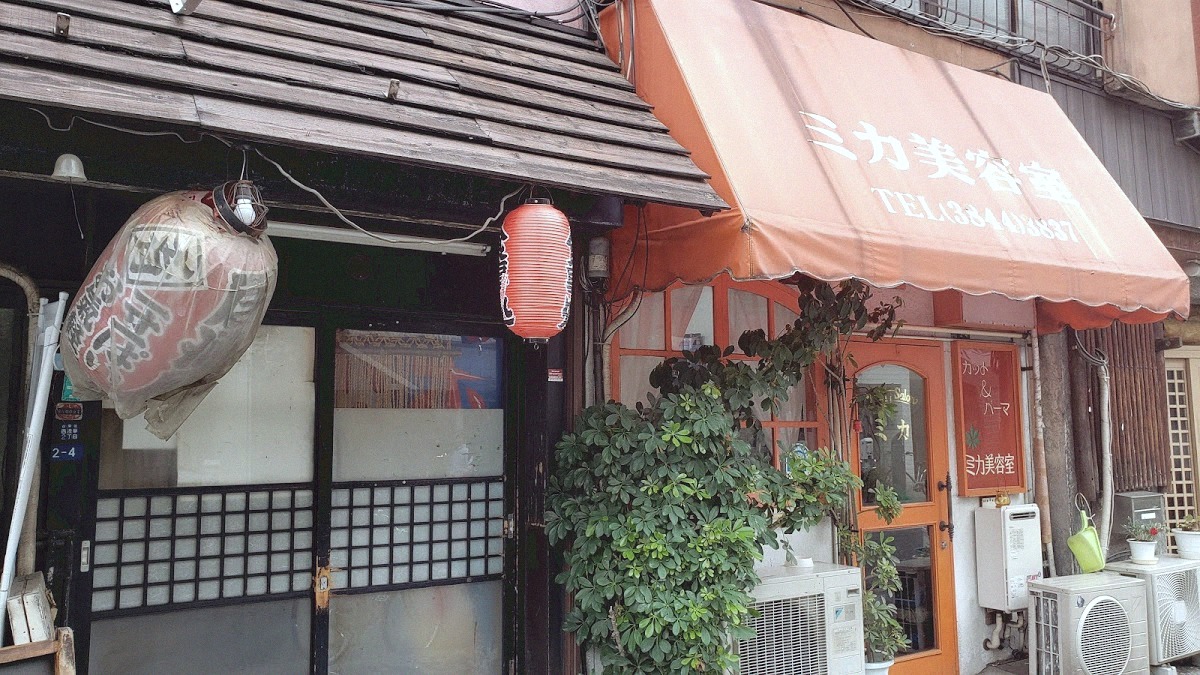
A traveller hits a cash-only sign in Tokyo and reads it as a fault — a shop that has not caught up, a country oddly behind on something it should have solved. The reading is backwards. In one of the safest, most technologically dense cities on earth, the persistence of cash is not a lag. It is the visible edge of a specific economic and cultural story, and once you know that story the cash-only sign stops being an obstacle and starts being information — frequently the good kind.
This piece explains why cash held on here when it collapsed almost everywhere else, what a cash-only door is actually telling you about the food behind it, and the short, unglamorous system for never being caught short again.
The short answer: many Tokyo restaurants are cash-only because, for a small owner-run shop with a fixed clientele and no growth ambition, a card terminal adds fees, a settlement delay, and overhead while solving a problem the shop does not have — so staying cash-only is usually a rational choice, not a failure to modernise. The rest of this guide is why that is true, what the sign signals about the food, and how to never get caught without notes.
Why Cash Survived Here
Japan went into the card era from a different starting point than the West. Crime is low enough that carrying real money was never the risk it is elsewhere, and decades of near-zero inflation made holding cash cost nothing — there was no quiet penalty for keeping value in a wallet rather than a balance. On top of that sits a population that is old and trusts what it has always used. The result is a country that, on the official METI count, reached 58.0 percent cashless in 2025 (published March 2026) — past its old 40 percent target, now aiming at 80 percent long-term — while South Korea sits near 95 and China above 80. The gap is not a country that cannot; it is one where the pressure to switch never bit the way it did abroad.
The part most explanations get wrong is the small-shop math. The easy story is “card fees eat thin margins,” and that is real — a family kitchen running on single-digit margins genuinely feels a few percent per plate. But analysts who looked closely found the deeper brake is not the fee alone; it is that for an owner-run place with a fixed regular clientele and no growth ambition, going cashless solves a problem it does not have. A terminal, a settlement cycle, a screen between the owner and the customer — all cost, no gain, for a shop that was never trying to scale. Cash-only, here, is often not inertia. It is a rational choice by exactly the kind of business that optimises for the food and nothing else.
What the Cash-Only Sign Actually Tells You
That is the reframe worth carrying. The cash-heavy long tail of Tokyo is not the bad restaurants; it is disproportionately the independent, owner-cooked, off-the-itinerary places — the small soba counter, the yokocho stall, the old-market sushi-ya, the eight-seat izakaya — the exact category that defines eating here. Mega-chains and tourist-facing rooms took cards early because scale made the terminal worth it. A great deal of what a serious eater is actually chasing did not, for the reasons above. So the sign is a rough, imperfect, useful filter: card-everywhere skews toward the engineered and the large; a hand-written cash-only note on the door skews toward the small and the personal. Not a law — plenty of superb places take cards now — but a signal that runs the opposite direction to the one visitors instinctively assume.
Read it that way and the friction inverts. The cash-only door is not warning you off; it is, more often than not, pointing at the room where the owner is also the cook.
How to Not Get Caught
The defence is one habit and one machine. The machine: a 7-Bank ATM, inside almost every 7-Eleven, more than twenty thousand of them, running 24 hours, taking foreign-issued cards in English with low or no surcharge from the machine itself. That single network solves cash in Tokyo almost entirely on its own. Japan Post ATMs are the nationwide backup — also foreign-card friendly, a small fixed charge, but with real operating hours that close at night, so they are the rural and daytime fallback, not the 1 a.m. one. The habit: leave your accommodation each day already carrying around ten thousand yen in cash, treat it as a floor not a ceiling, and top up at any 7-Eleven the moment it runs low — which, conveniently, you pass every few hundred metres anyway.
Then know the categories that assume cash so the sign never surprises you: yokocho alley stalls, small independent soba and sushi counters, old-market eateries, tiny owner-run izakaya, street and festival food, and many shrine-district shops. Trains, convenience stores, department stores, chains and most mid-to-large restaurants take cards and IC cards fine; a Suica or Pasmo IC card handles transit and konbini without thinking. The rule compresses to one line: carry ten thousand yen you did not plan to spend, refill it at 7-Eleven before zero, and the cash-only sign becomes a recommendation instead of a wall.
Where You Will Need It
The places this matters most are the ones worth the small logistics. Omoide Yokocho in Shinjuku and Ebisu Yokocho are textbook cash territory — postwar alley stalls where the owner cooks and the till is a box; Kanda Matsuya, a hand-cut soba house founded in 1884 in a 1924 wooden hall, is the kind of old independent that proves the signal; and a faux-Showa izakaya like Shirubee in Shimokitazawa runs on the same cash-comfortable logic. Pair this with the companion reads: the yokocho guide maps where this is densest, the cost-of-eating guide is why the ten-thousand floor is the right number, and the piece on otoshi covers the other small-bill surprise these same rooms produce. Carry the cash, read the sign as a signal, and the most rewarding tier of Tokyo eating stops being the one you accidentally walk past.
Cash in Tokyo: Quick Answers
How much cash should I carry per day in Tokyo? Treat ¥10,000 as a floor, not a ceiling — enough for a couple of small owner-run meals plus drinks. Top it up at any 7-Eleven before it runs to zero, and carry more on days planned around yokocho alleys, festivals, or old-market eating.
Why are so many Tokyo restaurants cash-only? For a small owner-cooked shop with a fixed clientele and no plan to scale, a card terminal adds fees, a settlement delay, and a screen between owner and customer while solving a growth problem the shop does not have. Cash-only is usually a rational choice, not a refusal to modernise — and Japan was still only 58.0 percent cashless in 2025 on the official METI count, so the habit had no national pressure forcing it out.
Do Tokyo restaurants take credit cards? Chains and most mid-to-large restaurants do, as do trains, convenience stores and department stores. The reliably cash-only category is the small, independent end: owner-run soba and sushi counters, tiny izakaya, yokocho stalls, street and festival food, and many shrine-district shops.
Are 7-Bank ATM fees high for foreign cards? The machine’s own surcharge is low — Seven Bank charges roughly ¥110 per withdrawal (accessed June 2026), and many foreign cards see no machine fee at all. The bigger cost is usually your home bank’s foreign-transaction or FX markup, not the ATM. The 7-Eleven network runs 24 hours, takes Visa, Mastercard, Amex, JCB and UnionPay, and offers an English menu.
Where will I definitely need cash? Yokocho alley stalls, small independent soba and sushi counters, old-market eateries, tiny owner-run izakaya, street and festival food, and many shrine-district shops. A Suica or Pasmo IC card covers transit and konbini, but the rooms the cash-only sign points at still run on notes.
And if a card you expected to work is refused mid-meal, don’t panic — here is exactly what to do when your card gets declined in a Tokyo restaurant.
Sources & Further Reading
- METI — 2025 Ratio of Cashless Payment Among Consumer Spending (official, published 2026-03-31; the 58.0% 2025 figure and the 80% long-term goal; accessed June 2026)
- Nippon.com — the state of cashless payments in Japan (why adoption stayed low; cross-country comparison)
- Dentsu Webdentsu — why small and medium stores are slow to go cashless (the deeper brake is not the transaction fee alone)
- JNTO / Japan Travel — cashless payments in Japan (official) (where cards and IC work; where cash is still expected)
- Japan-guide.com — ATMs in Japan (7-Bank 24h foreign-card access; Japan Post hours and fee)
- Seven Bank — ATM for foreign-issued cards (network size; 24h access; ~¥110 per withdrawal; accepted international card brands; accessed June 2026)