
What “Sold Out for the Day” Actually Tells You in Tokyo
The sign reading uri-kire-shidai shuryo isn't scarcity marketing or bad luck — it's a production decision written on a door. Why Tokyo's craft shops cap their daily output at one morning's batch, and how to read the sign, the clock, and the batch so you arrive at the right hour.
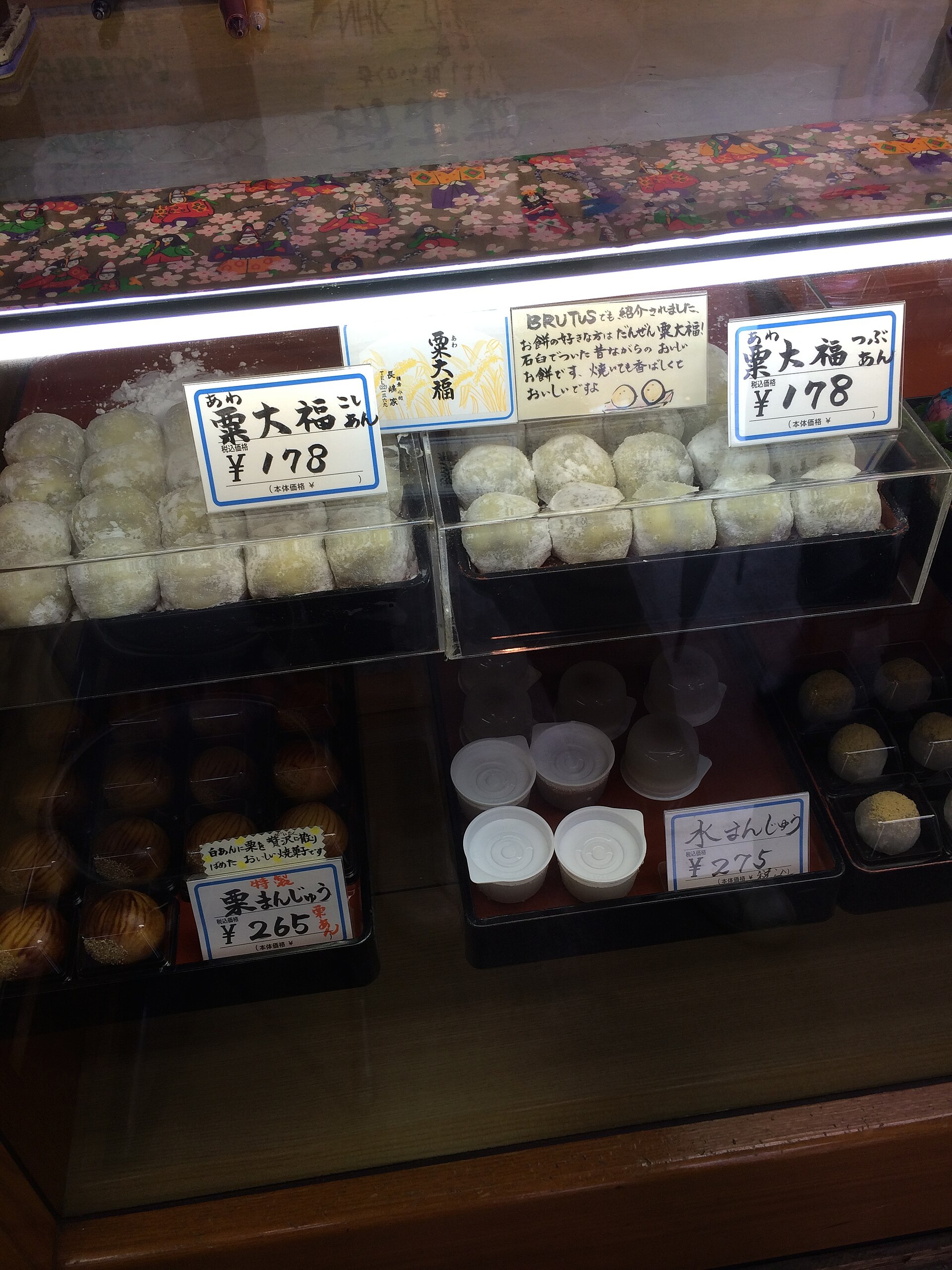
You walked twenty minutes for the daifuku and the shutter is half down. A handwritten sign reads uri-kire-shidai shuryo (売り切れ次第終了, “we close once it’s sold out”). The instinct is to read it as bad luck, or worse, as a shop playing hard to get. It is neither. That sign is a business model written on a door. It tells you the shop fixed today’s output to whatever one morning of fresh, perishable, hand-made work could produce, and then refused to make more. You did not get unlucky. You arrived at the wrong hour of a fixed-supply day. The fix is not patience or persistence — it is a clock and a morning, and once you understand why the supply is capped, you can time it precisely.

“Sold Out” Is a Sentence, Not an Accident
English flattens it. A vocabulary card will tell you 売り切れ (urikire) means “sold out” — 売り (selling) plus 切れ (run out) — and stop there, as if it were the same forgettable message a supermarket flashes when the milk is gone. It isn’t. The full phrase on a craft shop’s door is uri-kire-shidai shuryo, and the load-bearing word is shidai: “as soon as.” The shop does not close at a fixed hour. It closes the instant the last unit leaves the counter, whether that lands at 13:00 or 16:30. The closing trigger is the inventory, not the clock.
That is a deliberate, non-deceptive convention in Japan for anything made in limited daily quantity. It is the opposite of scarcity marketing, which manufactures a fake ceiling to drive urgency. Here the ceiling is real, physical, and set before the doors even open. The shop is not withholding supply it could produce. It has told you, in five characters, that it would rather end the day early than make a worse version of the thing. Read that way, the sign is less a rejection and more a disclosure — an honest statement of how much exists.
Some Foods Are Legally and Physically Dead by Tomorrow
Start with the sweets, because they make the logic impossible to argue with. Namagashi (生菓子, “fresh wagashi”) — the soft, moist confections like mame-daifuku (豆大福, “bean-paste rice cake”) — carry a shelf life measured in hours, not days. The category is defined by high moisture and minimal preservatives: fresh bean paste, soft pounded rice, sometimes cream. Industry shelf-life guides routinely list namagashi at roughly one day. The product is not built to survive a night, which means a shop cannot make Tuesday’s batch on Monday and hold it. It has exactly one window: make it in the morning, sell it before it dies.
At Okano-Eisen (岡埜栄泉) in old Yanaka, the mame-daifuku is the same-day-only kind: built from morning-pounded rice and freshly cooked bean paste, it’s meant to be eaten the day you buy it rather than held. Across the wider Okano-Eisen lineage the daifuku regularly sell out by early afternoon; regulars phone ahead or reserve the day before to secure them rather than gamble on a morning walk-in. This is the made-in-the-morning model in its purest, most honest form. There is no central kitchen baking a thousand shelf-stable units overnight. There is one shop, one morning, and a confection that will not be the same tomorrow even if it survived — so it isn’t made to.
This is the same perishability clock that runs Tokyo’s department-store basements, where a food-safety rule forces premium bento into deep markdowns in the closing hour — a logic we unpack in why Tokyo’s best cheap dinner is a department store basement. Same physics, opposite end of the day: perishable food sets the rules, and the only question is which hour you show up.
The Other Cap Is Hands, Not Shelf Life
Not every sellout is about decay. Some foods are finite because the labor itself does not scale. Kanda Matsuya (神田まつや), a soba house in a wooden hall rebuilt in 1925 after the Great Kanto Earthquake, hand-cuts its buckwheat noodles every day. A rotating team of artisans does the cutting — the uchi (打ち, the act of cutting a batch of soba) — and on the heaviest day of the year, New Year’s Eve, the number of cutting sessions can run past two hundred. That figure is the point. The daily ceiling is not how much buckwheat the shop can buy; it is how many times a skilled pair of hands can cut before quality slips. A machine could cut more. The shop chooses not to use one, which means it chooses to run out.
This is what the style of these shops actually protects: continuity over volume. A hand-cut noodle and a machine-extruded one share a name and almost nothing else — the gap is a stack of decisions about milling, technique, and time, which is exactly why real soba costs ¥1,800 and cheap soba costs ¥600. Selling out is simply the price of staying on the expensive side of that line. The shop that never sells out has, somewhere upstream, agreed to industrialize. The one that closes early has not.
Frying works the same way, on a shorter clock. At Asakusa Menchi (浅草メンチ) on Denboin-dori, the menchi-katsu (メンチカツ, a breaded, deep-fried ground-meat cutlet) is fried one by one from morning, specifically so each is eaten agetate (揚げたて, “just fried”). A fried cutlet has a quality window of minutes, not hours. So the constraint here isn’t a fixed daily stock — it’s that the kitchen can only fry so many at the pace that keeps every one fresh. It is a continuously replenished but fundamentally same-hour item, and at around ¥400 it’s the cheapest possible illustration of the rule: quality, not inventory, sets the daily ceiling.
Why No Second Shift Comes to the Rescue
The piece tourists miss is structural. In most of the West, a popular food business answers demand by scaling: a central commissary, a second shift, a frozen pre-batch, a third location. The Tokyo craft shop has none of those levers, usually by design. It is frequently a single operator or a tiny family team working one set of equipment in one room. There is no commissary kitchen producing overnight, no night crew to double the run, no second griddle in a back unit. The day’s capacity is one team, one morning, one batch — and when that’s gone, there is nothing behind it to deploy.
You can watch the whole arc compress at Onigiri Cafe Risaku (利さく) in Sendagi, where the closing trigger is the rice itself. The shop cooks its rice in a hagama (羽釜, a traditional flanged iron kettle), and service runs until the rice runs out — the evening sitting ends once the pot is empty, even if that’s before the posted close. There is no warehouse of cooked rice. The batch is the business. When the hagama scrapes empty, the day is over, and the only variable that ever mattered was when you walked in relative to that pot.
The model has variants worth knowing, too. A few doors into Asakusa, Kimuraya Honten (木村家本店) has been griddling ningyo-yaki (人形焼き, small sponge cakes cooked in figured molds) since 1868. Here the making is continuous through the day rather than a single dawn batch — but it is still finite, still bounded by how fast two hands can work a hot mold. Continuous or once-a-morning, the underlying truth holds: output is capped at what real work can yield, and the shop would rather hit that cap than fake its way past it.
How to Read the Sign, the Clock, and the Batch
Here is the decoder, the part you can use tomorrow. First, treat uri-kire-shidai shuryo as information, not insult: it means the day ends on supply, so the earlier you arrive, the more of the day is left. For made-in-the-morning items — daifuku, fresh wagashi, anything in the namagashi family — go in the morning, full stop. Afternoon is the gamble. If a specific item matters, call ahead or reserve the day before; for daifuku especially, a phone call the previous afternoon is the regulars’ move, not an imposition.
Second, read the trigger. A hand-cut soba house or a fry-from-morning counter replenishes through the day, so a midday arrival is usually fine — but a single-batch shop (the rice runs out, the dawn tray sells down) rewards being early and punishes being late, with nothing in between. Third, when in doubt, check the shop’s own page on the day you go. These are small craft operations; they shift hours seasonally and close on sellout, so treat any posted time as “roughly,” not a guarantee. The traveler who internalizes this stops collecting closed shutters. The sellout was never bad luck. It was a published number, and now you can read it.
Sources & Further Reading
- wagashi-biz.jp / shiroan.jp — 和菓子の賞味期限 (namagashi shelf life listed at roughly one day; basis for the perishability cap)
- Kateigaho / ehills.co.jp — 岡埜栄泉 豆大福 (mame-daifuku made fresh daily and meant to be eaten same-day; often sells out by afternoon; phone-ahead practice — accessed May 2026)
- 神田まつや 公式サイト / BRUTUS.jp (rotating artisans hand-cut soba daily; cutting sessions reported at roughly 200 on New Year’s Eve vs. ~30 on a normal day — accessed May 2026)
- 利さく 公式 / gltjp.com (hagama-cooked onigiri; service ends once the rice runs out)
- 浅草メンチ 公式 (fried one by one from morning for agetate freshness)
- DMM英会話 / dancyu.com — 売り切れ次第終了 (the phrase as a standard finite-batch convention, distinct from ordinary out-of-stock)