
Vegan Tokyo: Where, Not How
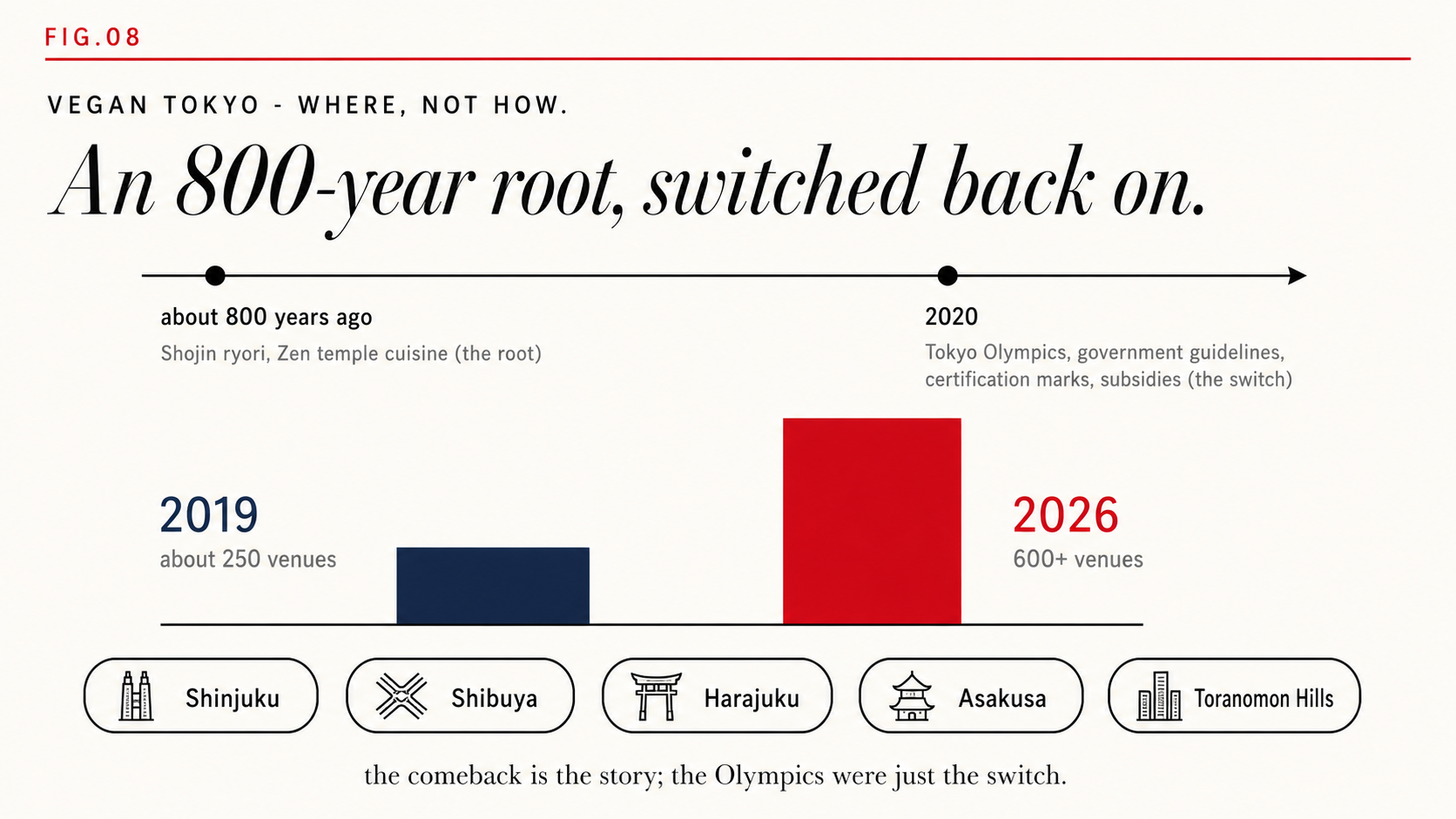
Stop reading vegan Tokyo as a survival problem. It's an 800-year-old domestic tradition the 2020 Olympics switched back on — ~250 venues in 2019 to 600+ by 2026. The map of where it's genuinely good, not the kit for getting by.
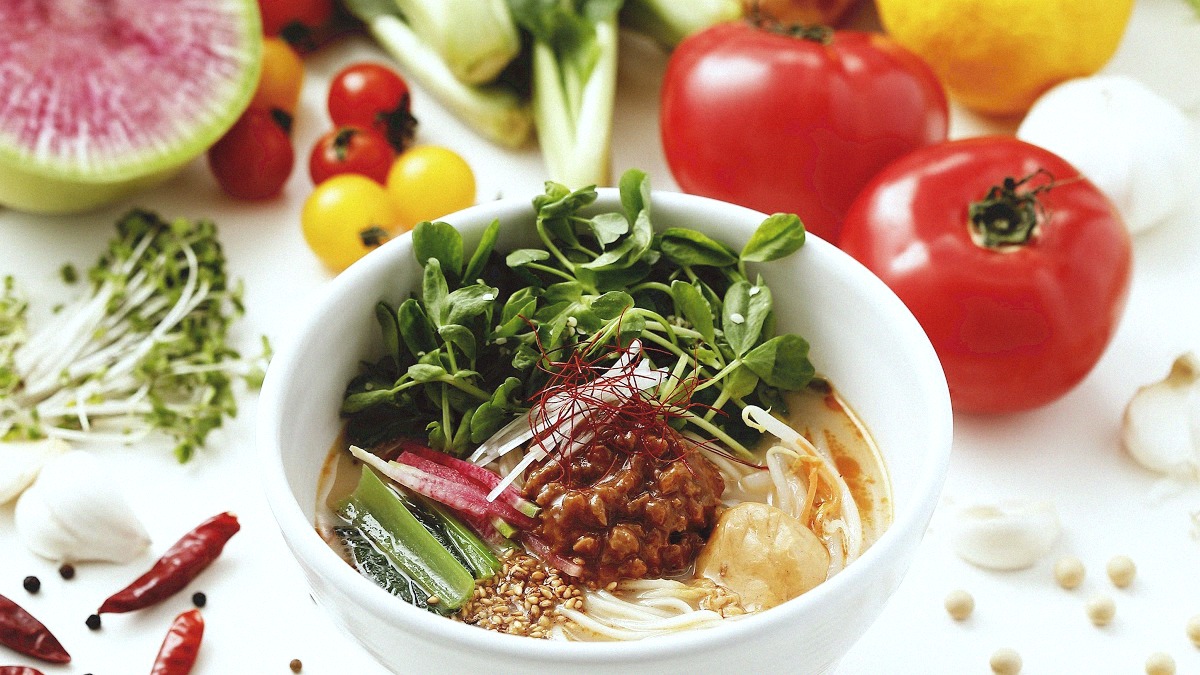
Most vegan-in-Tokyo writing is defensive: how to survive, how to avoid the hidden fish, how not to starve in a city that runs on dashi. That framing is not wrong — our piece on why vegetarian is actually harder than vegan here covers the mechanics of the trap in full. But it answers the wrong question for 2026. The useful question is no longer “how do I get by.” It is “where is it genuinely, affirmatively good” — and the honest answer surprises people, because Tokyo has quietly become the most plant-friendly major city in East Asia, for a reason that is not a Western import at all.
This piece is the map, not the survival kit: the old domestic root the city is drawing on, the event that switched it back on, where the good vegan eating actually concentrates, and how to land a real plant-based meal on purpose rather than by luck.
The Root Nobody Credits
Veganism in Japan is not new and not foreign. It is roughly eight centuries old and homegrown. Shojin ryori (精進料理, Buddhist temple cuisine) was developed by Zen monks who needed to build deep, satisfying food with no animal product whatsoever — and solved it by mastering umami from kombu kelp, dried shiitake, fermented miso, and tightly seasonal vegetables. That is not a compromise cuisine; it is a complete one, refined over generations specifically to prove that plants alone can carry a full meal. The modern Tokyo vegan scene is not an invention copied from Los Angeles or Berlin. It is a resurfacing — contemporary kitchens reaching back into a technique the country already owned and adapting it to ramen, curry, and tasting menus. Knowing this changes how you eat it: you are not asking Japan to do something against its nature. You are asking it to do something it has done longer than almost anywhere on earth.
The Event That Switched It Back On
A dormant tradition needed a catalyst, and the 2020 Olympics were it. In the run-up, anticipating a wave of visitors with diets the city was not yet set up for, the government issued vegan guidelines, introduced certification marks so a traveller could trust a label, and subsidised restaurants to add plant-based options. The effect compounded. Tokyo went from on the order of 250 vegan and vegan-friendly venues in 2019 to more than 600 by early 2026. The Games did not create Japanese veganism — the monks did that — but they took an 800-year-old temple practice and a scattering of niche cafes and turned them into a city-wide, labelled, navigable map. The comeback is the story; the Olympics are just the switch.
Where It Actually Concentrates
The map is not evenly spread, and knowing the dense zones removes almost all the friction. The concentration is in Shinjuku, Shibuya, Harajuku, Asakusa, and the newer Toranomon Hills cluster — in the central wards you are rarely more than a ten-minute walk from a verified plant-based option. The range inside that map is the part that defeats the “vegan means scraping by” assumption: you can eat a sesame-rich vegan ramen near Tokyo Station for under fifteen hundred yen at lunch and sit down to a Michelin-recognised shojin tasting menu the same night. Vegan Tokyo is not a thin band of survival options. It is a full vertical, from cheap and fast to one of the most refined vegetable meals available anywhere — concentrated tightly enough that geography, not luck, is what you actually plan around.
How to Land It Every Time
Turn the map into a method. Anchor on the dedicated vegan room when there is one near you: T’s Tantan inside Tokyo Station is the cleanest example — a fully vegan tantanmen, fast, inside the gates, and exactly the sub-fifteen-hundred-yen meal that breaks the survival framing. When no dedicated place is in reach, lean on the categories that travel well: shojin and temple cuisine for the full traditional version, Indian kitchens where dal and vegetable curry are reliably animal-free — SHANTi in the Harajuku cluster is the type — and a vegetable-forward independent like Nasu Oyaji in Shimokitazawa when you want plants on the plate rather than a vegan badge. Keep one dependable national fallback in your back pocket: CoCo Ichibanya runs a separate vegetarian curry sauce nationwide, which is the safety net when you are stranded and need certainty over romance. Two reads finish the toolkit: why vegetarian is harder than vegan for the dashi trap you still must check even inside this map, and what shun means for why shojin’s seasonal-vegetable logic is the same logic running under the best of it. The rule, inverted from the usual one: in 2026 you do not endure vegan Tokyo. You navigate to it.
Sources & Further Reading
- Grist — veganism has deep roots in Japan’s history; it’s beginning to resurface (the shojin-ryori root; the resurfacing framing)
- Grist — in meat- and fish-loving Japan, veganism is making a comeback (the 2020 Olympics catalyst; government guidelines and subsidies)
- byFood — Shojin Ryori in Tokyo: vegetarian Buddhist cuisine (the 800-year temple-cuisine technique modern kitchens adapt)
- MICHELIN Guide — the best vegetarian menus in Tokyo (the high end of the range; recognised shojin tasting)
- Japan Dev — vegan food in Japan: a guide (2026) (current venue density; the central-ward clusters and price spread)