
How to Eat Harajuku
Harajuku puts its loudest street at the front door, so almost everyone mis-eats it — a rainbow photo on Takeshita-dori, then out. The rule is clean: quality runs inversely to noise. The three streets, and how to move between them.
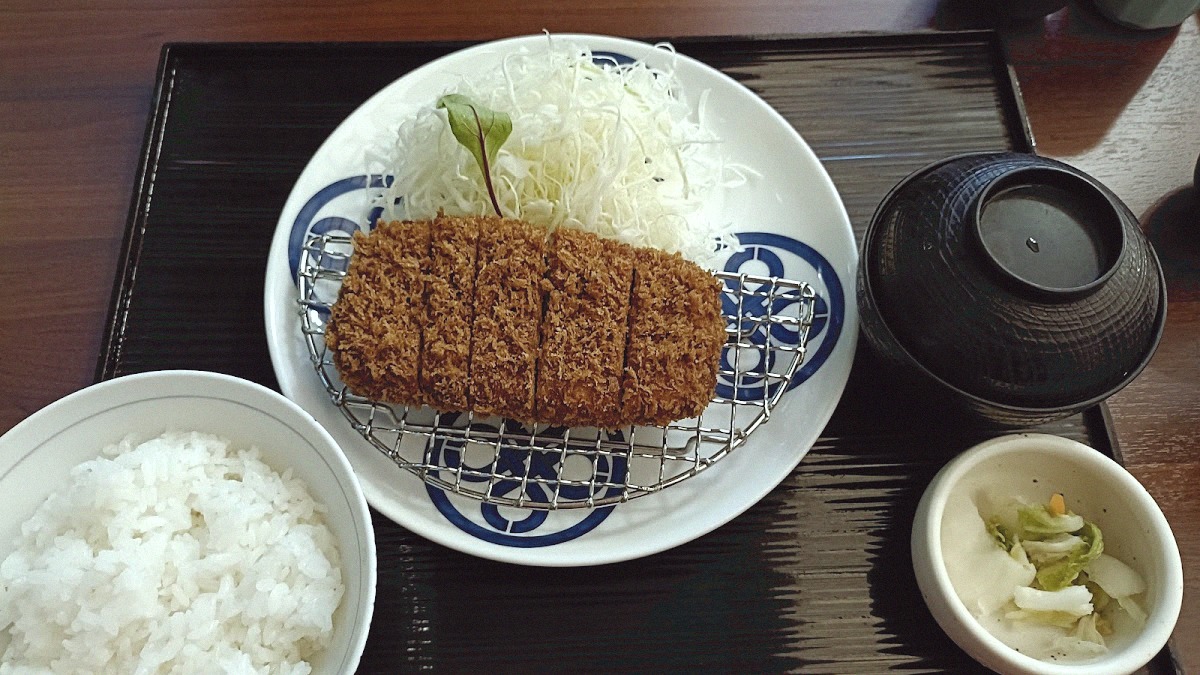
Harajuku is the district visitors most reliably mis-eat, because it puts its loudest street at the front door. Almost everyone walks straight into Takeshita-dori, eats a rainbow something for the photo, decides Harajuku is candy-floss-for-tourists, and leaves — never learning that the actual eating is one block off the street they were standing on. Harajuku’s rule is unusually clean: the quality is inversely proportional to the noise.
This piece is that inverse: why Harajuku eats the way it does, the three streets it really splits into, how to move between them, and what to walk past — even when it is the most photographed thing in view.
Why Harajuku Eats the Way It Does
Harajuku is not one place; it is three adjacent streets with opposite jobs, and your meal depends entirely on which one you are standing on. Takeshita-dori is a four-hundred-metre performance of kawaii culture where the food is made to be photographed first and eaten second — legitimate as spectacle, a poor choice as a meal. Omotesando, running parallel, is its calm, designed, upscale opposite, built for an unhurried sit-down. And Cat Street — Ura-Harajuku, the backstreets — is where the fashion-forward locals went in the 1990s and where the real eating and the serious coffee quietly settled. The district did not fail to develop good food. It sorted it by street, and put the weakest, loudest version where the most people enter.
The Three Streets of Harajuku
The spectacle street (Takeshita-dori). Treat it as one deliberate sweet, not a meal: Rainbow Pancake is the honest version of what this street does well — a made-to-order pancake that is genuinely good and also the photo, which is the correct way to use Takeshita-dori: pick one, enjoy it, keep walking. The refined mile (Omotesando). The calm sit-down layer; even a conveyor bowl here is the accessible, well-run kind — Heiroku Sushi is the old-school kaiten on the upscale fashion mile, the easy, no-pressure meal Takeshita-dori cannot give you. The backstreet (Cat Street / Ura-Hara). The reason to stay: Harajuku Gyozaro is the cheap, packed, real gyoza counter locals actually eat at, Kyushu Jangara is the Kyushu tonkotsu ramen one block off the chaos, SHANTi is the slow-cooked curry the backstreets reward you with, and The Roastery by Nozy Coffee is the specialty-coffee anchor of Cat Street itself.
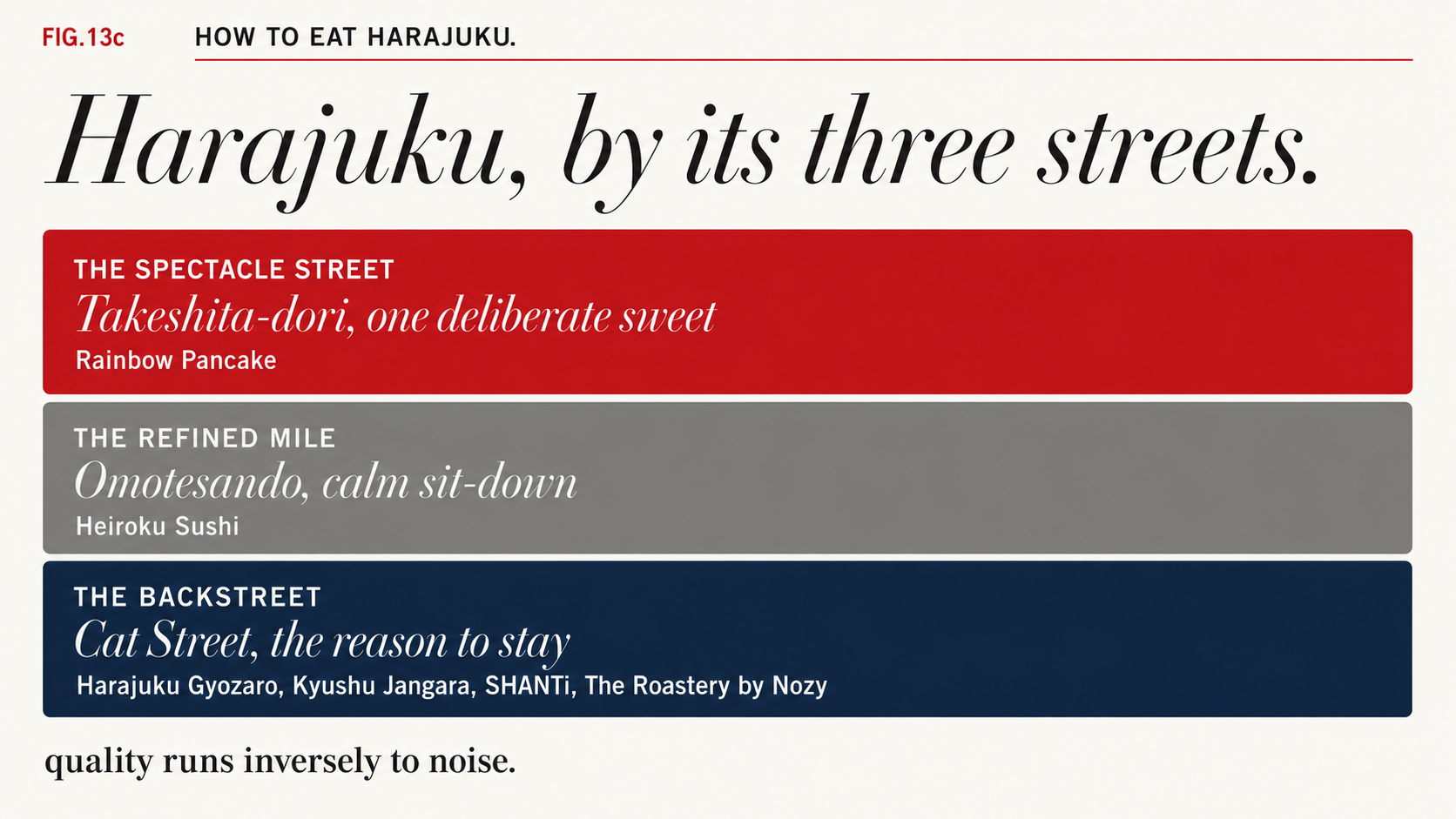
How to Actually Eat Harajuku
Use the noise as a compass pointed the wrong way: the louder the street, the less you eat there. Enter through Takeshita-dori because everyone does and because one excellent made-to-order pancake or crepe, eaten walking, is exactly the right amount of that street — then leave it. Step one block off into the backstreet layer for the meal proper: gyoza standing at Gyozaro, a tonkotsu bowl at Kyushu Jangara, or curry at SHANTi is the food Harajuku is genuinely good at and the food the spectacle street hides. Move onto Cat Street for the slow part of the afternoon — The Roastery is a destination, not a pit stop — and drift toward Omotesando when you want a calm, designed sit-down rather than a counter. The route is the inverse of a tourist day: arrive at the noise, eat away from it, end in the quiet.
What to Skip, and the One Rule
Skip making a meal out of Takeshita-dori — it is a one-sweet street, not a dining room; skip the novelty places selling colour over cooking past that first photographed bite; and skip leaving Harajuku at the end of Takeshita-dori, which is the single most common way to miss the entire district. For the connective logic, the sibling pillar how to eat Shibuya is a natural pairing — Cat Street walks you straight from one into the other — the coffee belts piece places The Roastery in Tokyo’s wider specialty scene, vegan Tokyo: where, not how covers the Harajuku plant-based cluster SHANTi sits in, and how to eat Ginza is the opposite-temperament pillar in the same cluster. The one rule for Harajuku: the quality runs inversely to the noise — eat one thing on the loud street, everything else off it.
Sources & Further Reading
- GO TOKYO (official) — Takeshita Street (the 400m kawaii-spectacle street; food-over-fashion shift)
- Japan-guide.com — Harajuku (the three-zone split: Takeshita / Omotesando / backstreets)
- byFood — where to eat in Harajuku (the real eating off Takeshita-dori; backstreet venues)
- MATCHA — Harajuku’s Takeshita-dori: shops, food and trends (the made-to-order crepe culture; how to use the street)
- Tokyo Cheapo — Harajuku area guide (Cat Street / Ura-Hara; The Roastery and the coffee layer)