
How to Taste Tokyo’s New-Crop Shin-Soba — and Read the Sign That Says It’s Here
New-crop soba isn't a fixed date — it rolls south from Hokkaido in late August to Tokyo's counters in late October and November. Here's how to read the 新そば banner that tells you a shop is pouring it today, why the autumn crop's aroma fades within weeks of milling, what separates a ¥600 station plate from a ¥1,500 hand-milled one, and where in central Tokyo to walk in and taste it.
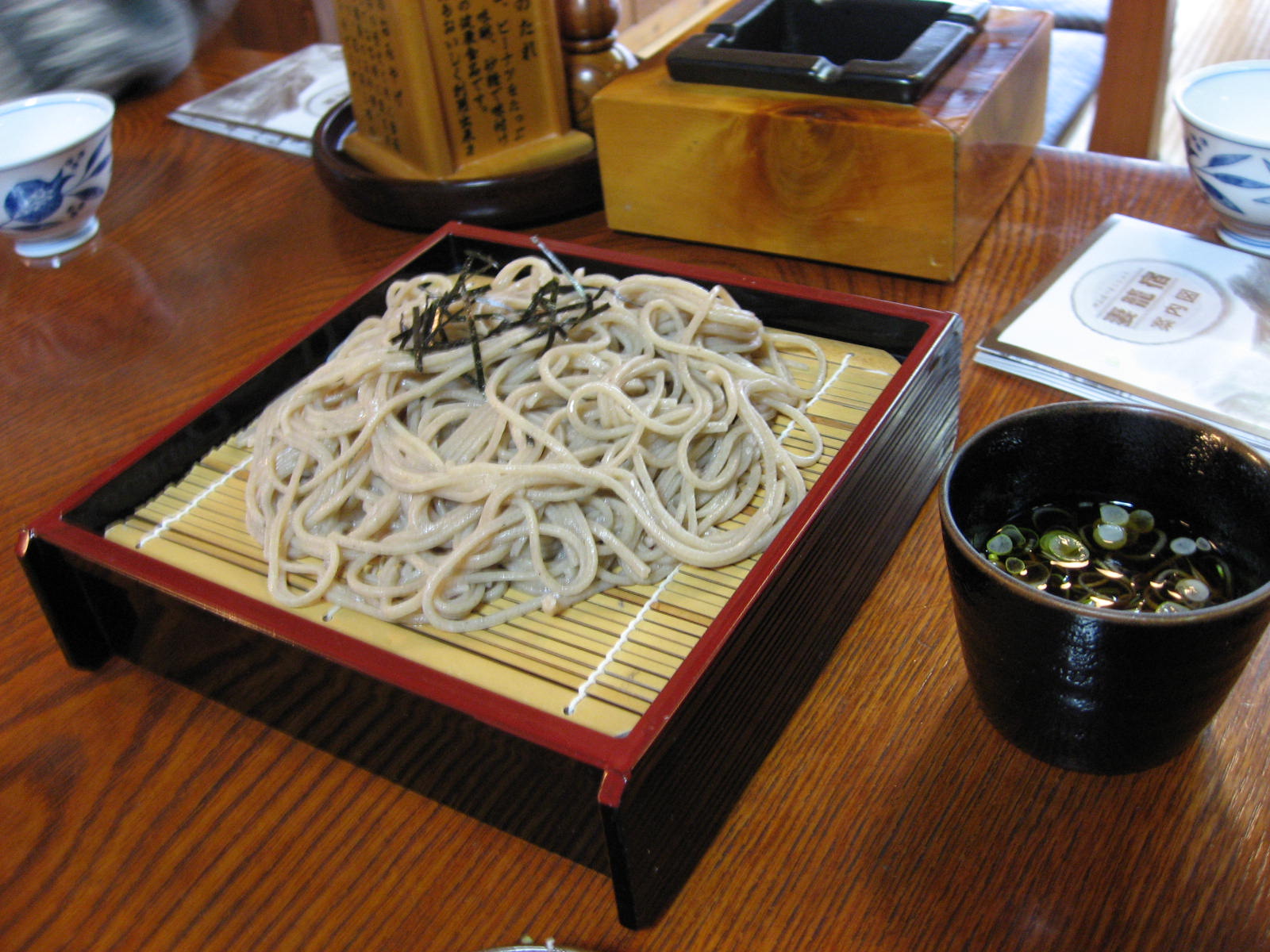
Shin-soba (新そば, shin-soba, “new soba”) is not a date on the calendar — it is a wave that rolls south. The newly harvested buckwheat reaches Hokkaido mills in late August, Nagano and Yamagata in October, and the soba counters of central Tokyo roughly from late October through November. If you want to taste it in the city this autumn, you do not need to guess the timing: you read the door. Many shops announce the arrival by hanging a 新そば banner — a vertical cloth nobori flag, or a hand-written sign at the counter — and that flag is the single most useful thing a traveler can learn to spot. The listicles will tell you where Tokyo’s best soba is. They almost never tell you when the buckwheat is at its peak, or how to know a shop is pouring the new crop the day you walk in. This is the part they skip.

The new crop is about aroma, and aroma has a clock
Buckwheat is harvested twice a year in Japan, and the two crops are not equal. The summer crop, natsu-shin (夏新, “summer new”), comes in around late August; the autumn crop, aki-shin (秋新, “autumn new”), comes in October and November. Millers and soba writers generally treat the autumn crop as the more aromatic of the two — deeper scent, better color, more of the grassy sweetness that makes a cold plate of soba worth eating plain. That preference is not snobbery. It is the whole reason shin-soba is seasonal at all.
What you are chasing in new-crop soba is volatile: the aroma and the faint green tint of freshly milled buckwheat fade within weeks of milling. A bag of buckwheat flour does not spoil in any dangerous sense, but the thing that makes shin-soba taste like shin-soba — that just-cut-grass note, that pale jade color in the noodle — leaks out steadily once the grain is ground. This is why the Edo soba ideal is summed up in one word, santate (三たて, “the three freshlys”): hikitate (freshly milled), uchitate (freshly cut), and yudetate (freshly boiled). New-crop buckwheat is what makes the first of those three actually matter. Mill it late, and you are eating the same noodle shape with the music turned down.
The season is a moving target because Japan is long
“Shin-soba season” sounds like a fixed window. It is not, and the reason is geography. Hokkaido is Japan’s largest soba-growing region — the town of Horokanai is the country’s single biggest producer — and because it is the far north, its buckwheat is sown and cut earliest. Hokkaido’s new crop appears from late August into September, and its flour starts switching over to the new harvest around early September. That is the natsu-shin you may see advertised before the leaves have even turned in Tokyo.
Then the wave moves south onto Honshu. The buckwheat regions that supply much of Tokyo’s serious soba — Nagano, branded as Shinshu (信州), and Yamagata (山形) up north — harvest in October and November, with Shinshu’s new flour generally arriving around early November. Stack those calendars and you get the nationwide truth: October and November are the peak, but “peak” is a relay, not a single gun. A warm autumn or a wet one can shift any given region’s harvest by a week or ten days, so treat every published date as a forecast, not a guarantee. For the traveler, this is good news. It means the window in Tokyo is wide — most of two months — and that the same word, shin-soba, can point at Hokkaido buckwheat in September and Shinshu buckwheat in November.
How to read the banner, and what to order to actually taste it
Here is the signal the explainers leave out. When a shop starts milling the new crop, it tells you — because telling you is good business. The 新そば nobori is sold to soba shops precisely so they can advertise the arrival of the new harvest; the banner is marketing, but it is honest marketing, because a shop running old flour has no reason to fly it. Look for the two characters 新そば (or the fuller 新蕎麦) on a vertical cloth flag at the entrance, on a sheet of paper taped inside, or chalked on a board by the register. One caution worth stating plainly: the banner is a widely practiced custom, not a law. Many shops display it; no shop is obliged to, and seeing one on a given day is never guaranteed. If you do not spot a flag, you can simply ask — “shin-soba?” — and the answer will be quick.
Once you are in, what you order decides whether you taste the new crop or bury it. The rule is to go cold and go plain first. Order seiro (せいろ) or mori (もり) — chilled noodles on a slatted tray, served with a cup of tsuyu dipping sauce on the side — before any hot broth or fried garnish. Heat and a heavy dashi will flatten the very aroma you came for; a pile of tempura on top is delicious and completely beside the point on your first plate. Dip only the bottom third of the noodles, eat fast while they are cold, and notice the scent before the sauce. Zaru (ざる) is the same noodle and the same quantity as mori, just dressed with shredded nori and usually a touch of wasabi — fine if you want it, but the barer the plate, the louder the buckwheat. Save the hot kake bowl and the tempura for a second visit, when you are eating for comfort rather than to read the crop.
Why a ¥600 plate and a ¥1,500 plate share a name but not a noodle
Shin-soba is sold across a wide price band, and the band tracks three decisions: how the grain is milled, how much wheat is mixed in, and how fresh the flour was when the noodle was cut. At the cheap end — the ¥350–¥600 stand at a station, where you slurp standing up — the soba is usually made from bagged, pre-milled flour delivered to the shop, often with a high proportion of wheat to keep the cost down and the texture forgiving. That noodle can still be honest and good, and in November a busy stand may genuinely be running new-crop flour. But it has already given up hikitate: the flour was ground somewhere else, days or weeks earlier, and the new-crop aroma you came for has had time to leak away. You are paying for speed and starch, not for scent.
Move up to the ¥800–¥1,200 hand-cut counter and the ratio is usually nihachi (二八, “two-eight”) — eighty percent buckwheat to twenty percent wheat flour. The wheat is not a shortcut here; its gluten is what makes the dough supple enough to roll thin and cut clean, giving the springy, balanced noodle most people picture when they think of soba. A nihachi shop that mills its own flour and cuts by hand can deliver all three of the santate freshlys, which is why this tier is the sweet spot for tasting the new crop without paying for a tasting menu.
At the top — ¥1,200 and well past ¥1,800 at specialist shops — you reach juwari (十割, “ten-tenths”): one hundred percent buckwheat, no wheat binder at all. With no gluten to hold it together, the dough is brittle and unforgiving, water doing the binding instead of wheat, so it demands a skilled hand and frequently same-day stone-milling. The payoff is the most intense, nuttiest, earthiest buckwheat flavor available, and a slightly rougher, drier noodle that breaks more easily on the chopstick — the opposite of the smooth nihachi bite. There is also sarashina (更科), the pale, refined style milled from the white starchy heart of the grain rather than the whole groat; it is the most delicate and least aromatic of all, prized for its near-translucent looks rather than its scent. For shin-soba specifically, the order of priority runs against price: a freshly milled, freshly cut nihachi or juwari plate at a self-milling shop will out-aroma a more expensive sarashina or a cheaper bagged-flour stand every time. For the full mechanics of that price gap — wheat, milling, technique, and time — our piece on why real soba costs ¥1,800 and cheap soba costs ¥600 walks through each decision in turn.
Where to walk in: one anchor counter, and a day trip if you want the festival
The cleanest place in central Tokyo to put all of this into practice is Kanda Matsuya (Kanda), an Edo-style soba hall founded in 1884 by Fukushima Ichizo in Kanda-Sudacho. The current two-story wooden building went up after the 1923 Great Kanto Earthquake and was designated a Tokyo historic building in 2001; the shop reportedly switched from machine-made back to hand-cut soba around 1963, and the novelist Ikenami Shotaro was a regular for years. That history is not decoration — a shop that hand-cuts its noodles is a shop where freshly milled, freshly cut, freshly boiled actually means something on the plate. It is an old-school, cash-friendly counter, so expect a lunch line, and order the cold seiro or mori first. A plain mori is reportedly around ¥825, though listings disagree and older menus quote figures closer to ¥650–¥700, so treat the number as a ballpark, not a promise (accessed May 2026). That puts it squarely in the hand-cut nihachi tier described above — the price you pay for a noodle that can actually carry the new-crop aroma.
Kanda Matsuya is the anchor, not the only door. The same banner-and-cold-plate approach works at a sarashina-line shop, at a juwari counter running all-buckwheat noodles, and even at a good station-counter tachigui stand pressing new flour in November — though the fast stands rarely fly the flag and rarely mill their own. If you would rather make a day of it, the Chichibu Arakawa Shinsoba Matsuri (秩父荒川新そばまつり), held in November in Saitama, sets up booths of freshly milled, hand-cut soba against autumn foliage; it is reachable from Tokyo via the Seibu Ikebukuro Line to Hanno and on into Chichibu, and it makes a clean contrast to a quiet Kanda counter. Whichever you choose, the seasonality itself is the point — and if you want the framework behind that idea, read what “shun” means, which lays out the hashiri–sakari–nagori arc that shin-soba lives inside. Walk in during the window, look for the flag, order the plate cold, and you will taste exactly what makes this crop worth a season of its own.
Sources & Further Reading
- Takayama Seifun — natsu-soba to aki-soba no chigai (twice-yearly harvest; autumn crop more aromatic; Hokkaido new flour early Sep, Shinshu early Nov; accessed May 2026)
- Jalan News — shin-soba no jiki (Hokkaido late Aug–Sep vs Honshu/Shinshu/Yamagata Oct–Nov harvest timing; accessed May 2026)
- Ishiyama Soba — Nihachi vs Juwari (80/20 wheat-binder nihachi vs 100% buckwheat juwari: texture, workability, aroma; accessed May 2026)
- shinise.tv — Kanda Matsuya (1884 founding, Fukushima Ichizo, reported hand-cut switch ~1963; accessed May 2026)
- With! Tokyo Rekiken Project — Kanda Matsuya (post-1923-quake wooden building, Tokyo historic-building designation 2001, post-war return to hand-cut soba, Ikenami Shotaro; accessed May 2026)
- Tabelog — Kanda Matsuya Honten (menu and price reference; listings disagree on mori price, hence hedged; accessed May 2026)
- GO TOKYO — official gourmet guide (Edo soba culture and the santate ideal; accessed May 2026)
- Chichibu City — Chichibu Arakawa Shinsoba Matsuri (November new-soba festival, held annually; verify exact 2026 date before travel; accessed May 2026)