
“Is It Rude To…”: the Tokyo Dining Etiquette Master Answer
The fear is the real problem, not the manners. The short list that genuinely offends (mostly funeral-coded), the long list that's actually fine (slurping, eating alone), and the few that depend on the room — every “is it rude to…” answered.
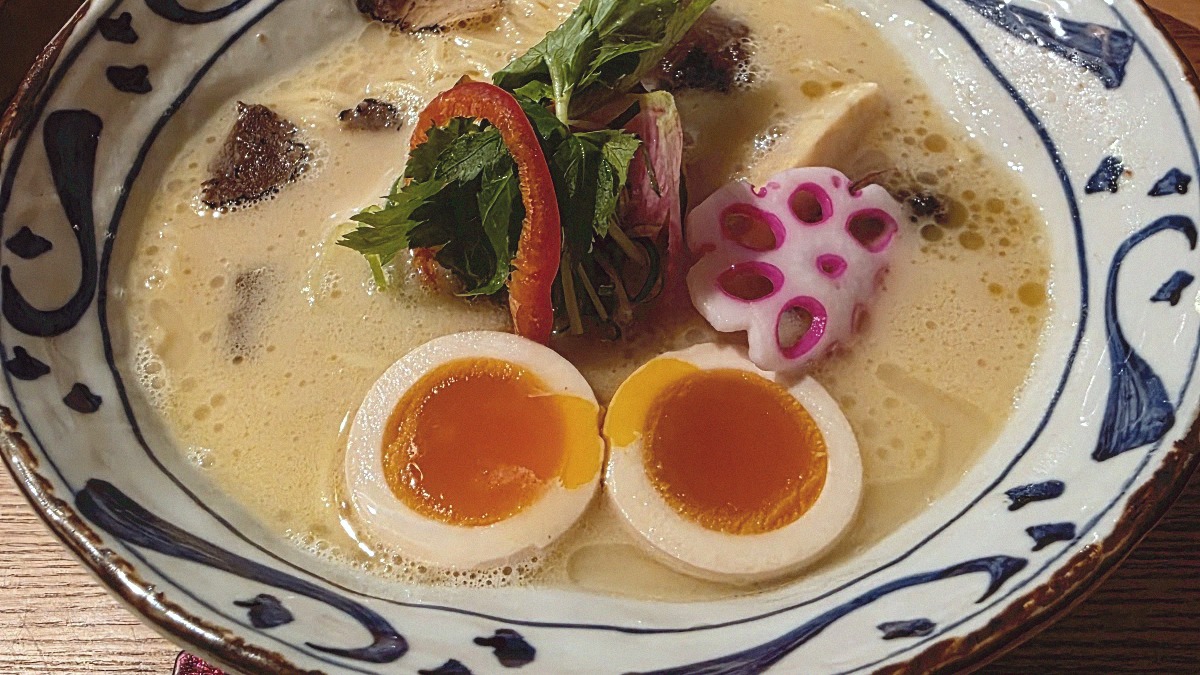
Almost everyone arrives in Tokyo quietly afraid of being rude. The internet feeds the fear with fifty-item etiquette lists that flatten the genuinely serious into the same tone as the trivial, so a visitor ends up equally worried about an act that reads like a funeral rite and an act that is completely fine. The fear is the real problem, not the manners. Japanese dining etiquette is not a minefield — it is a very short list of things that actually matter and a very long list of things foreigners imagine matter and that do not.
This piece answers the most-asked “is it rude to…” questions directly and sorts them into three honest buckets — what genuinely offends, what is completely fine, and the few that depend on the room — then points you to the deeper piece for each.
The Short List That Actually Matters
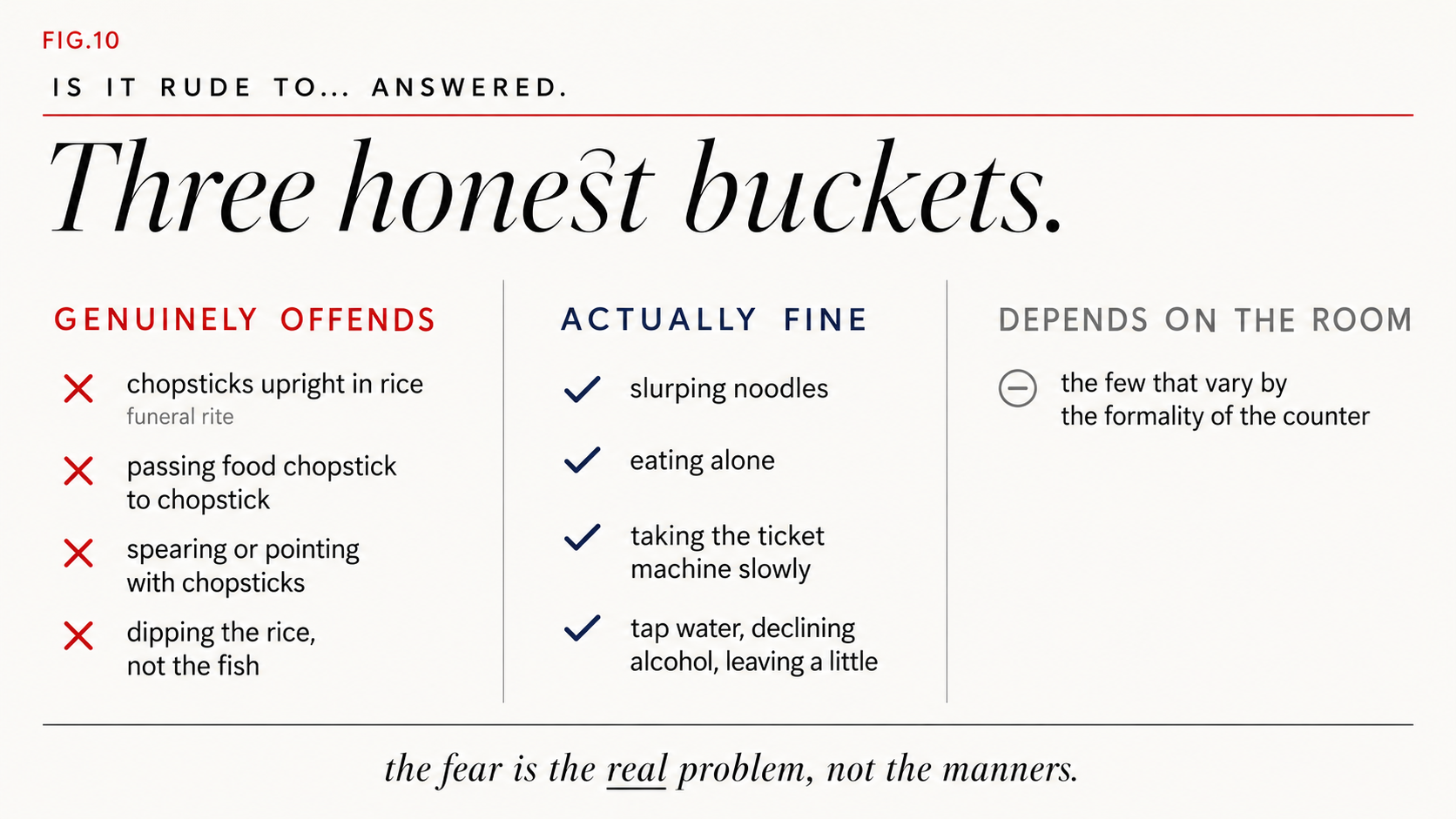
The truly offensive acts are few, specific, and learnable in a minute, and almost all trace to funeral symbolism. Do not stand chopsticks upright in a bowl of rice — that is how rice is offered to the dead. Do not pass food chopstick-to-chopstick to another person — that mirrors a step in cremation rites. Those two are the ones Japanese diners actually flinch at; treat them as absolute. After that the list is small and practical: do not spear food with a chopstick, do not wave or point with them, and keep soy sauce disciplined — at a sushi counter you dip the fish, never the rice, and you do not stir wasabi into the soy dish. When pouring or receiving a drink, use both hands; one hand reads as indifference. That is essentially the whole serious list. It is short on purpose, because the culture that built it expects visitors to get the funeral-coded things right and is relaxed about nearly everything else.
The Long List That Is Actually Fine
Now the relief, because most of what visitors agonise over is invented. Is it rude to slurp? The opposite — slurping noodles is normal and reads as appreciation, covered in full in the unspoken rules of eating ramen. Is it rude not to speak Japanese, to point at a menu, to take the ticket machine slowly? No — the ticket machine exists precisely so you never have to speak. Is it rude to eat alone? No; solo dining is ordinary and well-provided-for, which our piece on solo dining in Tokyo lays out. Is it rude to ask for tap water, to decline alcohol, to not finish every side dish? No — finishing your rice cleanly is admired, but declining a drink or leaving a little is not an offence. Is it rude to read a menu slowly or ask what something is? No. The single most common mistake visitors make with Japanese etiquette is over-applying it: performing stiffness nobody asked for and missing that ease, done respectfully, is itself good manners here.
The Few That Depend on the Room
A handful genuinely depend on context, and these are the ones worth a deeper read. Is it rude to tip? Not rude, but it causes real confusion and is not done — the full logic is in tipping in Japan. Is it rude to refuse the small unordered dish and its charge at an izakaya? It depends entirely on how it was presented, which is exactly what the otoshi piece untangles. Is it rude to photograph your food or use your phone at a high-end counter? At a conveyor shop, no; at a serious sushi counter the answer is yes when the chef is working — how to behave at a sushi counter and what omakase actually means cover the conduct that room expects. Is it rude to walk while eating? Fine on a festival or temple approach, frowned on in transit and formal settings — and late-night rooms have their own code, in eating late in Tokyo. Context, not a universal rule, decides each of these.
Where to Practise, and the One Rule
Practise where the stakes are zero. Ichiran in Shibuya is a private solo booth — no etiquette audience at all; Uobei is a touch-panel conveyor where the whole interaction is mechanical; Omoide Yokocho is forgiving, friendly, and used to visitors; and Kanda Matsuya is a traditional 1925 soba hall where ordinary respectful behaviour is more than enough. Use these to get the funeral-coded chopstick rules into your hands once, and the fear evaporates. The one rule that contains all of it: learn the four things that genuinely matter — chopsticks not upright, not passed tip-to-tip, soy sauce disciplined, both hands on the bottle — and then relax completely about the rest, because the only real rudeness in Tokyo is treating the room as though it owes you your own language and habits.
Sources & Further Reading
- GO TOKYO (official Tokyo travel guide) — Customs & Manners (the official baseline for dining customs in Tokyo)
- JNTO (official) — Japanese Food Etiquette Guide (chopstick rules; slurping; soy-sauce discipline — official)
- JNTO (official) — Japanese Manners Do’s and Don’ts (what genuinely offends vs what is fine — official)
- Japan-guide.com — Japanese table manners (the funeral-symbolism chopstick acts; both-hands pouring)
- byFood — Japanese table manners & dining etiquette 101 (itadakimasu / gochisosama; the over-application point)